
Matilda
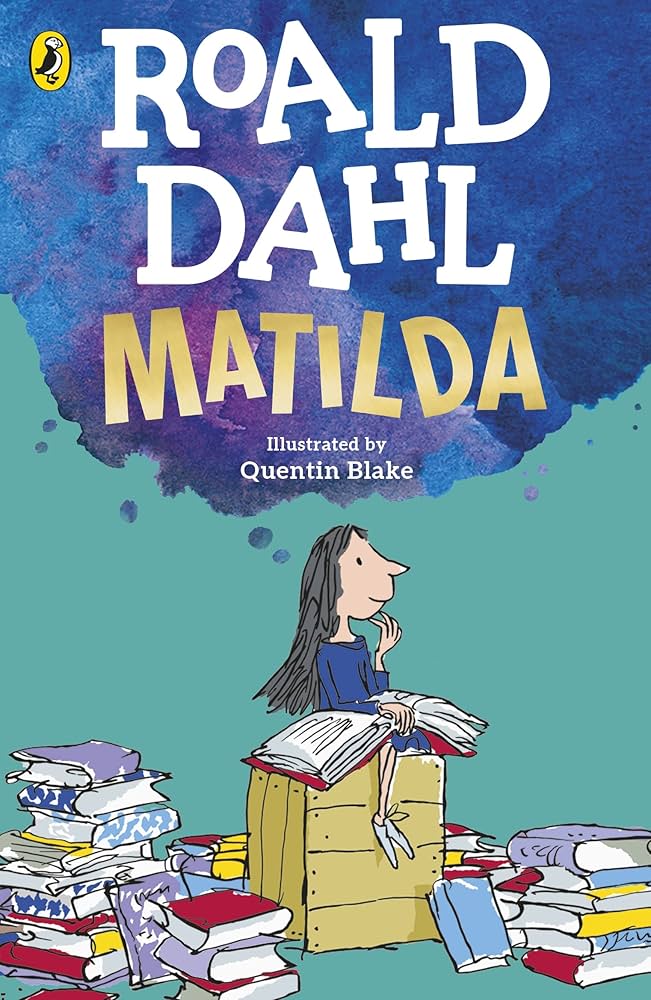
Matilda by Roald Dahl
Discover engaging literacy reading resources for Year 3 and Year 4 classes with this rich, curriculum-aligned exploration of Matilda. Designed to build reading comprehension, vocabulary, and critical-thinking skills, these Matilda-themed activities support guided reading, whole-class reading skills and discussions, and independent learning.
Perfect for teachers seeking high-quality LKS2 literacy materials, this resource helps learners connect with Roald Dahl’s classic text while developing confidence, creativity, and a lifelong love of reading.
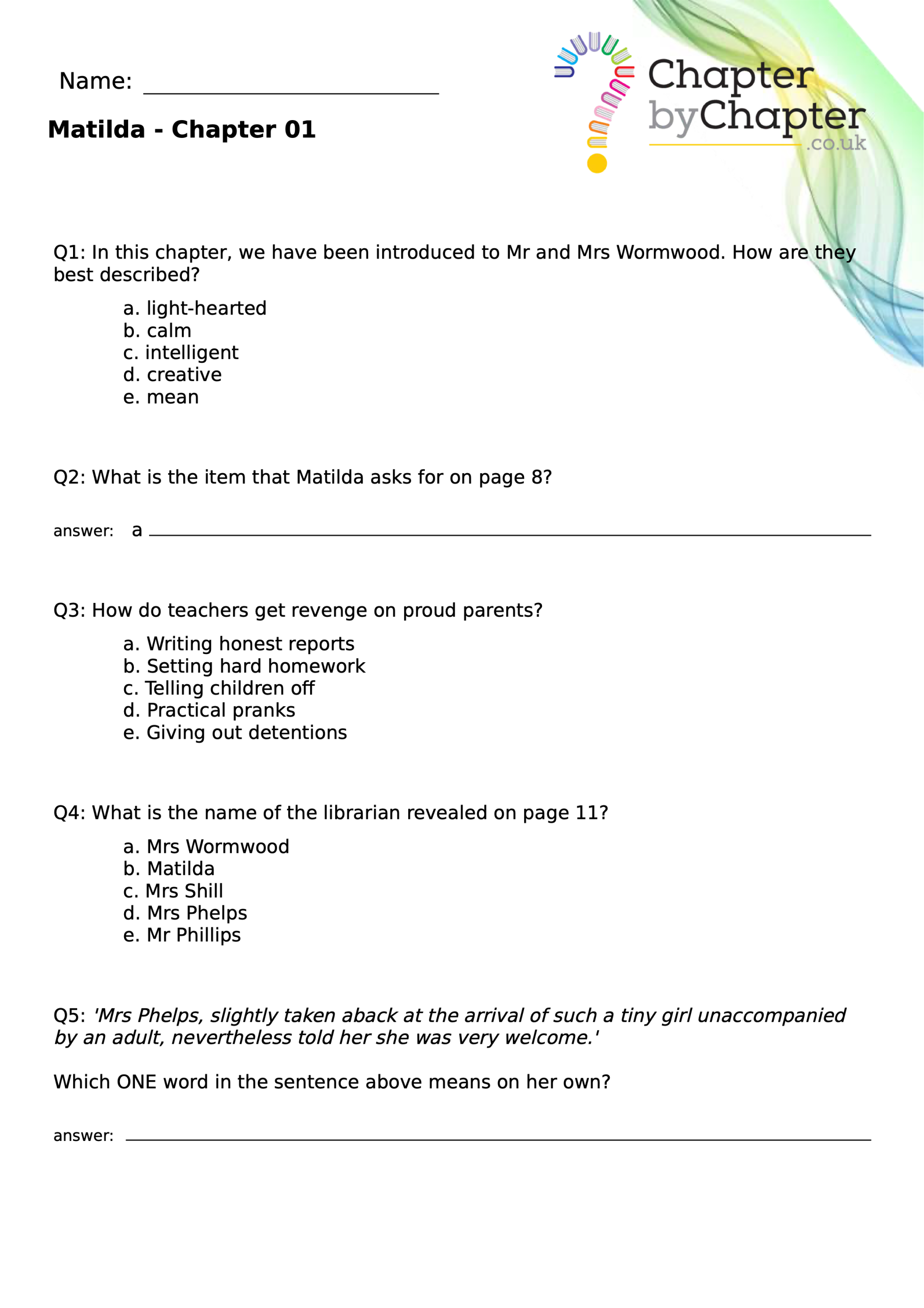
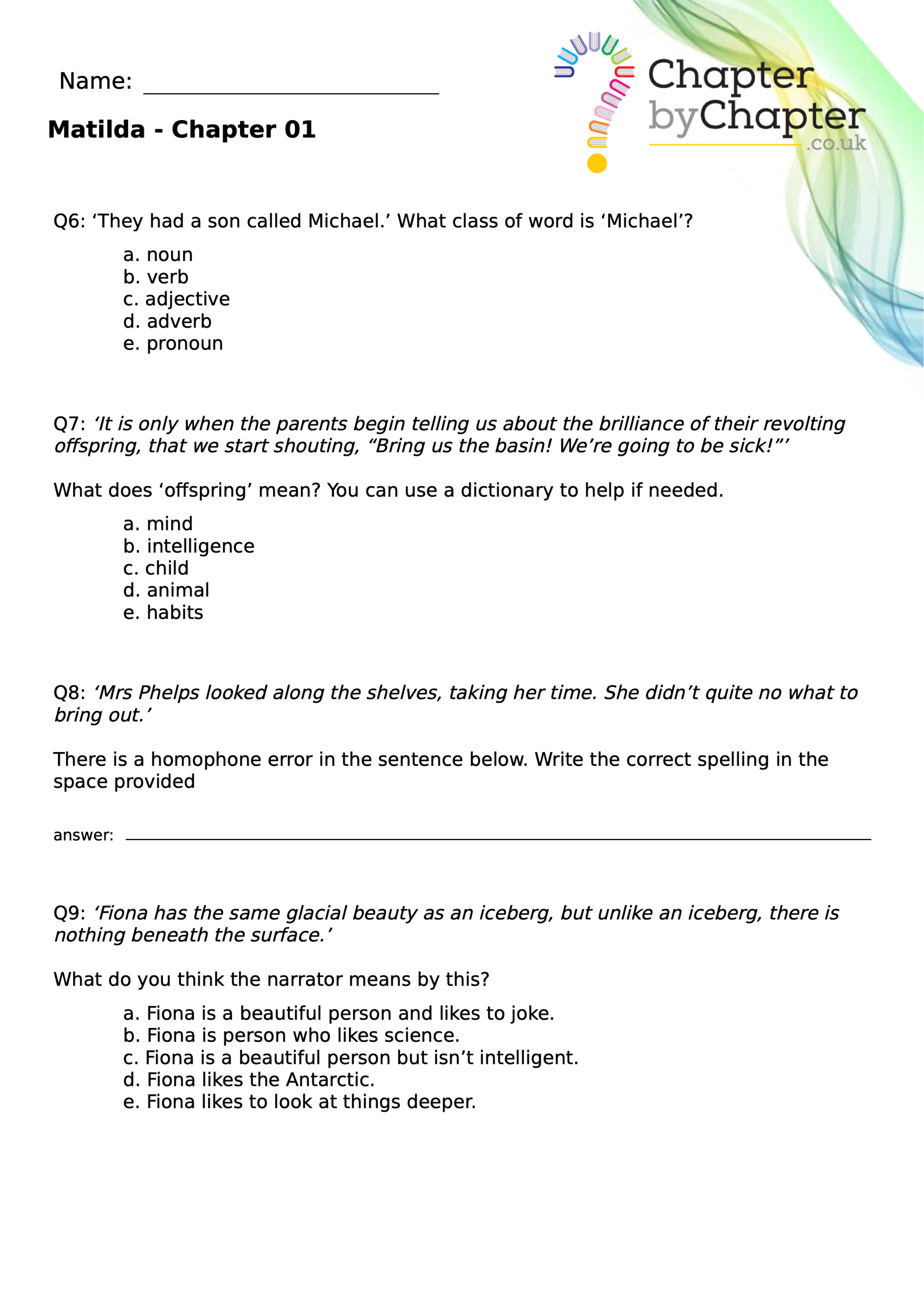
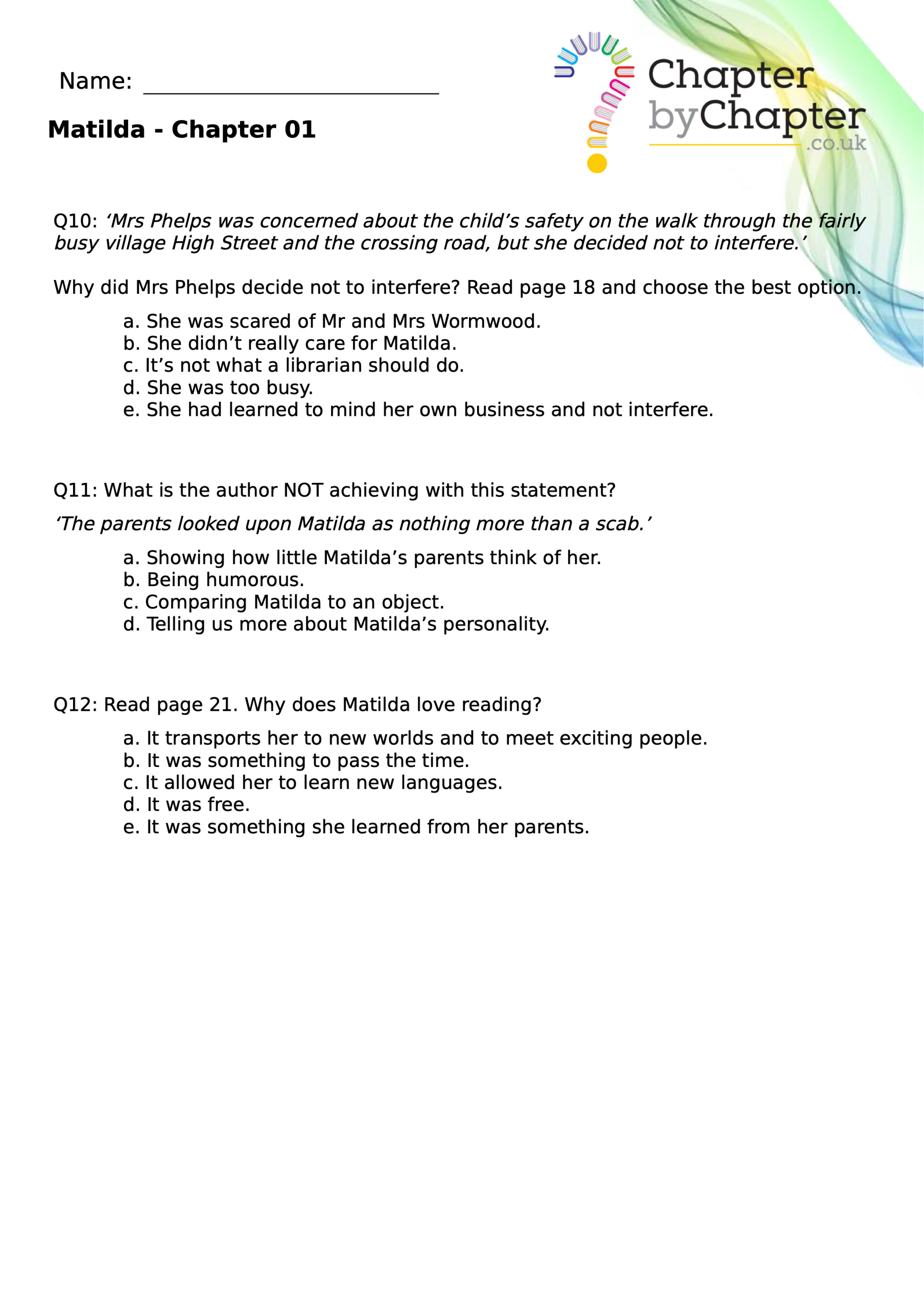
Chapter 1 Questions
The first comprehension set for Chapter 1 of Matilda includes 12 questions that vary in style to cover: retrieval questions, SPAG, inference and more.
Summary
Chapter 1 introduces Matilda Wormwood, a remarkably bright little girl born into a family that has no interest in nurturing her talents. While most parents proudly encourage their children, Matilda’s parents dismiss her intelligence and treat her as an inconvenience. From an early age, she teaches herself to read using newspapers and magazines left around the house, quickly discovering that the world of books offers far more kindness and excitement than anything she receives at home.
Feeling starved of stimulation, Matilda begins visiting the local library, where her love of reading flourishes under the gentle support of the librarian. As she devours book after book, her imagination and understanding of the world expand far beyond her years. Despite the neglect she faces, Matilda’s curiosity, resilience, and sense of fairness begin to shine—quiet hints of the extraordinary girl she is becoming.
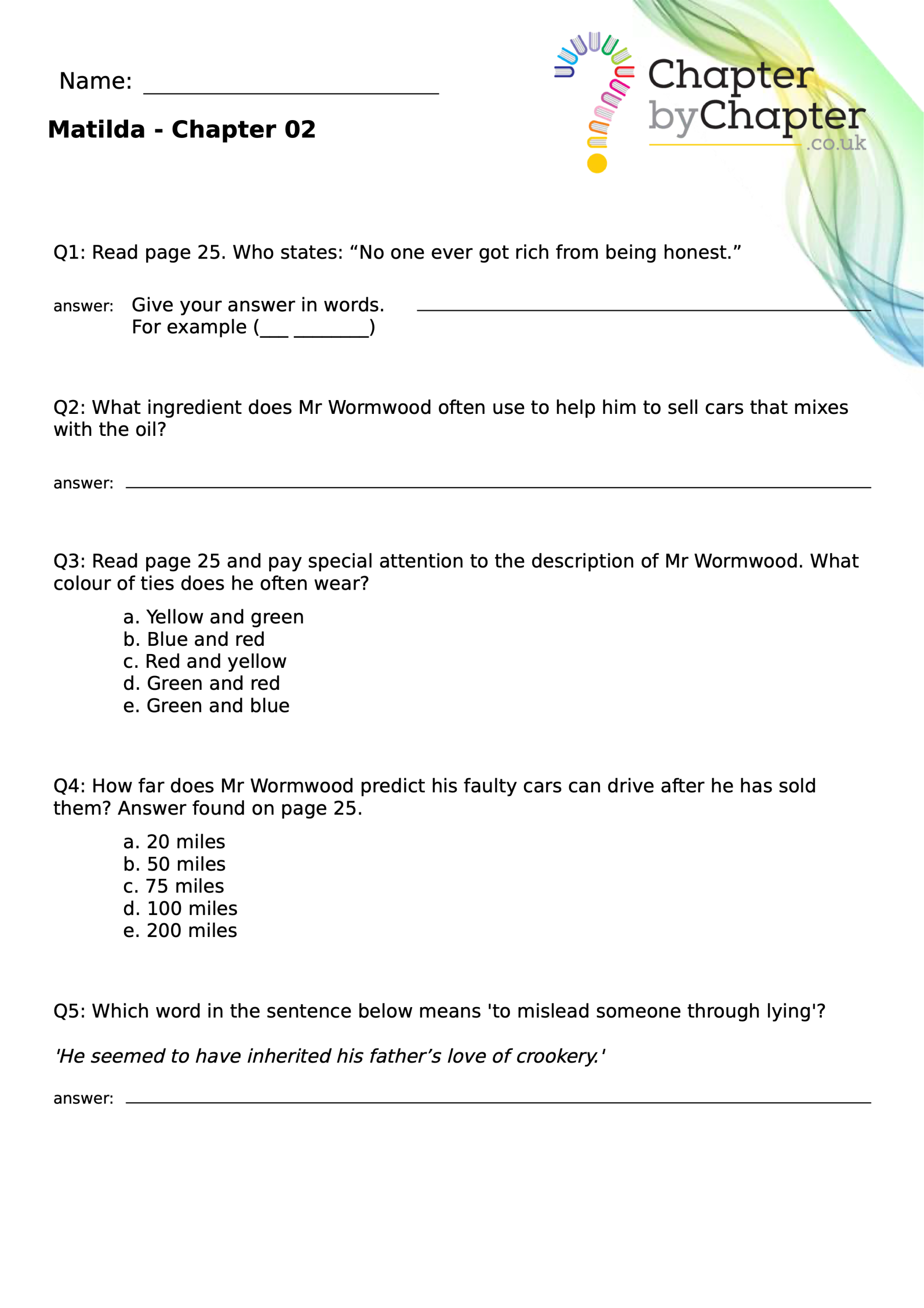
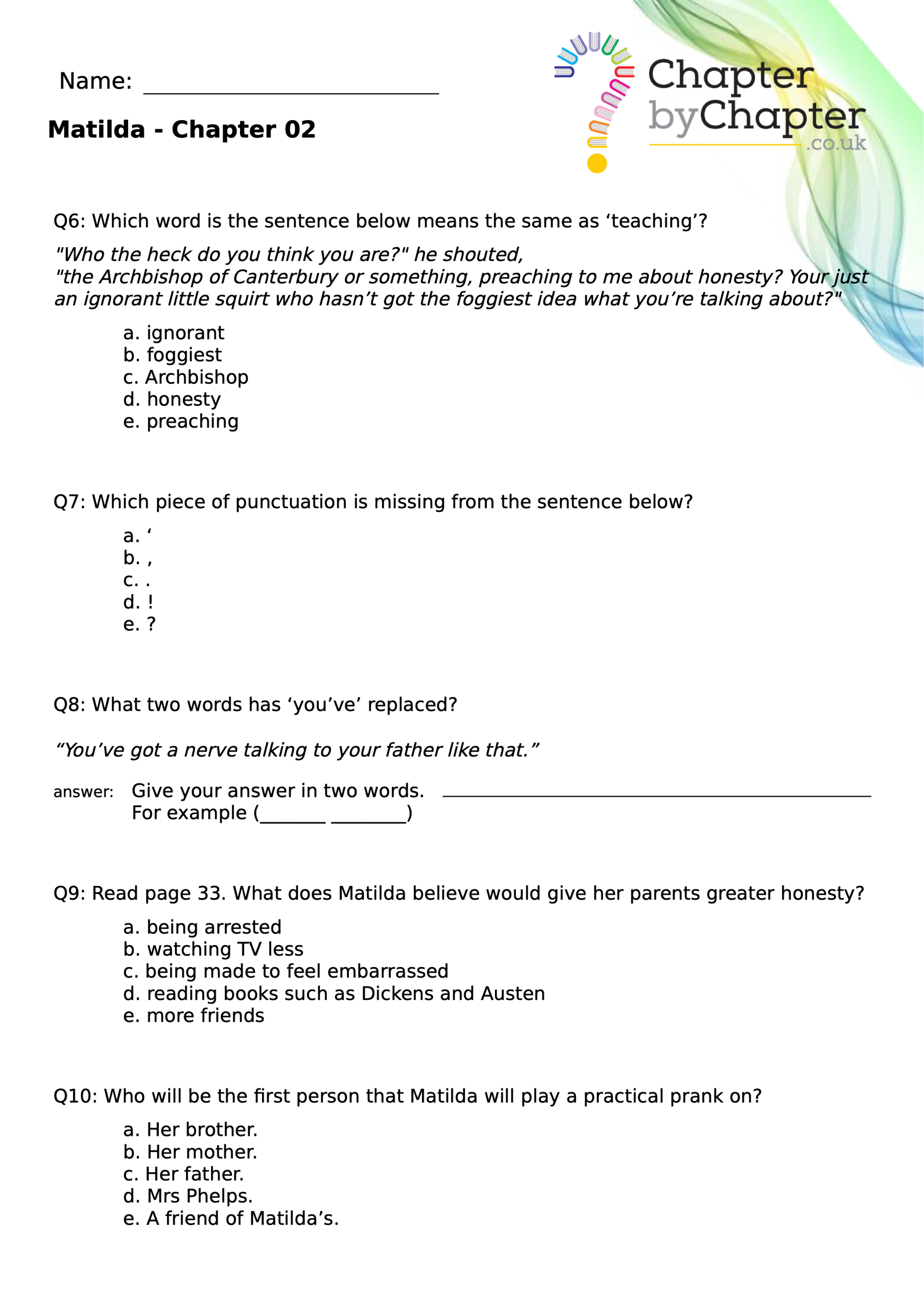
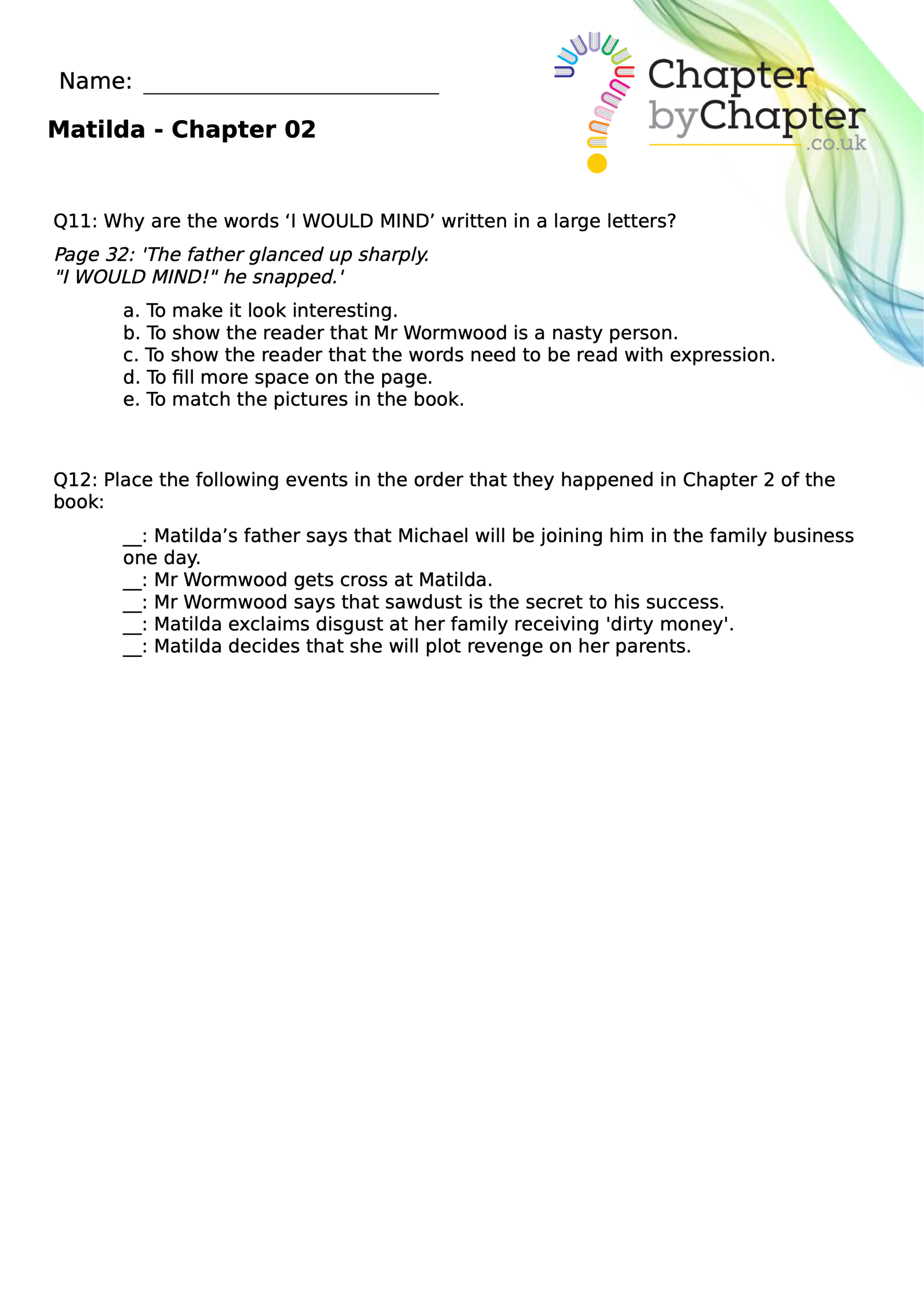
Chapter 2 Questions
Whether you’re planning classwork or homework, this resource is perfect for whole class reading or guided reading sessions, and it covers a range of objectives in the reading and literacy curriculum.
Summary
Chapter 2 highlights the sharp contrast between Matilda’s developing moral awareness and her parents’ careless behaviour. While Mr Wormwood boasts about his dodgy used-car business and proudly predicts that his son Michael will one day join him, Matilda begins to understand just how dishonest her father’s dealings truly are. She is appalled when he describes the tricks he uses—like stuffing sawdust into engines—to cheat his customers, and she cannot hide her disgust at the idea of their family benefiting from such behaviour.
Her father, furious at being challenged by a child, lashes out and dismisses her intelligence, deepening the sense of unfairness Matilda faces at home. This moment marks a turning point for her. Realising that reason and honesty mean nothing to her parents, she quietly decides that she will no longer simply endure their mistreatment. Instead, she begins to contemplate standing up for herself in her own clever, determined way—setting the stage for the inventive retaliations to come.
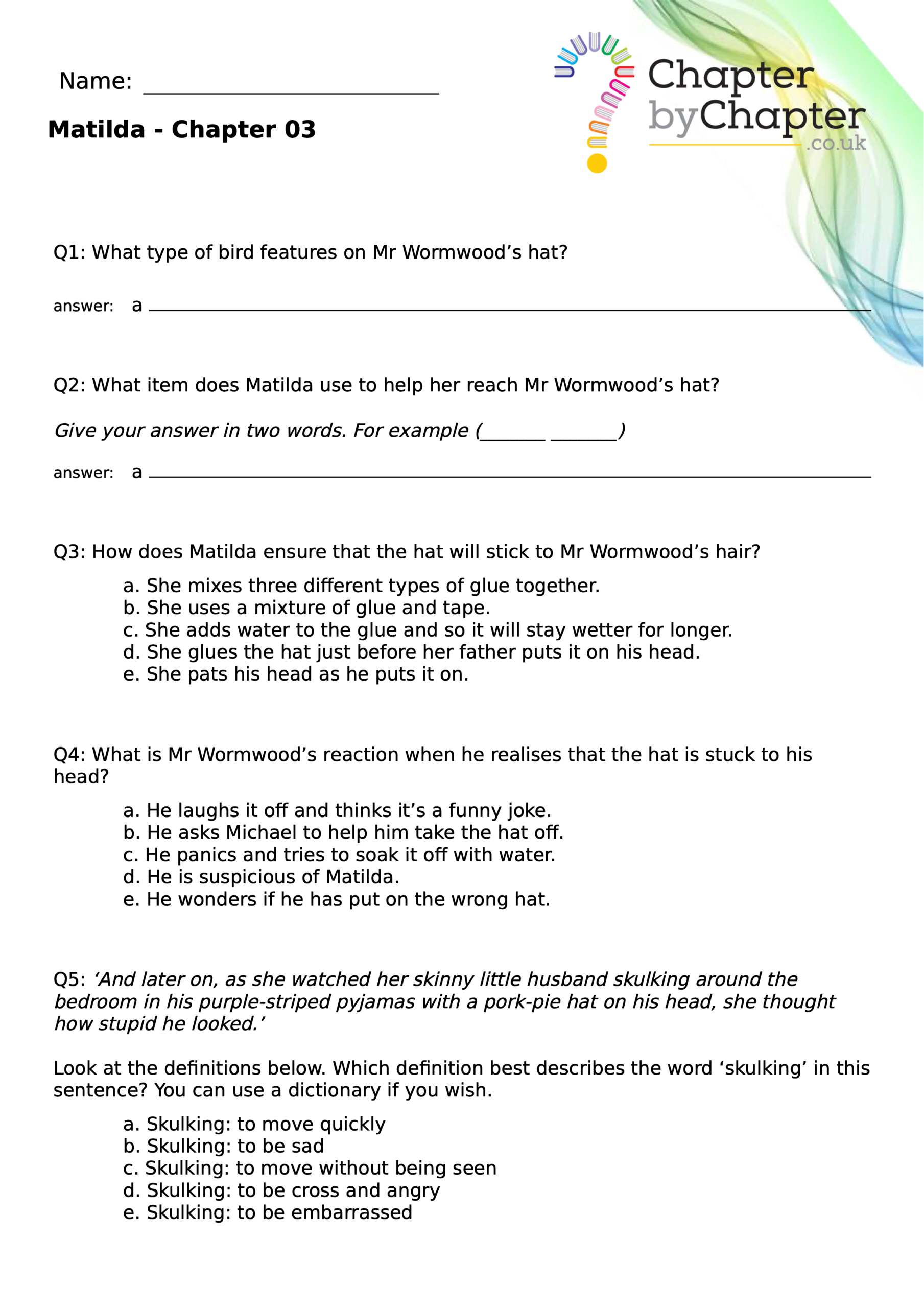
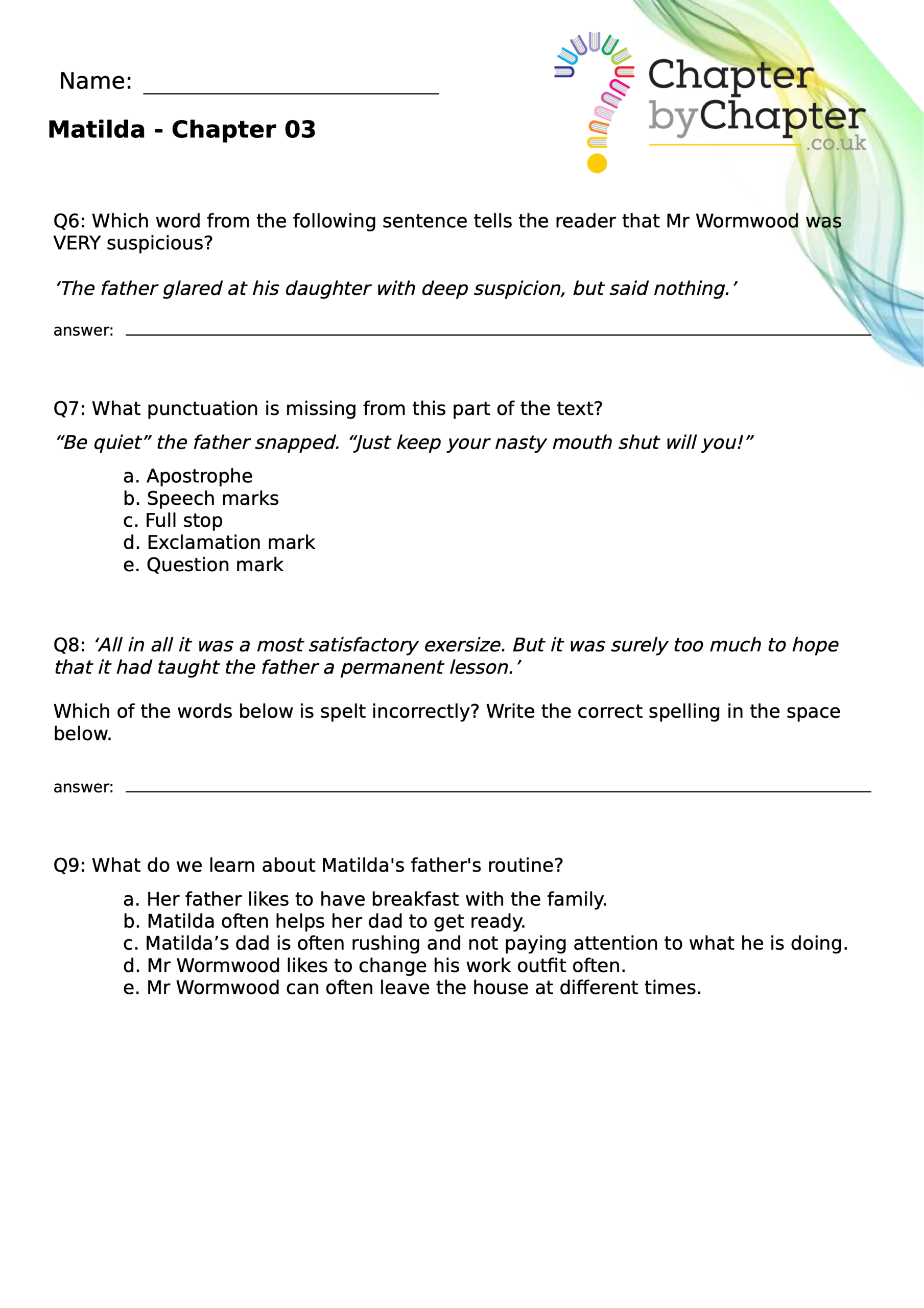
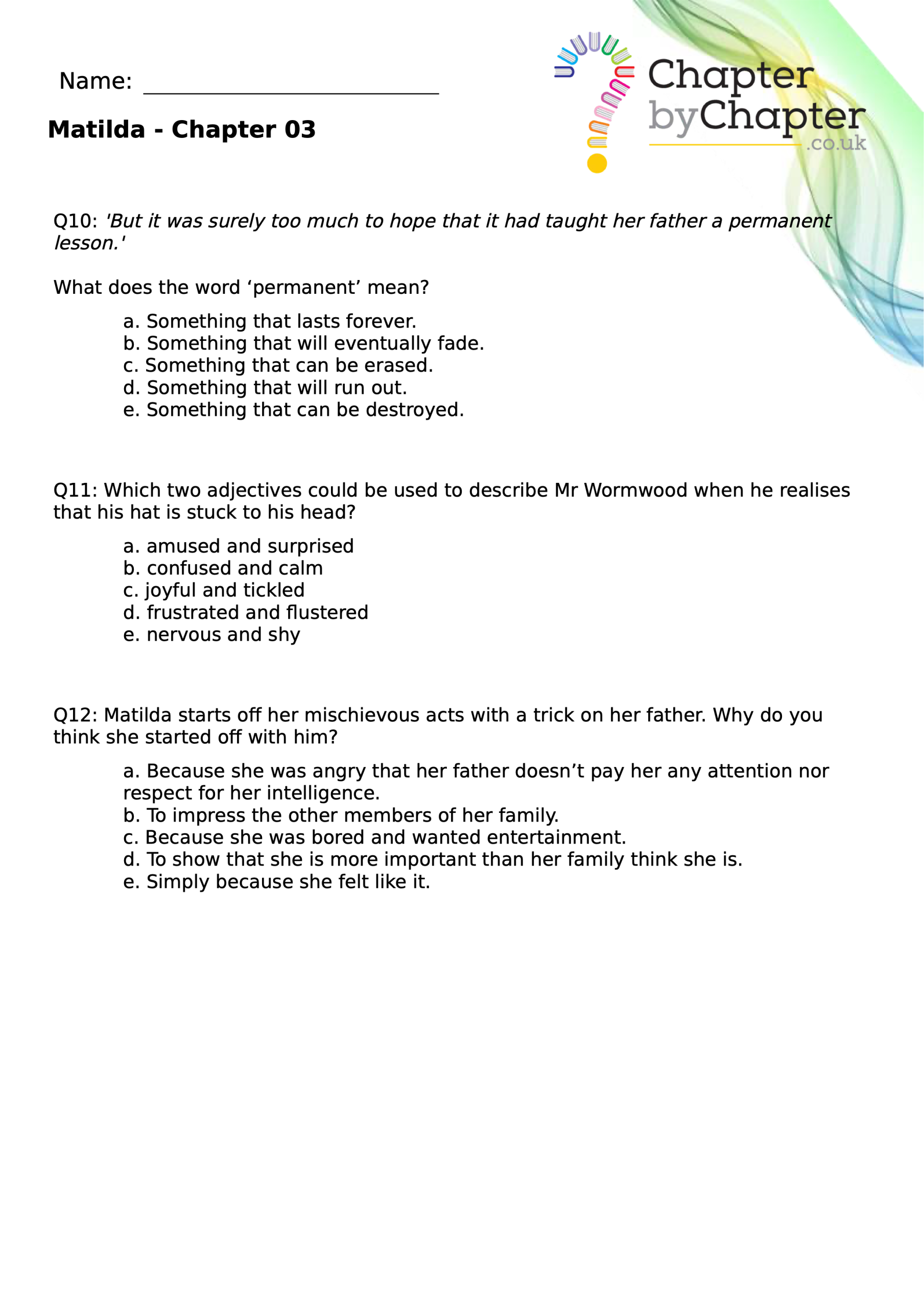
Chapter 3 Questions
With multiple choice and free response questions included for every chapter, this Matilda resource pack is useful for both assessment and class discussion.
Summary
Chapter 3 focuses on Matilda’s first act of clever rebellion against her parents’ constant mistreatment. After her father’s latest bout of shouting and belittling, Matilda decides she can no longer simply tolerate his behaviour. Spotting an opportunity in his predictable morning routine, she secretly applies strong glue to the inside brim of his favourite, flashy hat. Her plan is simple: he’ll put it on without thinking, and the consequences will unfold on their own.
The next morning, everything goes exactly as she anticipated. Mr Wormwood follows his usual rushed habits, slams on his hat without hesitation, and heads out—only to discover later that it is stuck fast to his head. His attempts to remove it lead to embarrassment, frustration, and a ruined hat, all while Matilda calmly observes the fallout. The chapter highlights her intelligence, resourcefulness, and growing determination to stand up for herself in the only ways her parents will notice.
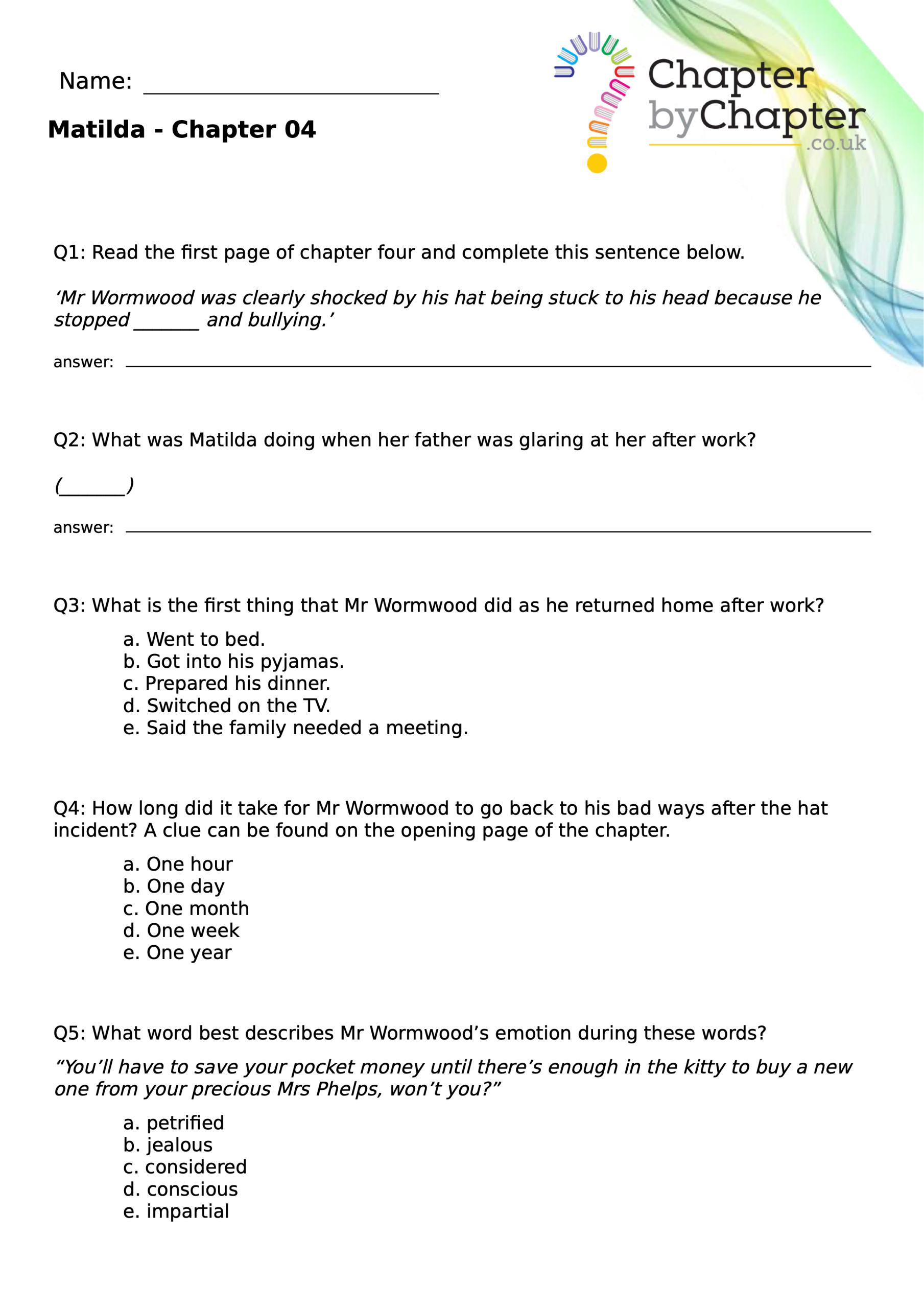
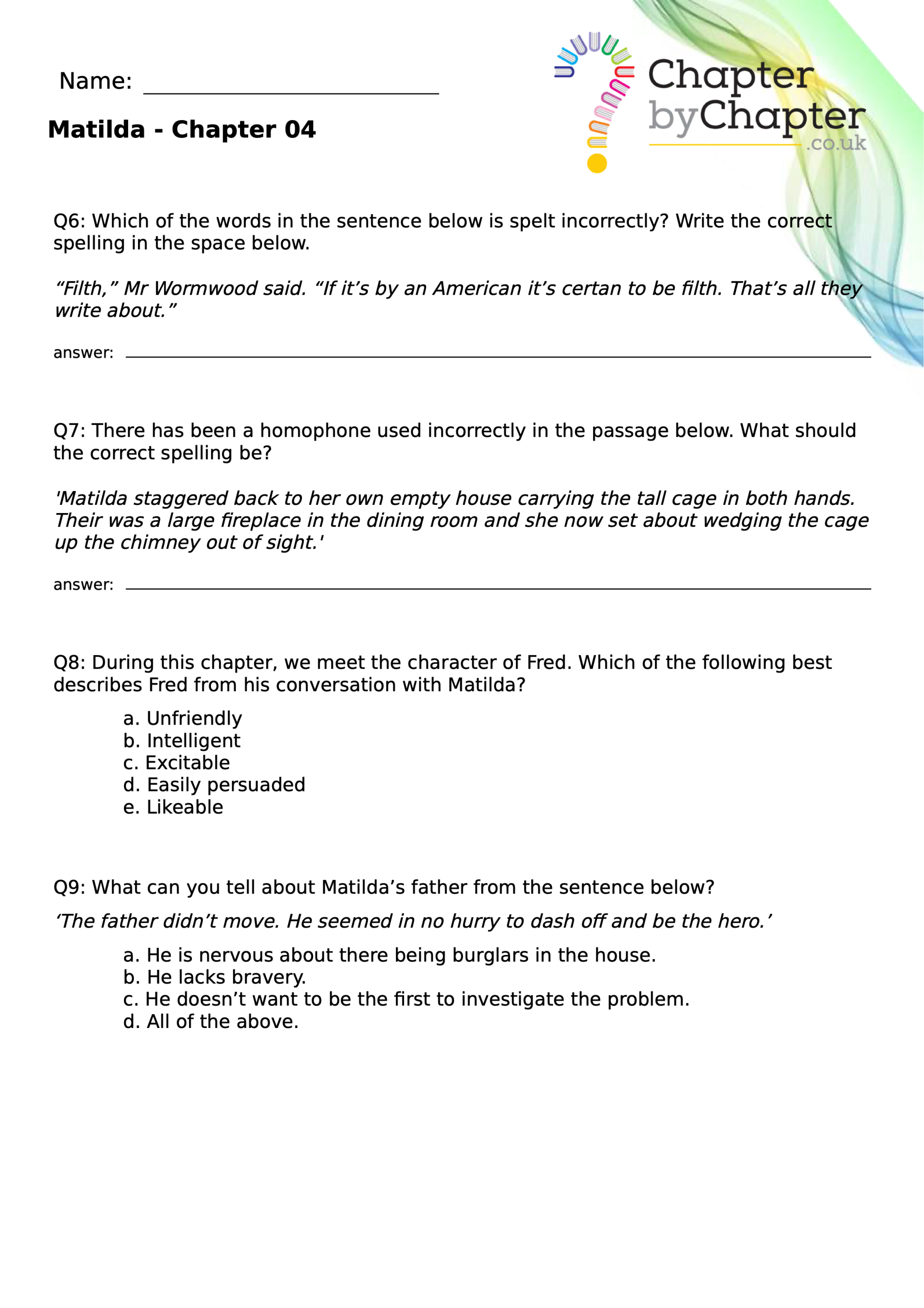
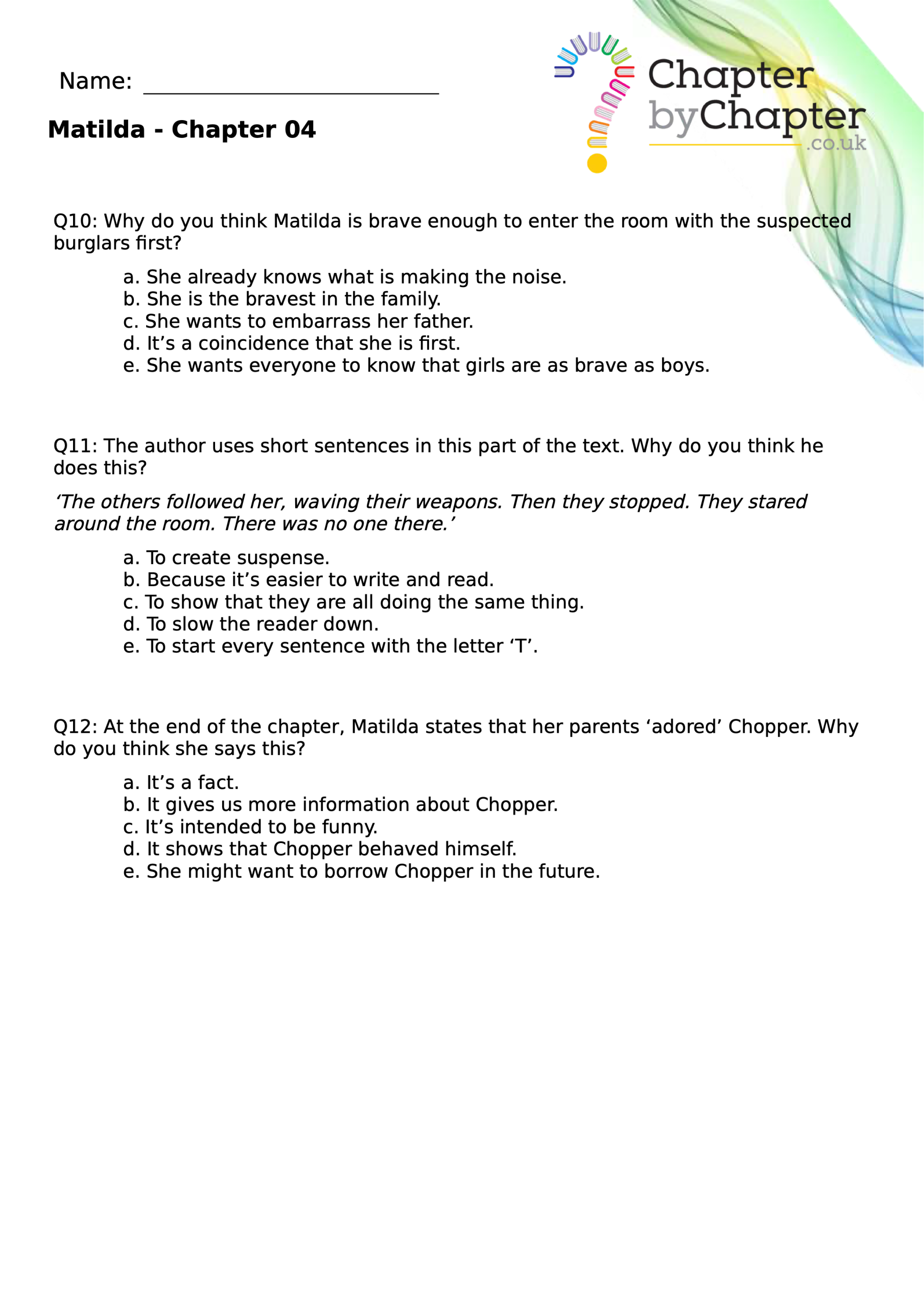
Chapter 4 Questions
Teachers can use our Matilda comprehension resources for guided reading or as part of whole class reading sessions focused on key reading objectives.
Summary
Chapter 4 continues to show just how dismissive and unreasonable Matilda’s parents are, especially her father, who treats her love of reading as something suspicious rather than admirable. When Matilda borrows a library book and settles down to enjoy it, Mr Wormwood storms in and accuses her of wasting time. He insists that watching television is far more worthwhile, mocking her interest in stories and learning. Instead of recognising her intelligence, her parents try to force her into their narrow routine of loud TV and shallow entertainment.
This unfair treatment fuels Matilda’s growing sense of injustice. After enduring yet another outburst—this time sparked simply because she chooses a book over the television—she realises that reasoning with her parents will never work. Their behaviour convinces her that standing up for herself means being inventive and bold. By the end of the chapter, Matilda is more determined than ever to use her quick thinking and creativity to teach her parents a lesson they won’t forget.
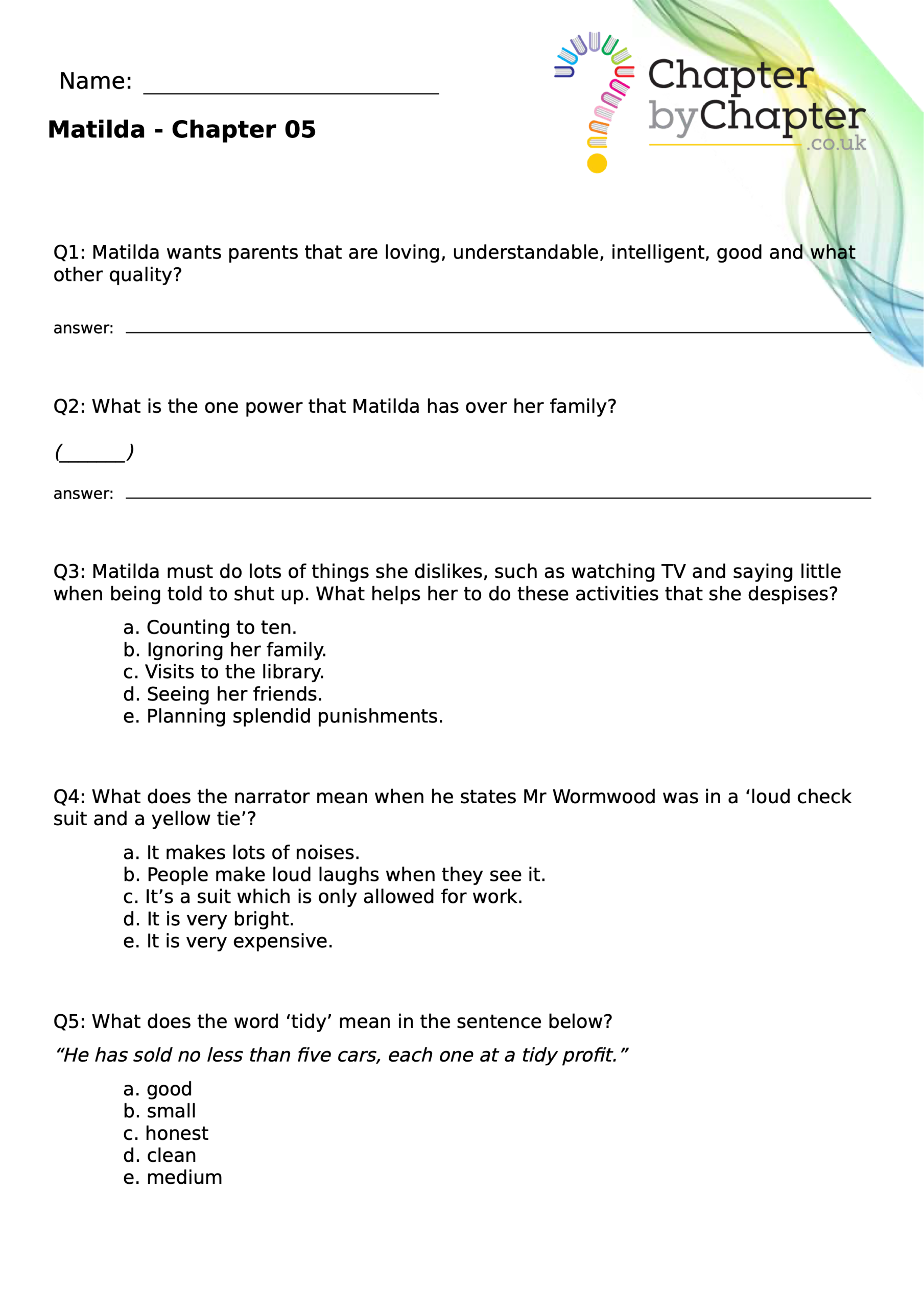
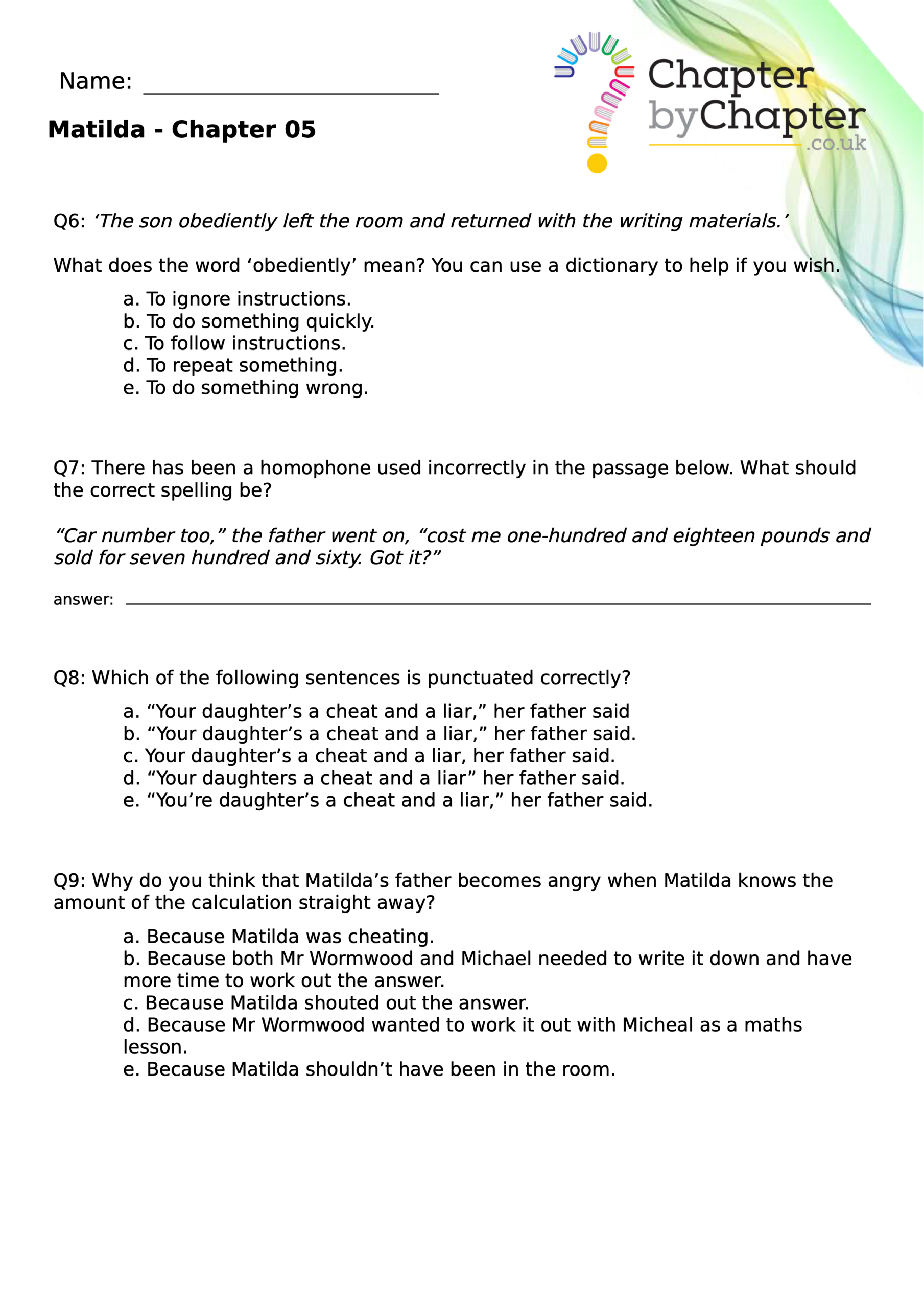
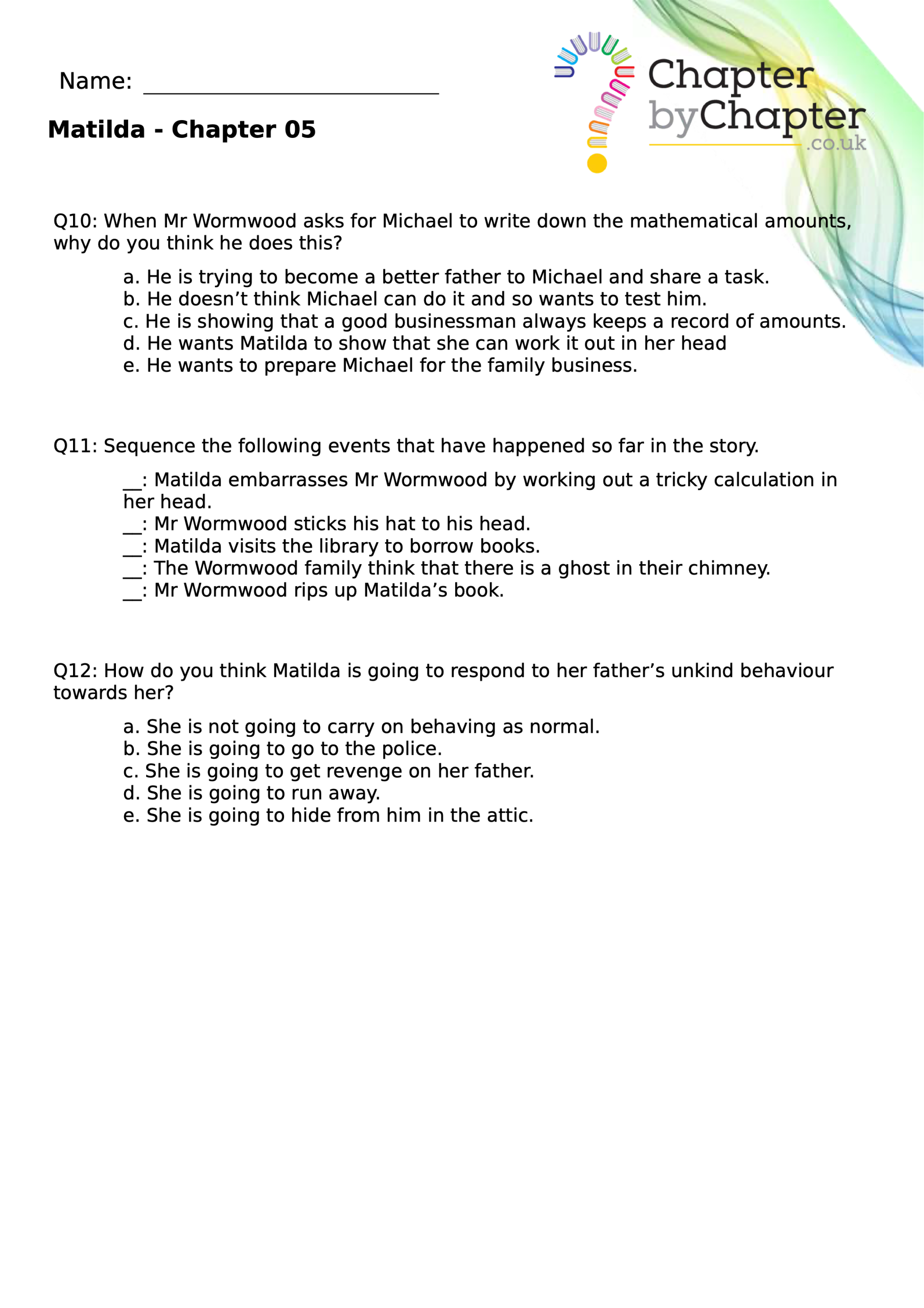
Chapter 5 Questions
The resource is structured around questions for each chapter in the book, making it easy to track progress as students move through the book.
Summary
Chapter 5 shifts the focus to Matilda’s mother, who is every bit as dismissive as her father but in a different way. Mrs Wormwood is obsessed with looking glamorous, spending long hours at the beauty salon and boasting about treatments, lotions, and makeovers. She believes appearance is far more important than education, proudly telling Matilda that brains don’t matter nearly as much as looking attractive. Her shallow priorities highlight the huge gap between Matilda’s thoughtful, curious nature and the values of the adults around her.
During one of her mother’s self-satisfied speeches, Matilda quietly questions this worldview, pointing out—politely but pointedly—that intelligence and learning can be just as valuable as appearance. Instead of listening, Mrs Wormwood becomes irritated and dismisses Matilda’s ideas, insisting she knows better. This encounter reinforces the loneliness Matilda feels in her own home, but it also strengthens her resolve. As she realises her parents will never understand her, her confidence in relying on her own judgment and abilities begins to grow.
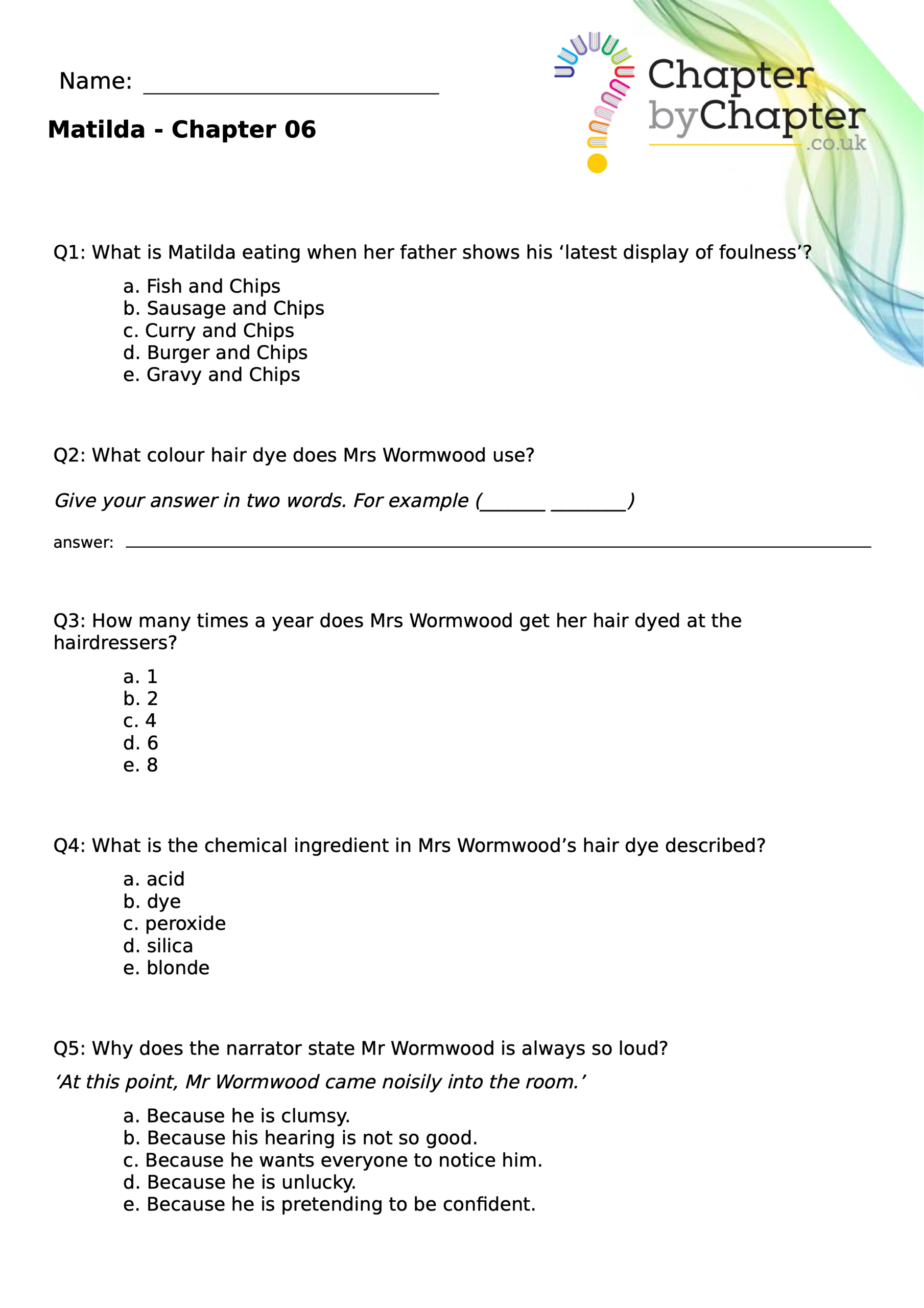
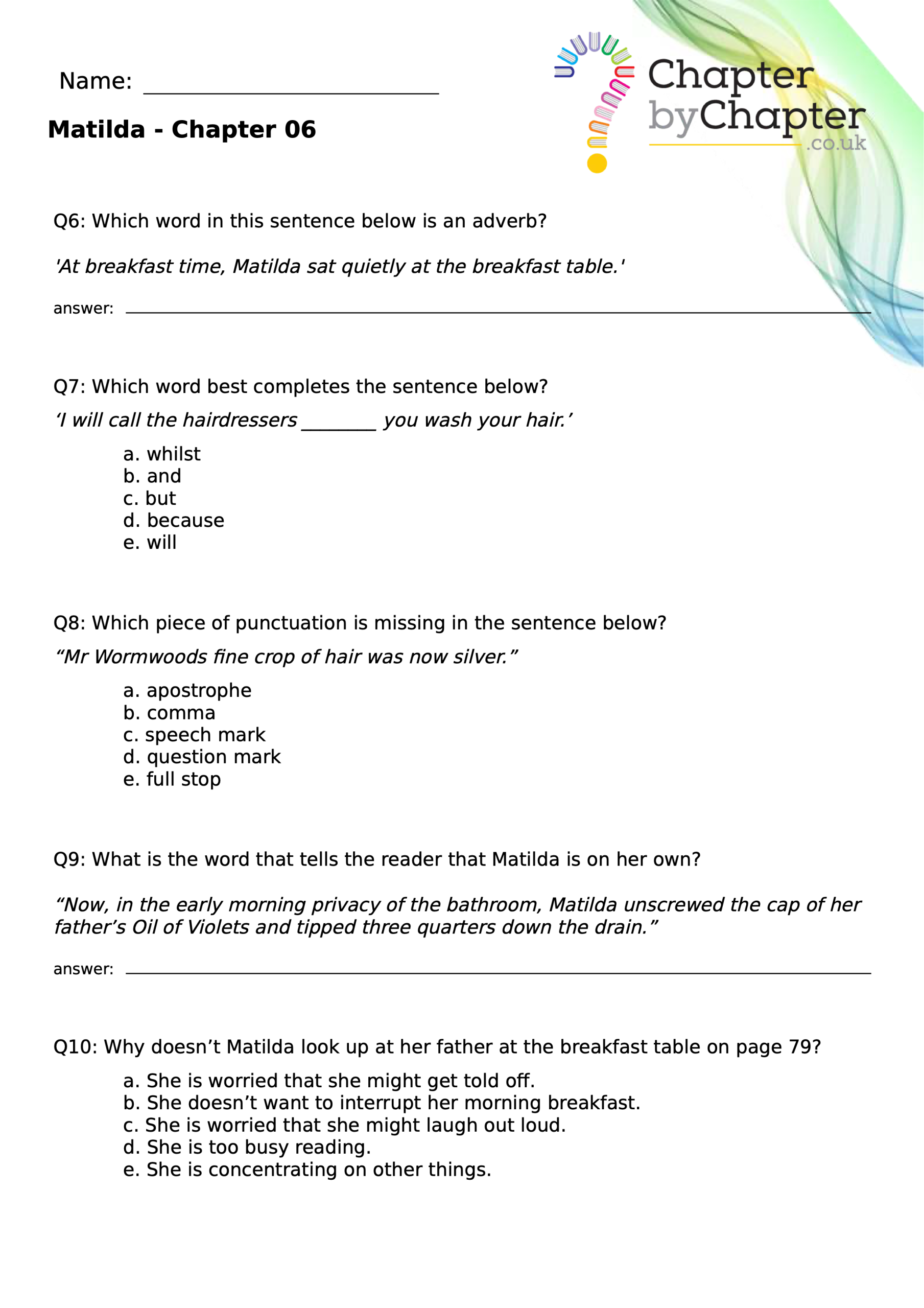
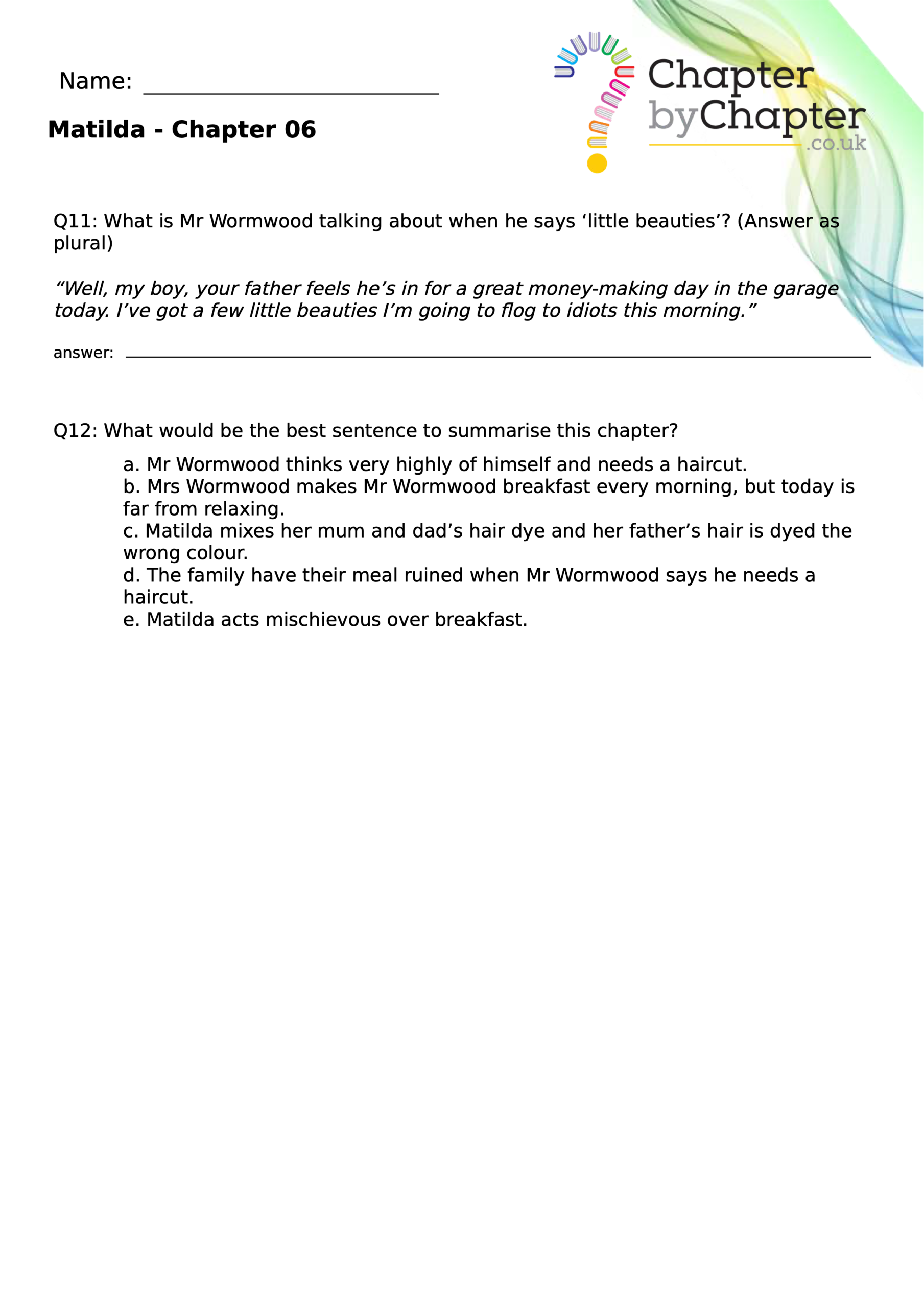
Chapter 6 Questions
Pupils can practise grammar, punctuation, and spelling in context with our comprehension pack for Matilda from questions 5-8, tied directly to each chapter.
Summary
Chapter 6 explores how deeply Matilda relies on books as a source of comfort and escape. Surrounded by parents who neither notice nor value her abilities, she turns to stories to understand the world beyond her home. Through the characters she meets in these books, Matilda learns about kindness, bravery, and possibilities that feel very different from the neglect she experiences daily. Reading becomes her safe space—somewhere she feels seen, supported, and inspired.
This chapter also highlights how Matilda’s love of learning shapes her identity. Each book she reads strengthens her confidence and curiosity, giving her a sense of belonging she cannot find with her own family. Although her parents dismiss reading as unimportant, Matilda knows that stories give her knowledge and power. By the end of the chapter, it becomes clear that her passion for reading is not simply a hobby but a vital part of who she is—and something that will help her face the challenges ahead.
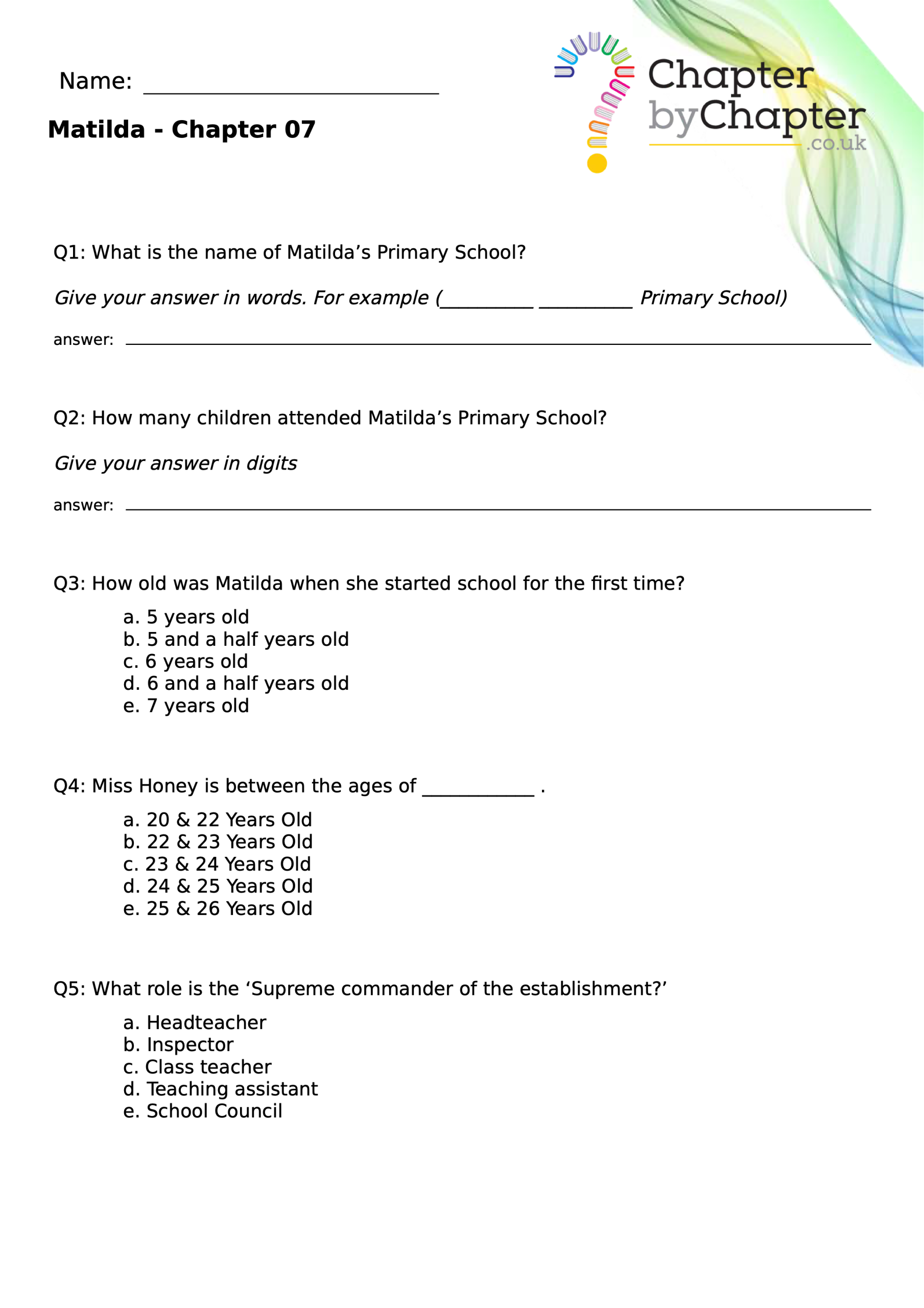
Chapter 7 Questions
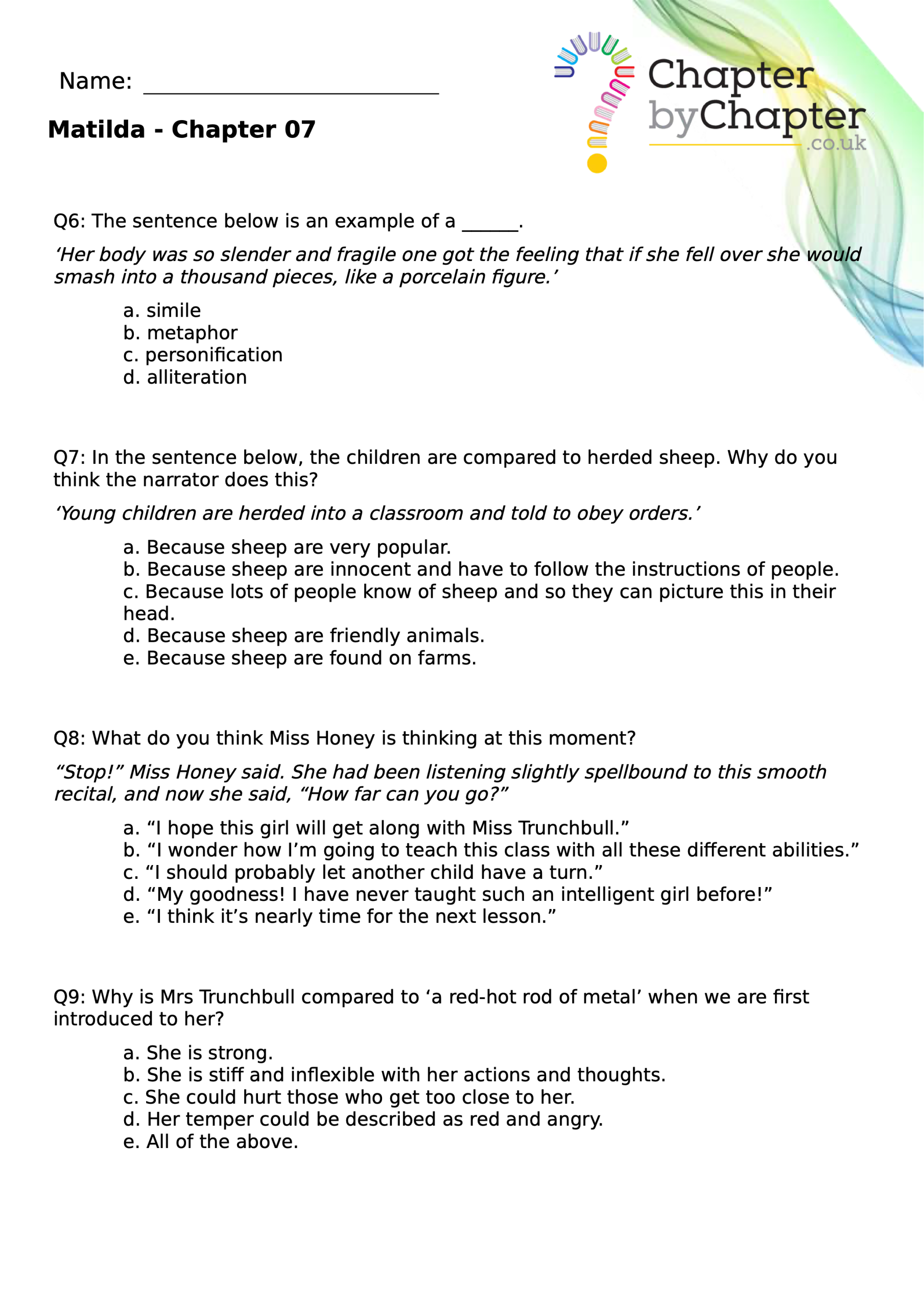
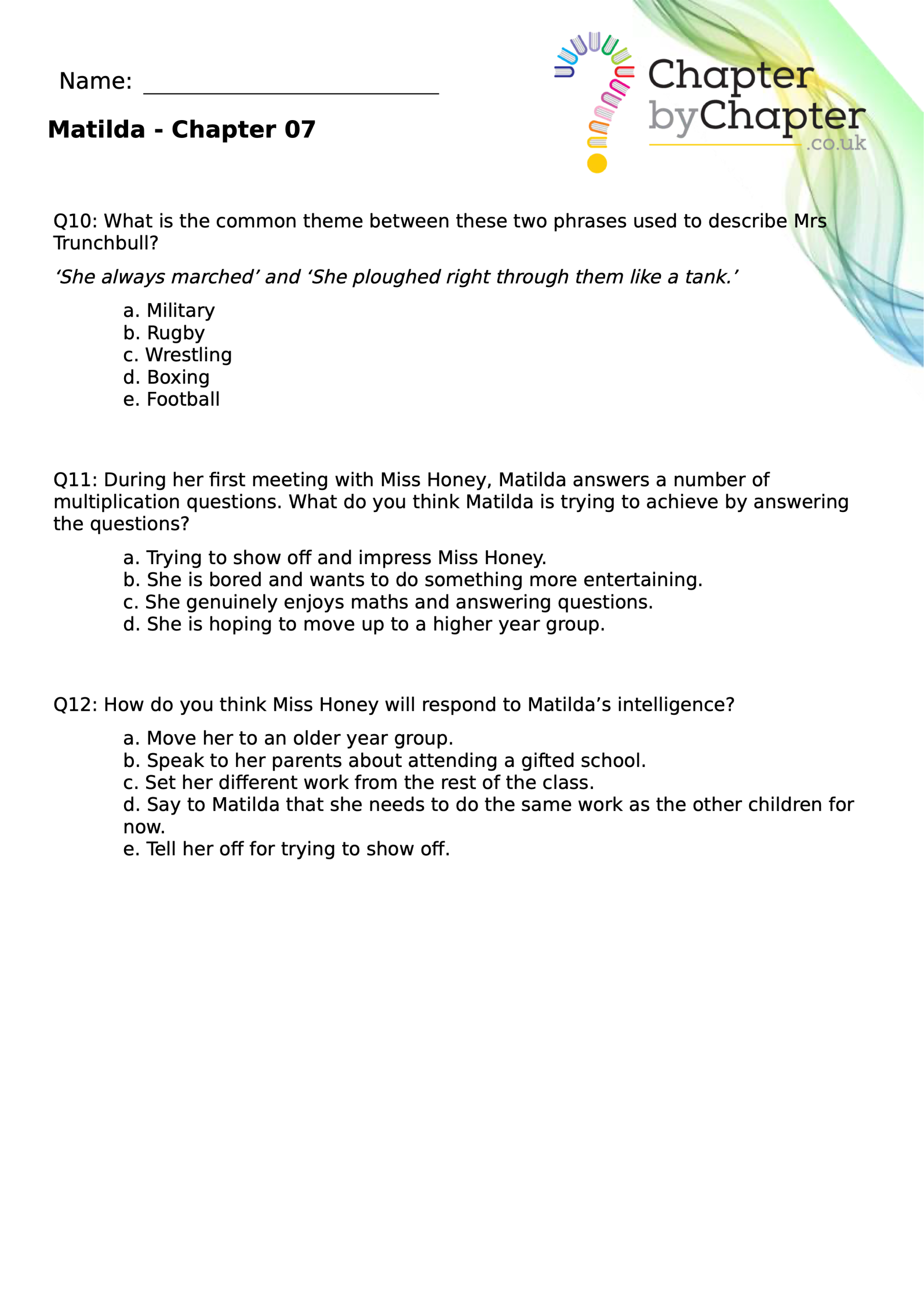
Our literacy resource sets includes a rich mix of retrieval questions, inference questions, summarising questions, and sequencing questions, helping students develop key comprehension skills.
Summary
Chapter 7 marks an important shift in Matilda’s life as she begins school and meets Miss Honey, the first adult to truly recognise her extraordinary abilities. From the moment Miss Honey sees Matilda read, calculate, and think far beyond her age, she is astonished—not only by Matilda’s intelligence, but also by her humility and gentleness. For Matilda, meeting someone who genuinely listens and respects her is a new and uplifting experience, and it gives her a glimpse of what a supportive adult relationship can feel like.
Miss Honey quickly realises that Matilda needs more challenge than the average pupil, and she becomes determined to help her reach her potential. However, she also senses that something is not quite right at home, noticing subtle signs that Matilda’s talents have not been nurtured or encouraged. The warmth between the two characters begins to grow, laying the foundations for a bond that will become central to the story. This chapter highlights how transformative it can be when a child is finally seen for who they truly are.
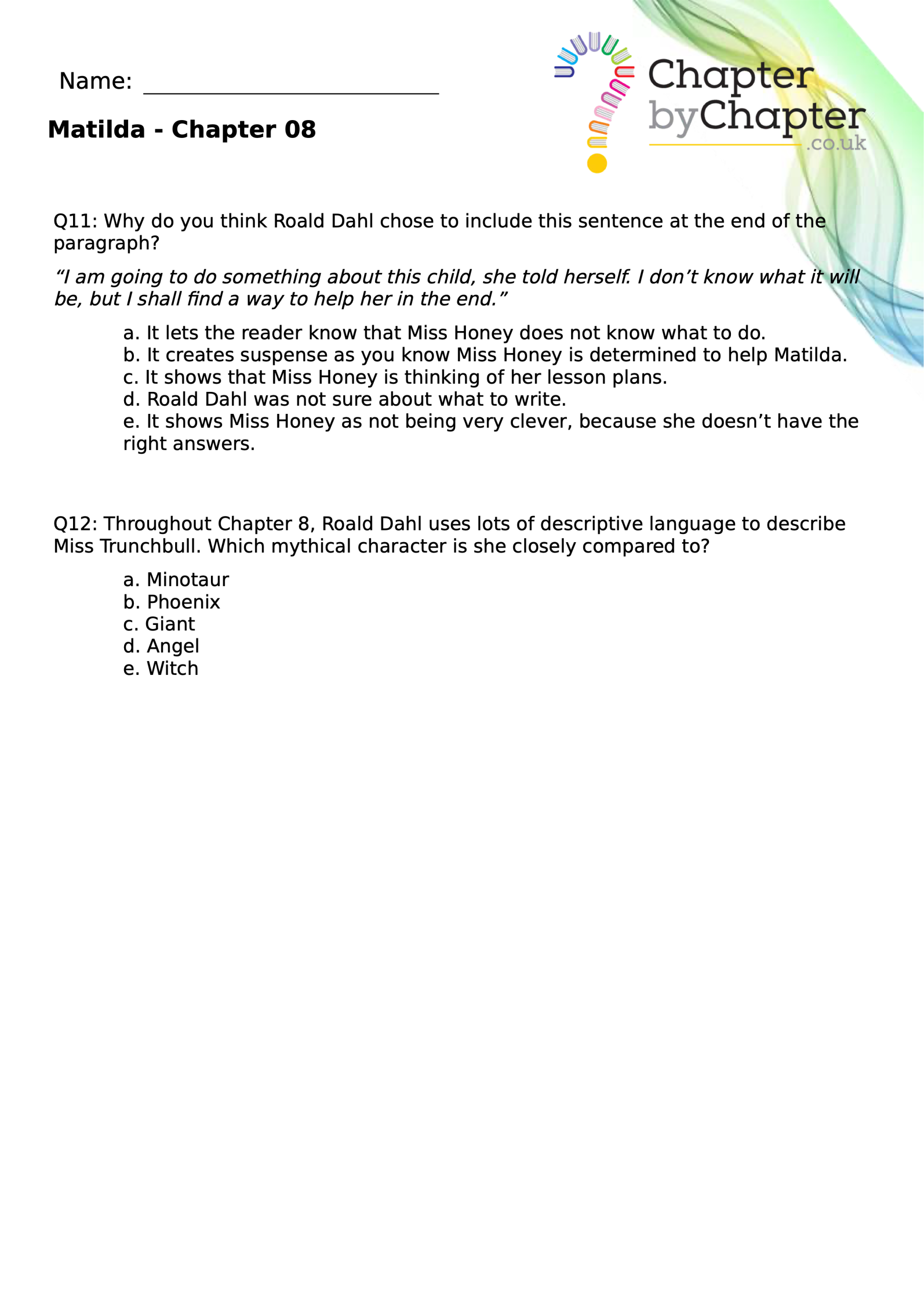
Chapter 8 Questions
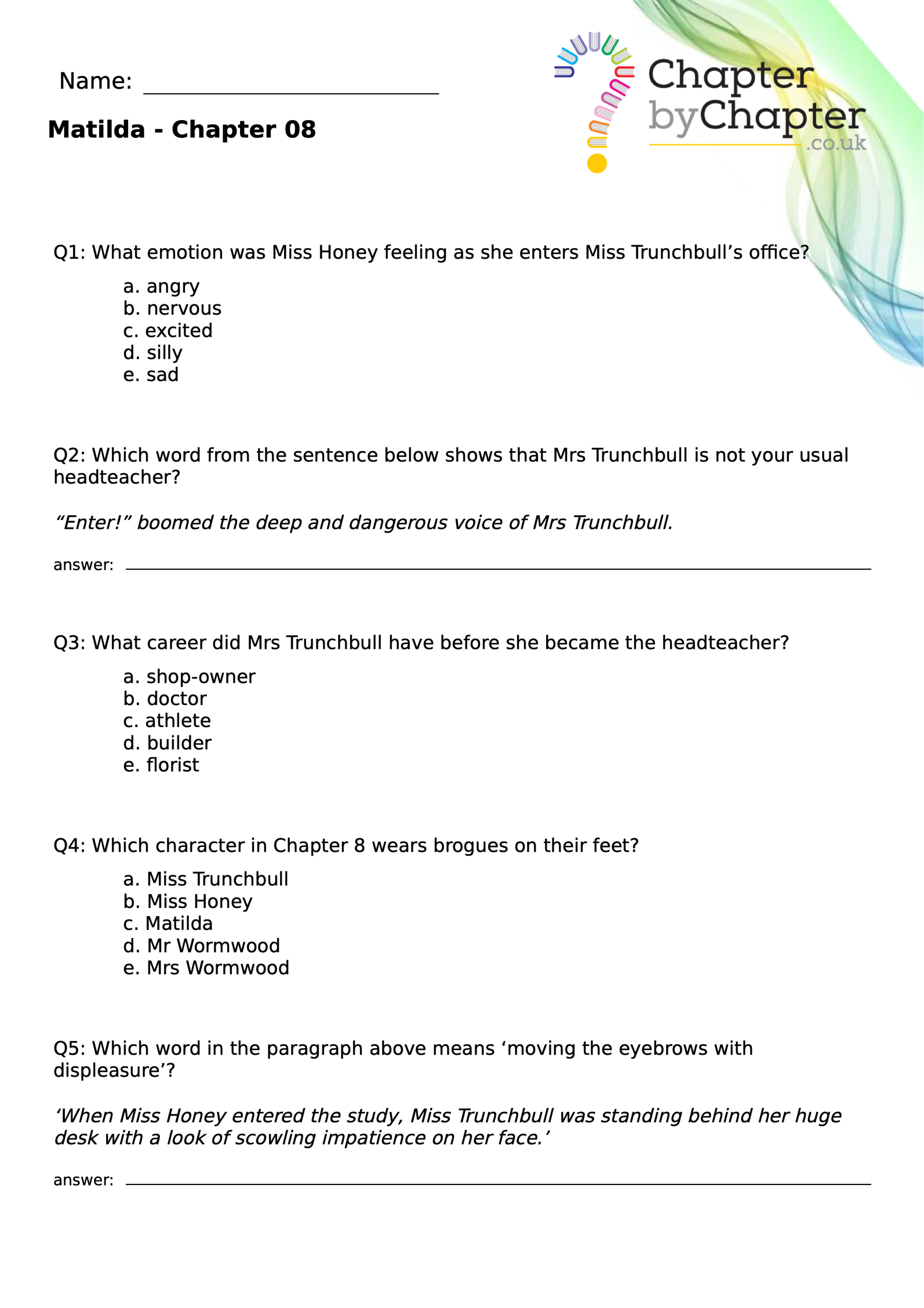
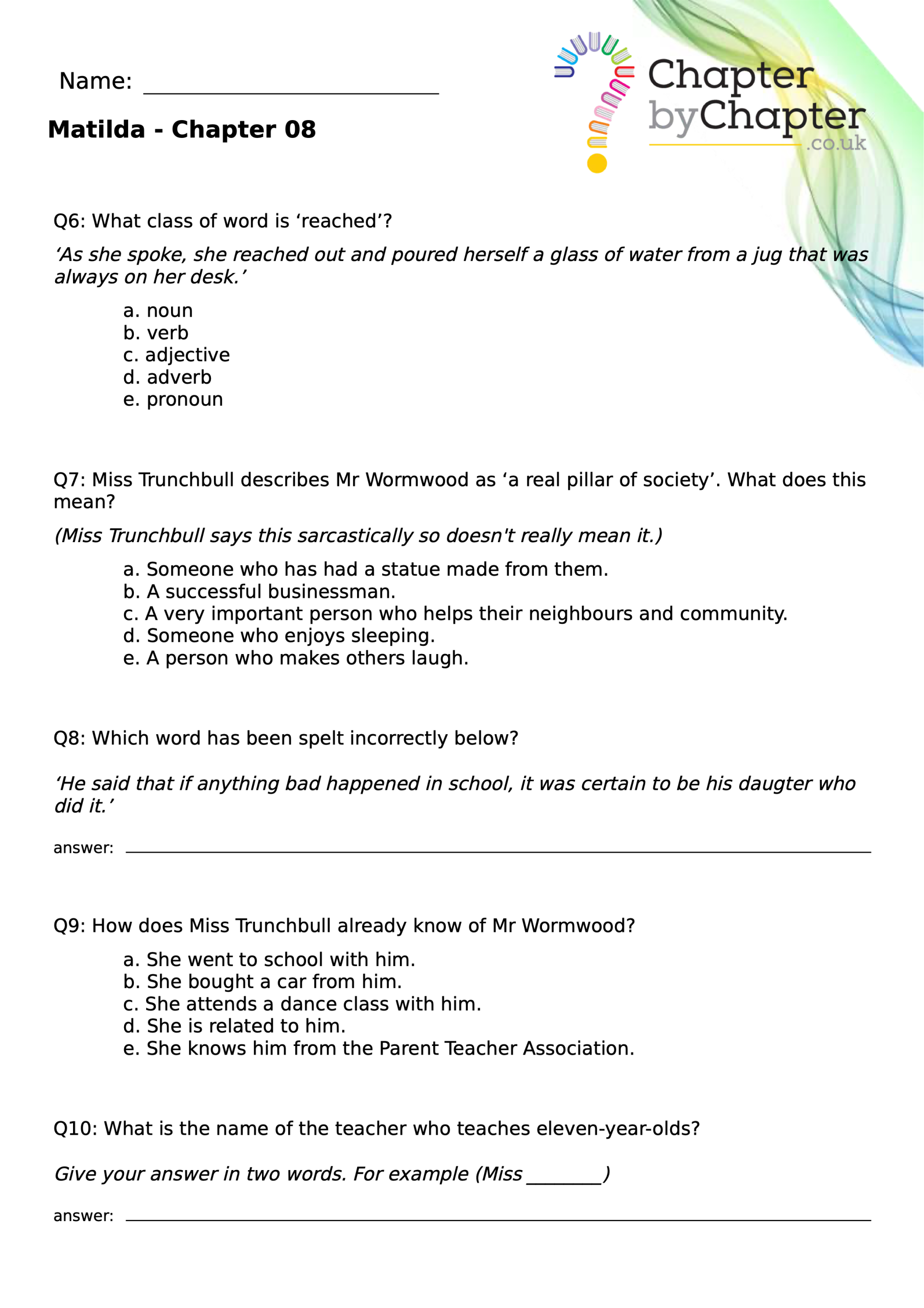
Our LKS2 reading comprehension packs are designed for Year 3 & Year 4 pupils and includes carefully crafted questions for each chapter in the book, making it ideal for building confidence and boosting understanding.
Summary
In Chapter 8, Matilda’s parents are furious when Miss Honey visits their home to praise Matilda’s extraordinary abilities and recommend she be moved up a class. Instead of feeling proud, Mr and Mrs Wormwood dismiss Miss Honey’s concerns, insisting their daughter is “nothing special” and accusing her of interfering. Matilda watches helplessly as her father mocks books, learning, and Miss Honey herself, revealing just how little her family values education or kindness.
After Miss Honey leaves, the atmosphere grows even colder. Matilda realises that no matter how well she behaves or how hard she tries, her parents will never appreciate her brilliance. This moment strengthens her bond with Miss Honey and deepens the contrast between the cruelty of her home life and the gentleness she finds at school. It also sparks a quiet determination in Matilda to rely on her own intelligence and resilience rather than on the adults who should care for her.
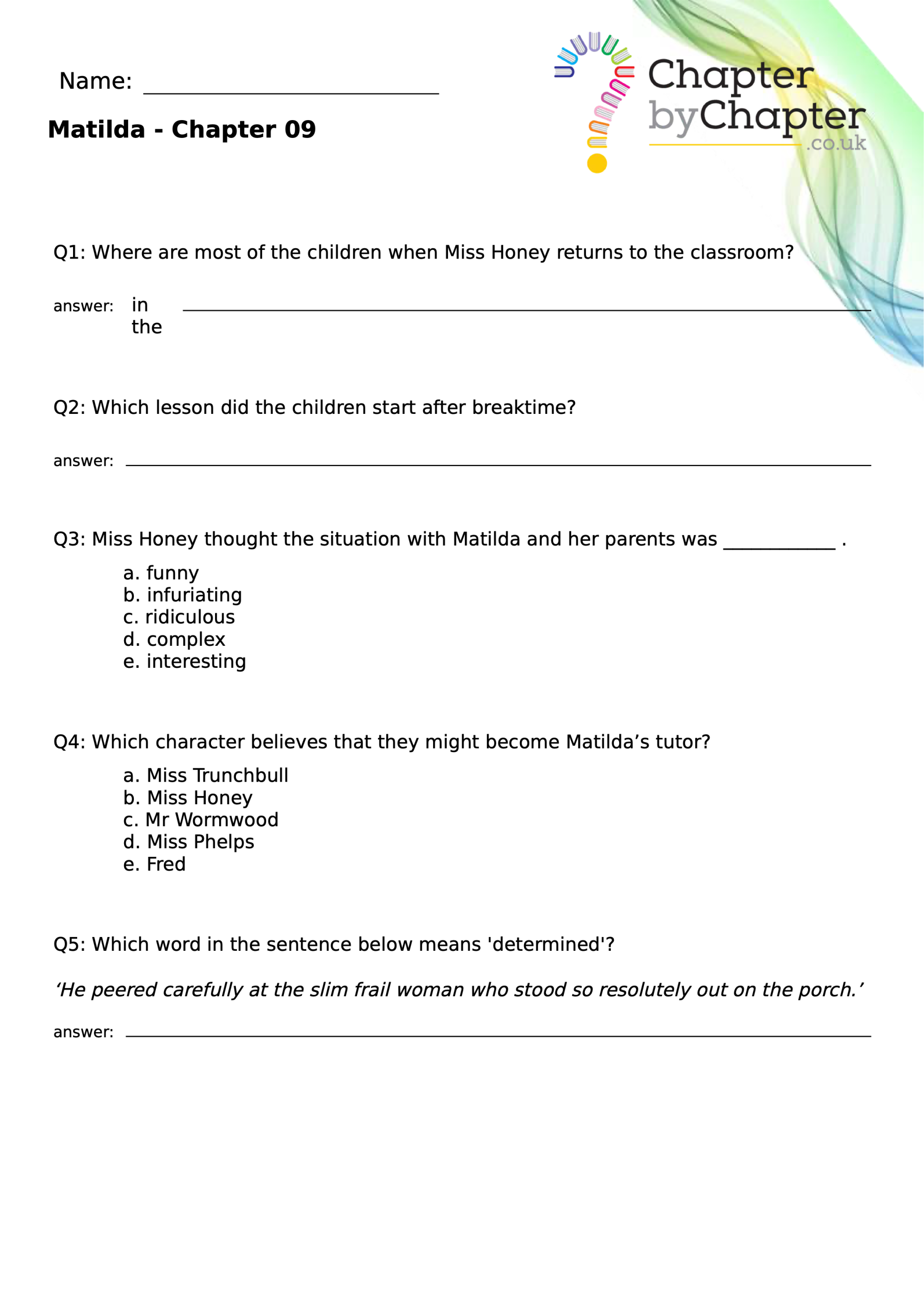
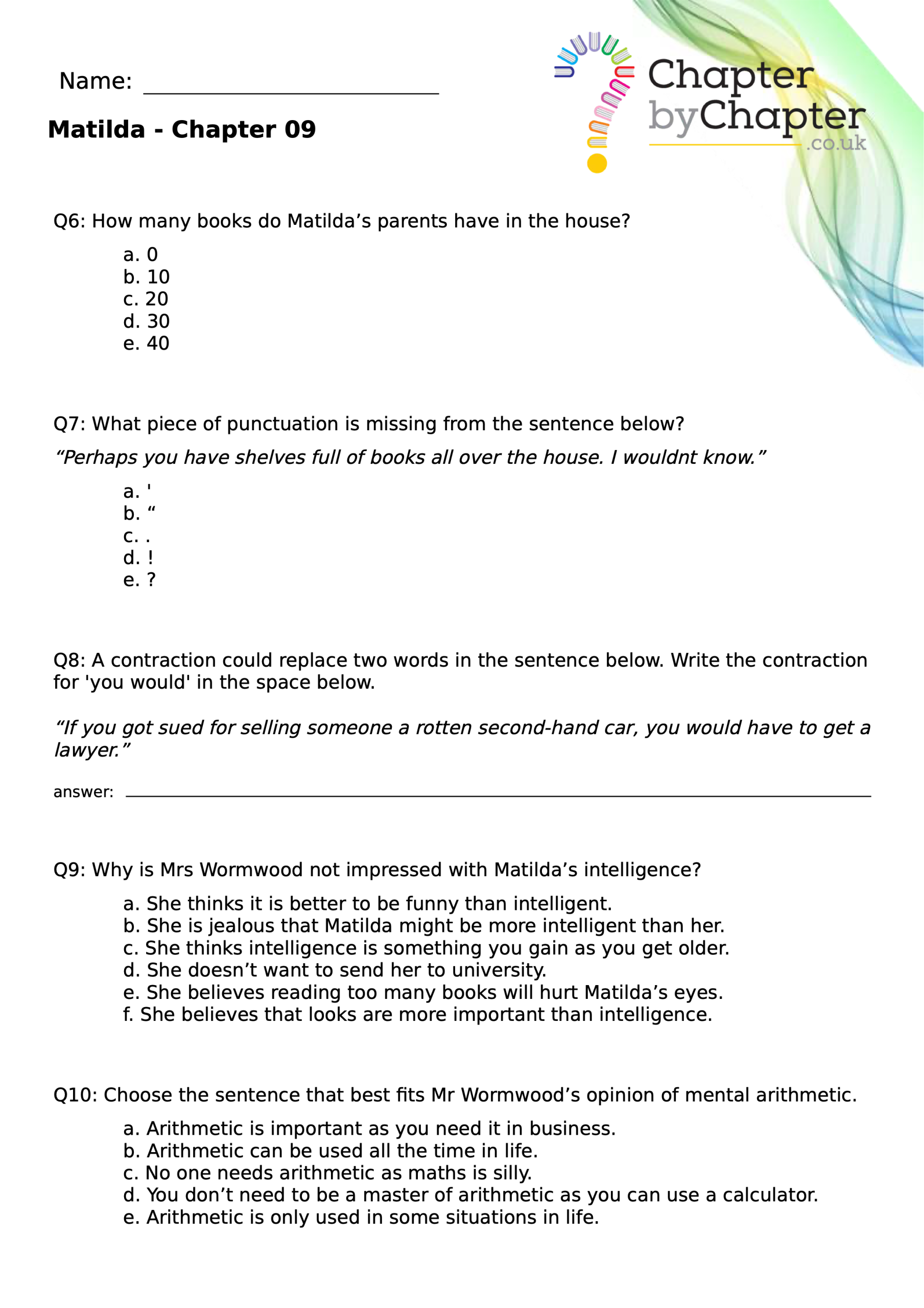
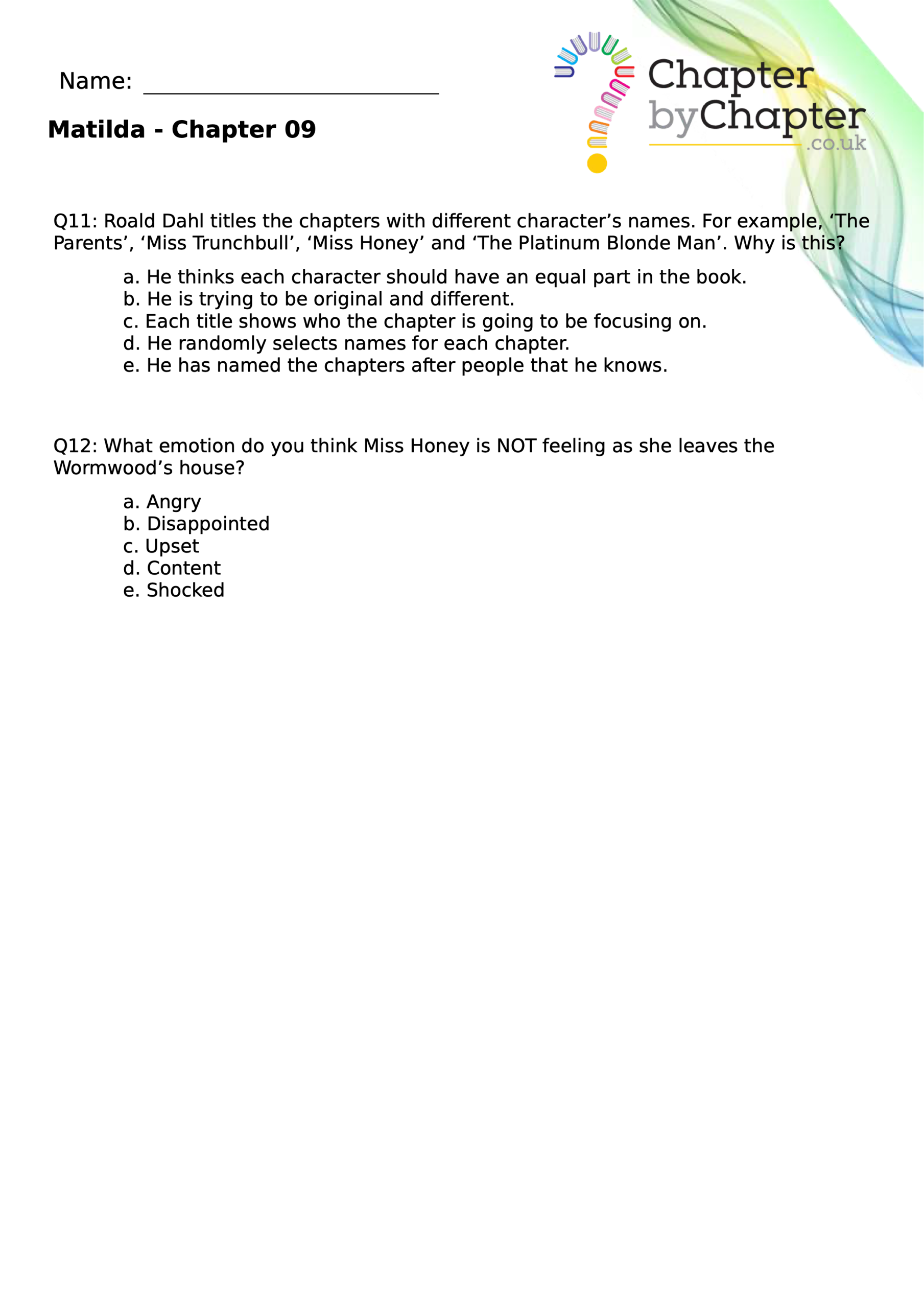
Chapter 9 Questions
The Matilda book pack offers spelling, punctuation, and grammar questions that reinforce key literacy skills while directly linking to the text in each chapter.
Summary
In Chapter 9, Matilda’s frustration with her father reaches a boiling point after he once again belittles her and boasts about his dishonest car-selling tricks. Outraged by his cruelty and the way he cheats innocent customers, Matilda decides that this time she will not simply endure his behaviour. She plans a clever act of revenge, using her sharp mind and creativity to teach him a lesson he will never forget. Her quiet determination shows how resourcefully she copes with the unfairness in her life.
That evening, Matilda sneaks into the bathroom and replaces her father’s hair tonic with her mother’s platinum-blonde hair dye. The next morning, Mr Wormwood is horrified to discover his hair has turned a shocking silvery colour, and he immediately blames everyone but himself. Matilda remains calm and innocent-seeming, allowing her father’s panic to serve as its own punishment. The incident not only highlights the humour of the situation but also reveals Matilda’s growing confidence in standing up to the injustice she faces at home.
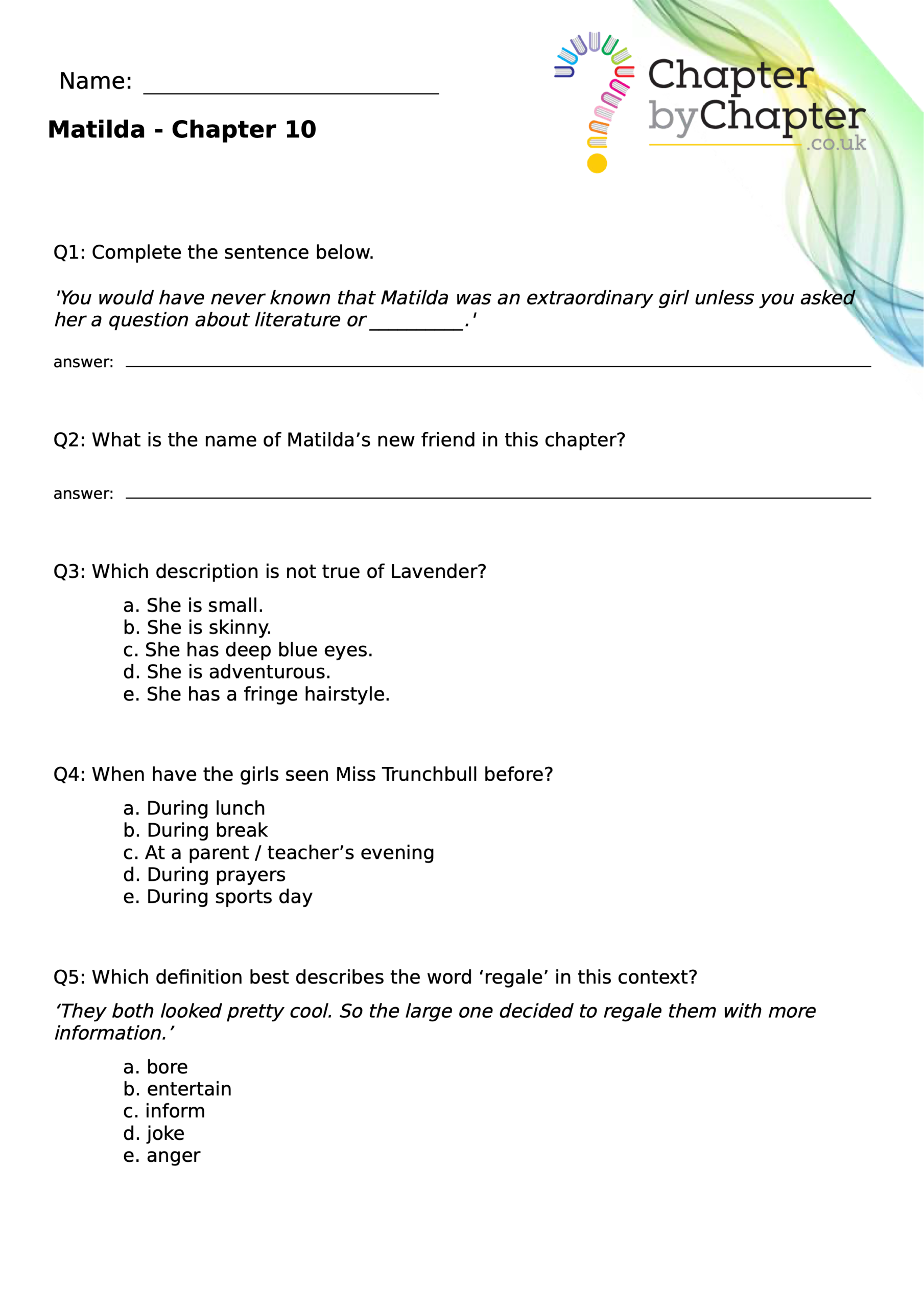
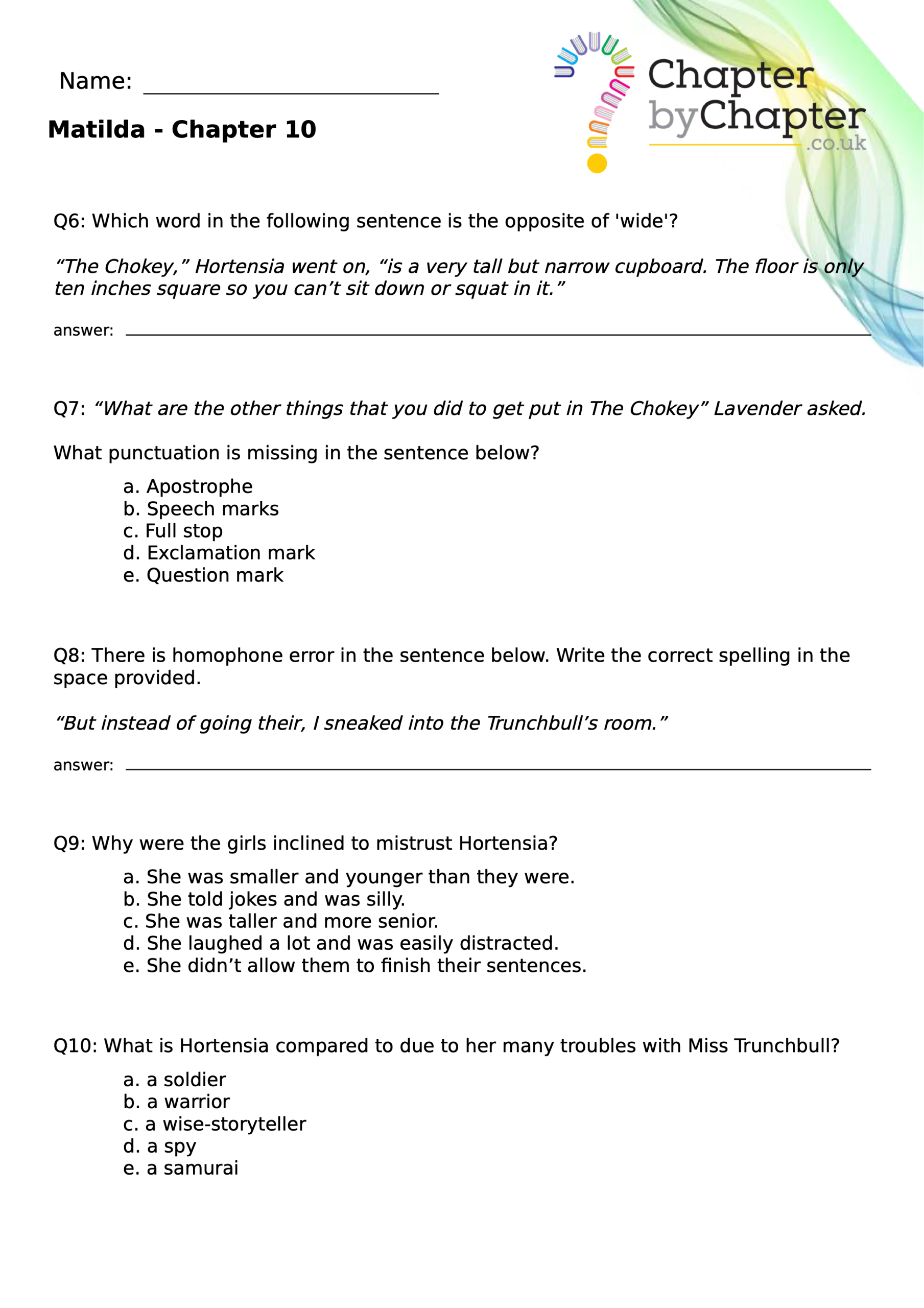
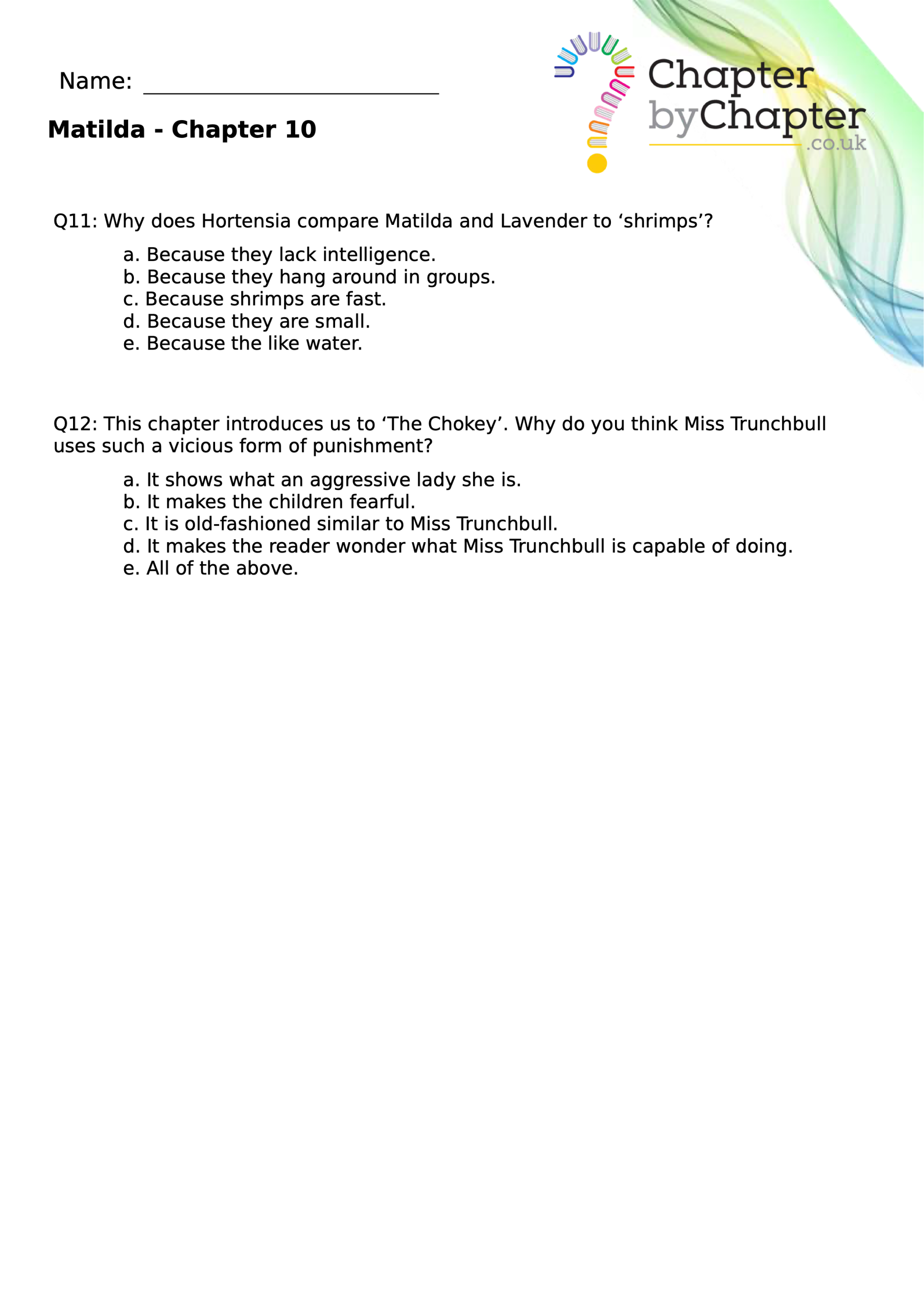
Chapter 10 Questions
Our comprehensions are an ideal, time-saving resource for teachers seeking questions for each chapter in the book, supporting consistent reading comprehension development.
Summary
In Chapter 10, Matilda and her classmates gather nervously for the weekly visit from Miss Trunchbull, who disciplines the school with fear and brute strength. The older girls tell Matilda that they’ve seen the Trunchbull before during school prayers, where she looms over the children like a tyrant, barking orders and glaring at anyone who moves. They also describe her astonishing power, recalling how she competes in the hammer throw at the local sports day and outperforms even the strongest men. These stories deepen Matilda’s curiosity but also her sense of caution about the formidable headmistress she is about to encounter.
As the children wait, they whisper warnings about Miss Trunchbull’s harsh punishments, particularly her infamous habit of throwing pupils across the playground as if they were sports equipment. Matilda listens carefully, realising that the Trunchbull rules through intimidation and enjoys proving her dominance. The chapter builds tension as the class braces for the dramatic entrance of a woman who seems almost superhuman in strength and temper. Through the children’s fearful descriptions, Matilda begins to understand why the entire school trembles in the Trunchbull’s presence.
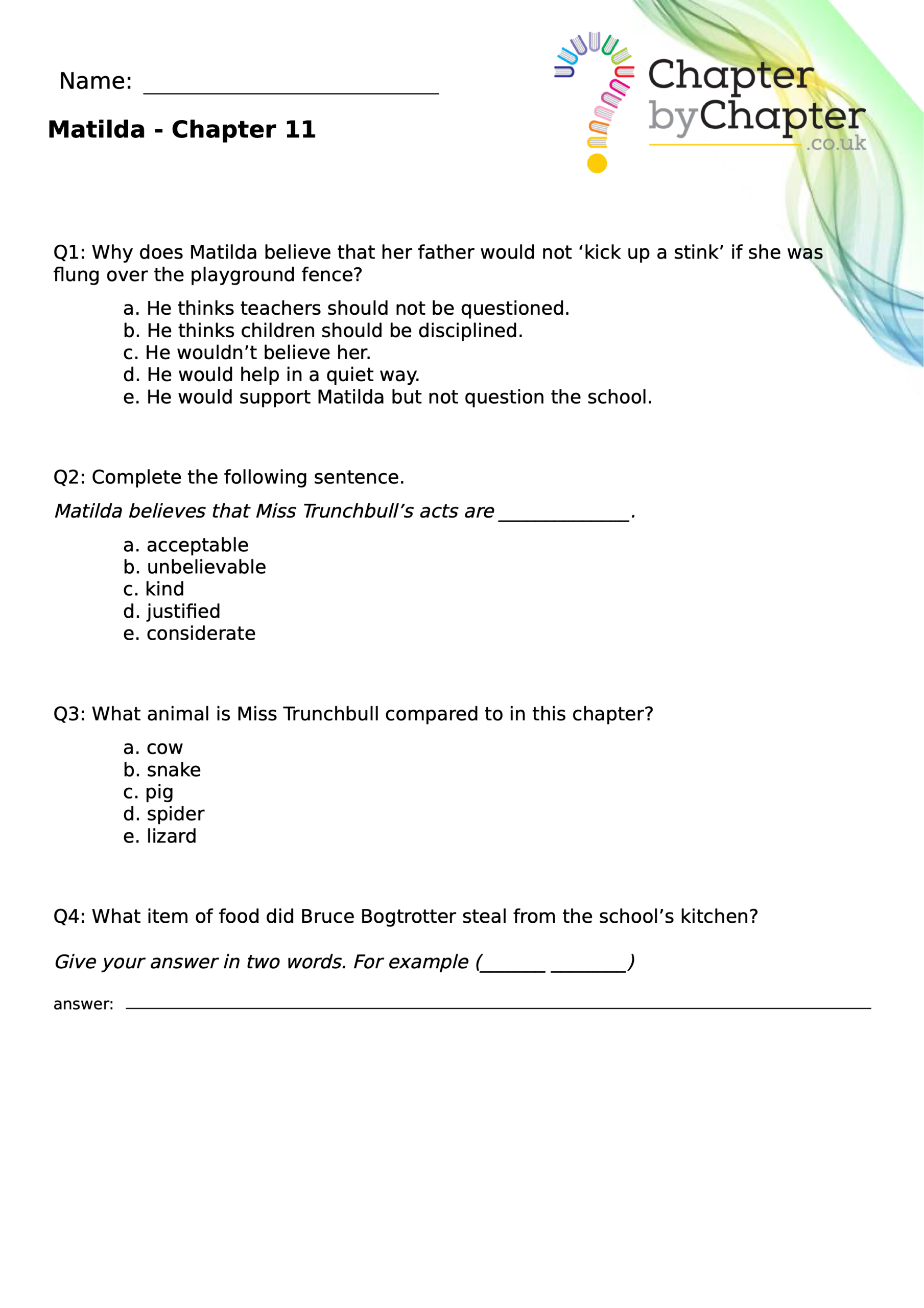
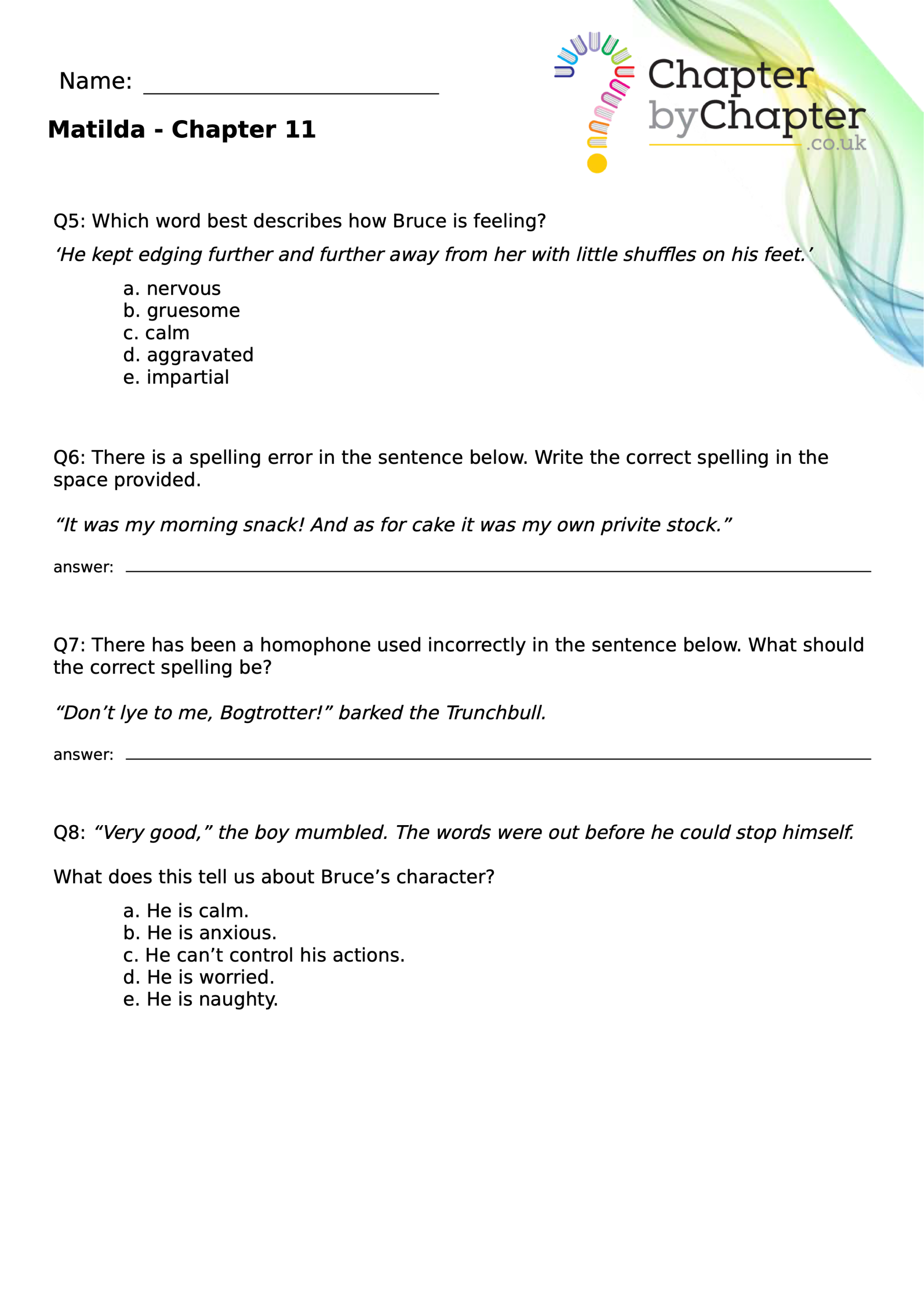
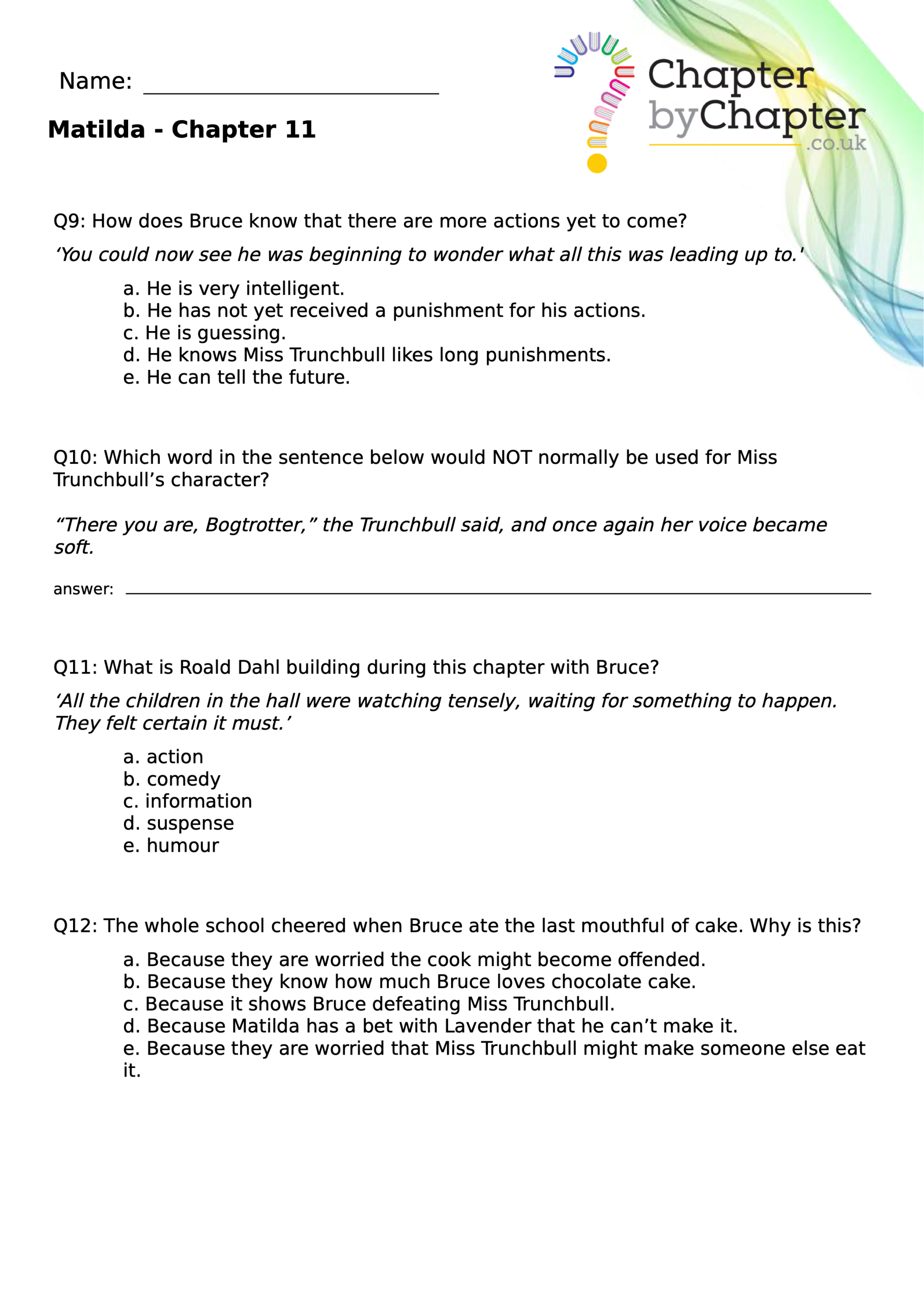
Chapter 11 Questions
With a wide range of retrieval, inference, and summarising questions, our packs for chosen popular books is a powerful tool for assessing reading skills at LKS2 level.
Summary
In Chapter 11, Miss Trunchbull arrives in Matilda’s classroom for her weekly inspection, immediately filling the room with fear. She storms up and down the rows, questioning pupils in an attempt to catch them out and punish them. Her temper flares when she spots Amanda Thripp’s pigtails, a hairstyle she despises, and she launches into a furious rant about untidiness and disobedience. The children sit frozen, terrified of becoming her next target. Miss Trunchbull’s cruelty becomes unmistakably clear when she grabs Amanda by the pigtails, swings her around like a hammer, and hurls her across the field—an act both shocking and absurdly exaggerated.
Despite the violence of the throw, Amanda lands safely in a patch of soft grass, unharmed but shaken. Miss Trunchbull, however, shows no concern and marches back to the class without a hint of regret, as though she has done nothing wrong. Matilda observes all of this with horror but also fascination, realising just how monstrous the headmistress truly is. The incident unites the children in silent outrage, strengthening their sense of injustice and reinforcing the danger of crossing Miss Trunchbull. The chapter deepens the contrast between the harshness of the Trunchbull and the kindness of Miss Honey, making the children’s bravery and resilience stand out even more.
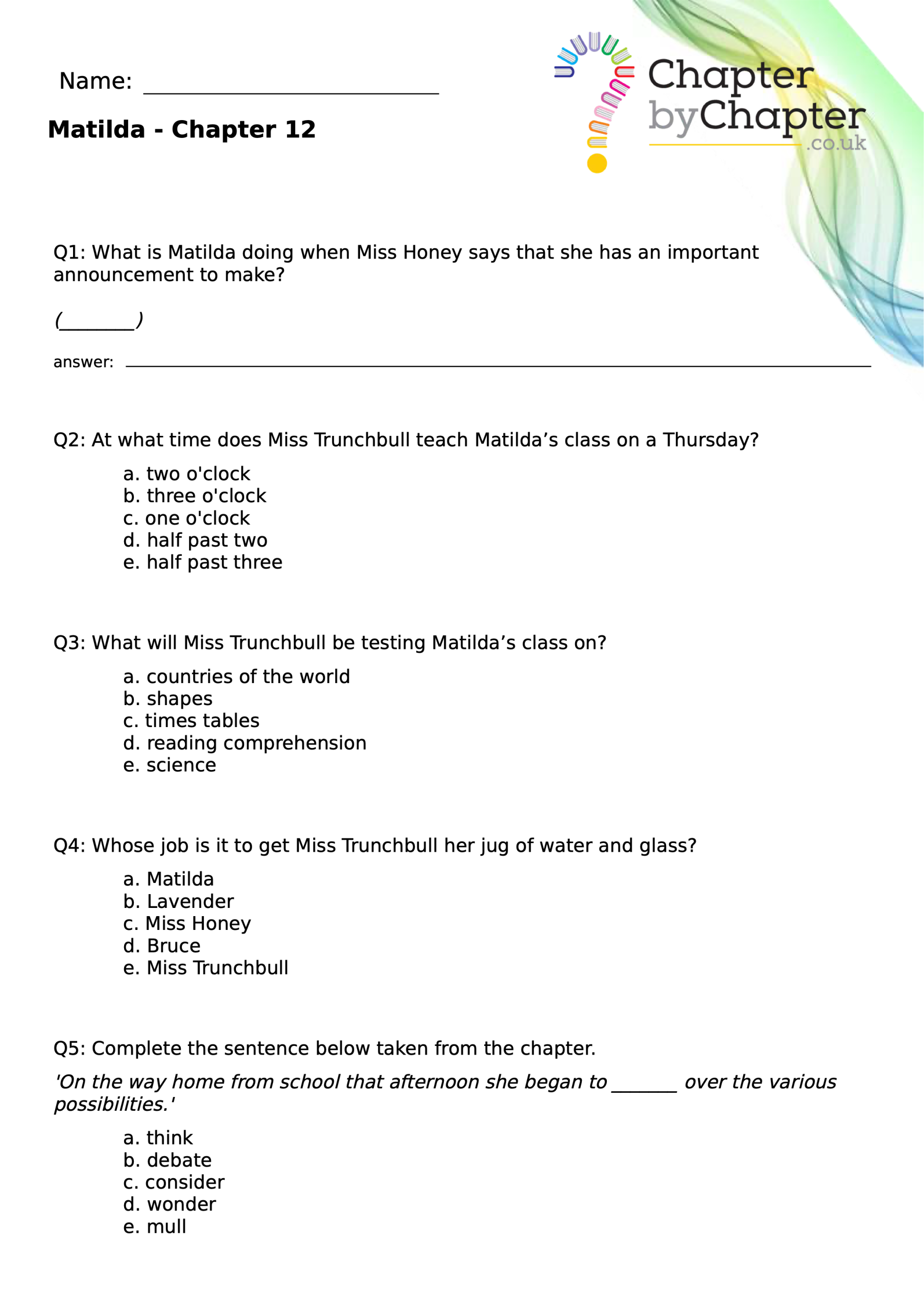
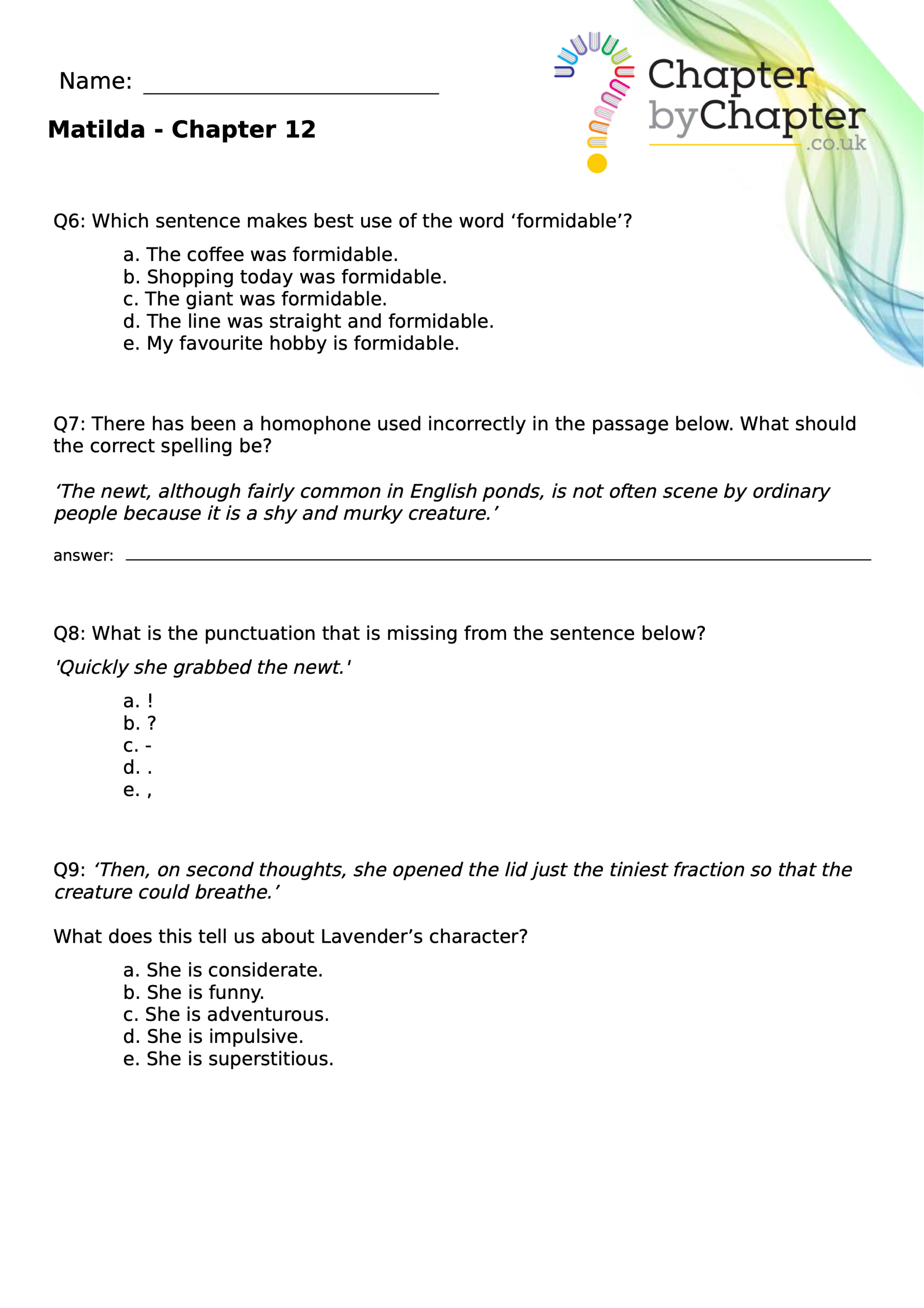
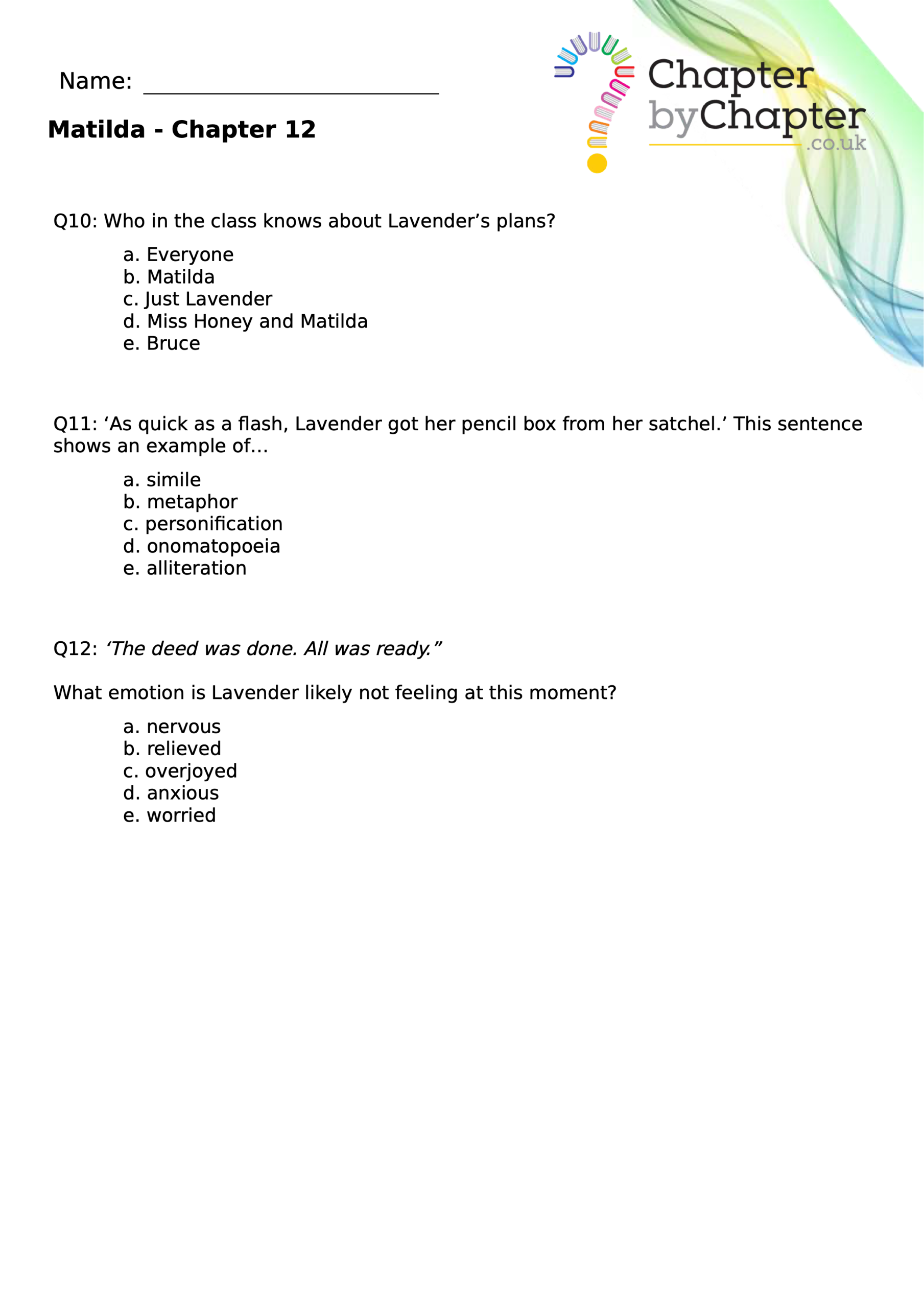
Chapter 12 Questions
Summary
In Chapter 12, Miss Honey invites Matilda to walk home with her after school, sensing that the girl needs kindness and someone who truly understands her. As they walk, Miss Honey gently encourages Matilda to talk about her abilities, and Matilda openly shares how easily she can solve complex maths problems and read advanced books. Miss Honey is astonished by her brilliance but saddened by how little support Matilda receives at home. Wanting to know more about the remarkable child, she continues the conversation in a warm and reassuring way.
When they reach Miss Honey’s small, run-down cottage, Matilda is surprised by how simple and bare it is. Miss Honey tells her that she lives with very little money and few possessions, hinting at a troubled past she has never shared with anyone. The tiny, sparsely furnished home contrasts sharply with her gentle personality and the nurturing atmosphere she tries to create for her pupils. As Matilda listens, she senses that Miss Honey’s life holds painful secrets. This chapter marks the beginning of a deeper bond between the two, built on trust, understanding, and the shared feeling of being misunderstood by the adults who should have cared for them.
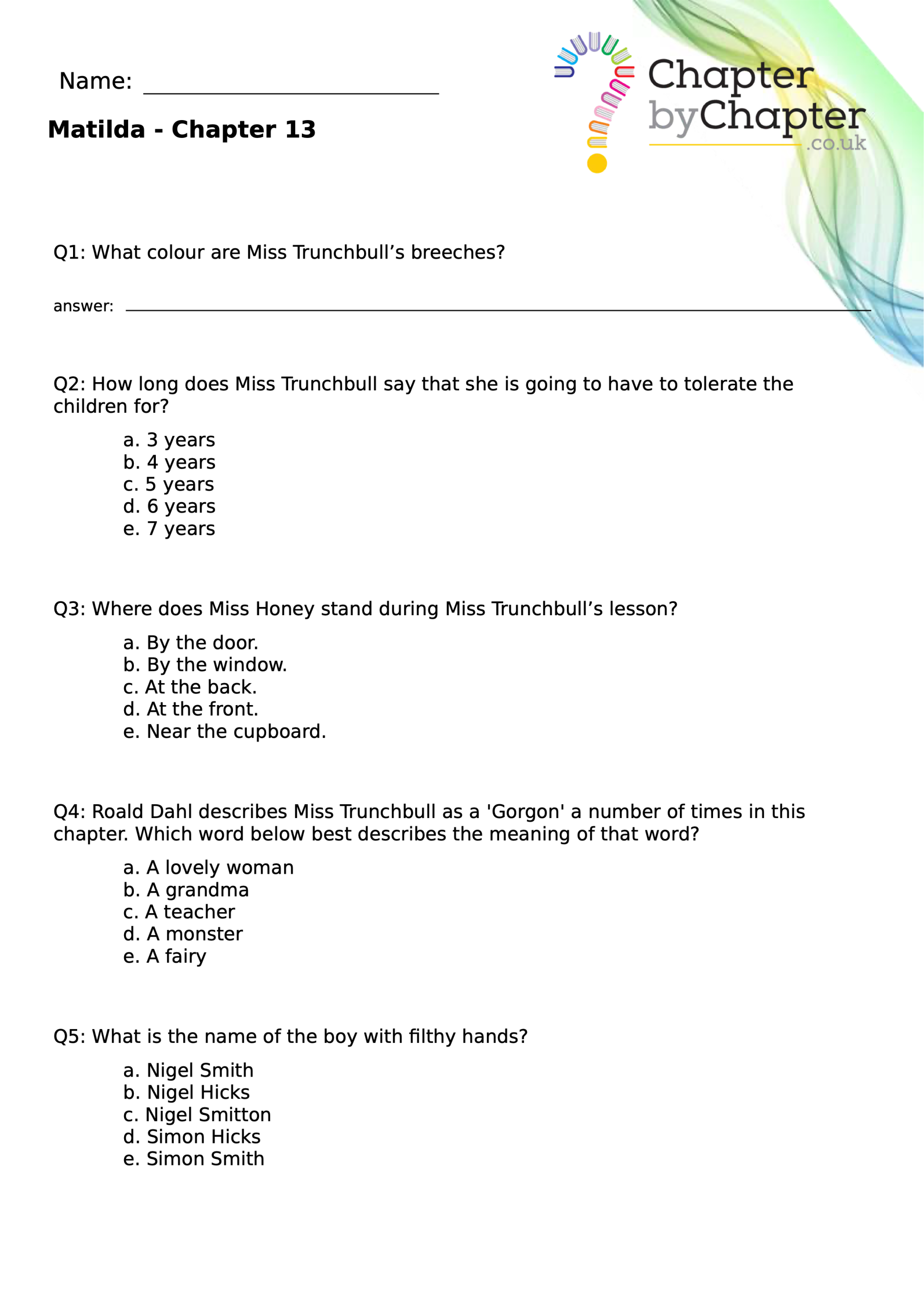
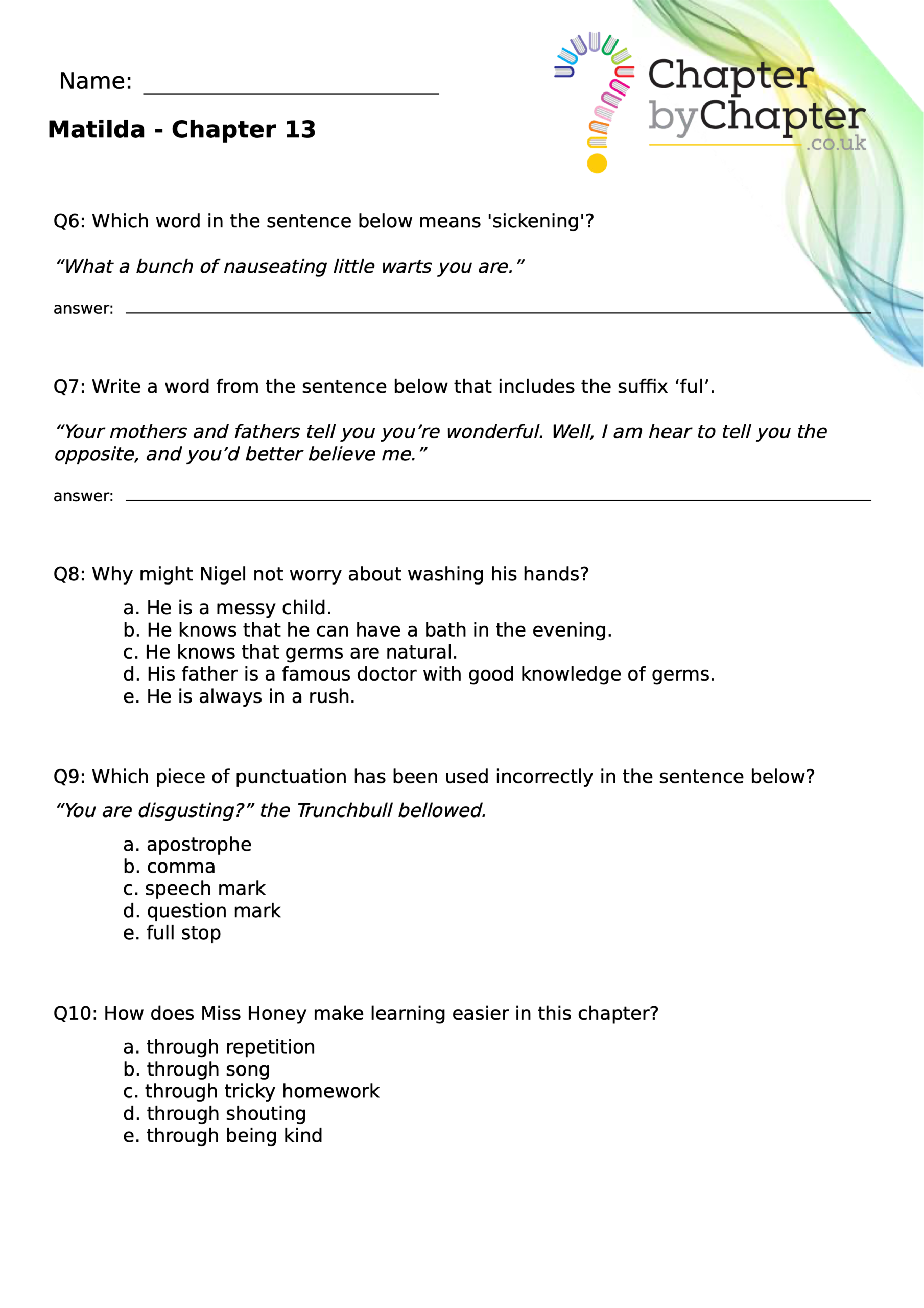
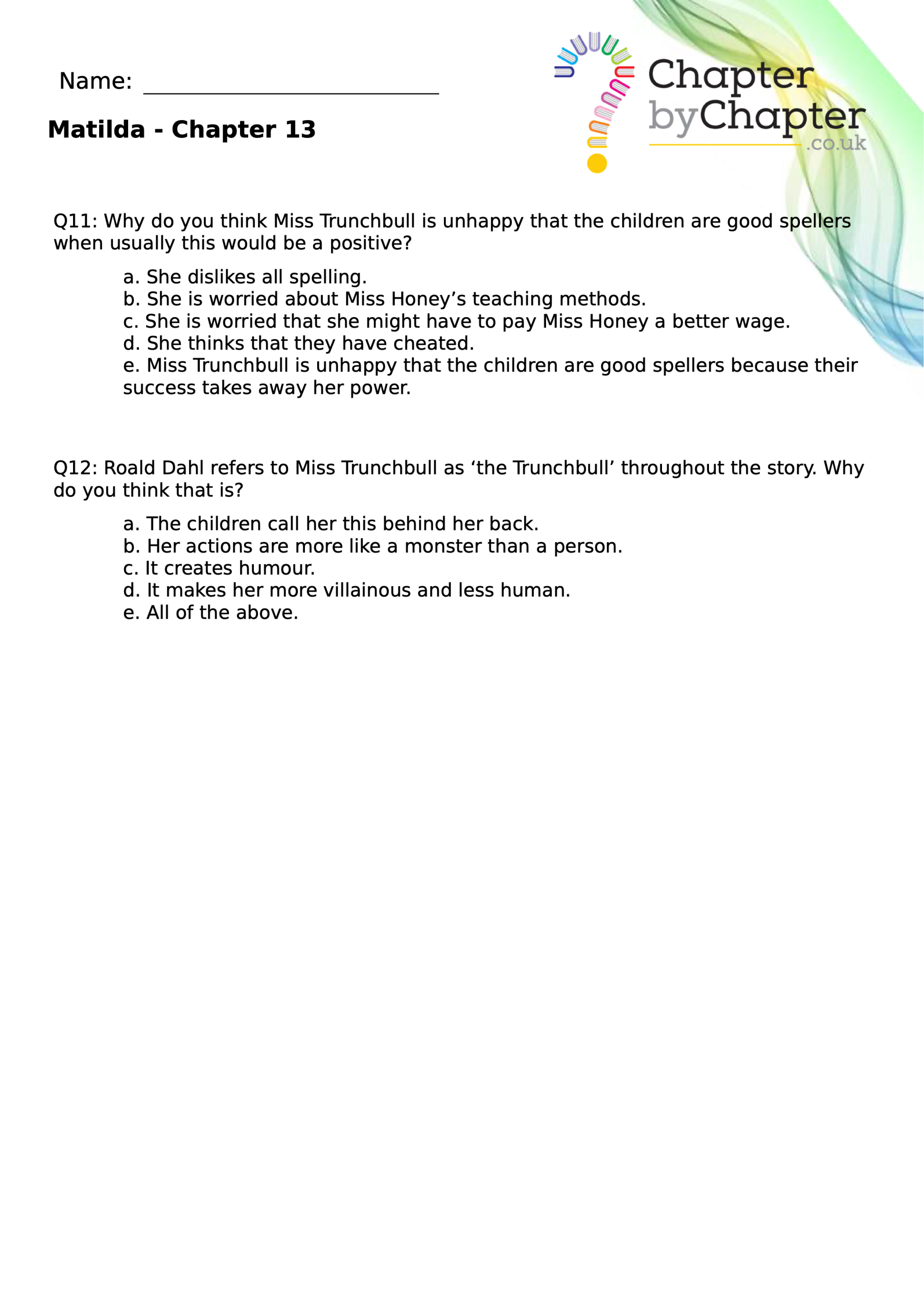
Chapter 13 Questions
Designed to be easily integrated with planning, this resource supports efficient preparation of literacy lessons across Year 3 and Year 4.
Summary
In Chapter 13, Miss Trunchbull visits Miss Honey’s class for her terrifying weekly inspection. The children sit frozen with fear as she storms in, determined to catch someone doing something wrong. She begins a spelling test designed to make them fail, but the pupils—prepared and determined—spell every word correctly. Instead of being pleased, Miss Trunchbull grows irritated, since their success denies her the chance to punish them. Her frustration only increases when she picks on individual children, searching for excuses to belittle them.
The tension rises when Miss Trunchbull spots the glass of water on Miss Honey’s desk and, in her usual bullying manner, refuses to believe it is harmless. As she lifts the glass to drink, she sees the newt inside and reacts with fury, accusing the class of trying to frighten her. The children stay silent, and Matilda feels anger bubbling inside her as she watches the injustice. This moment becomes a turning point, leading to Matilda’s first experience of her mysterious new power.
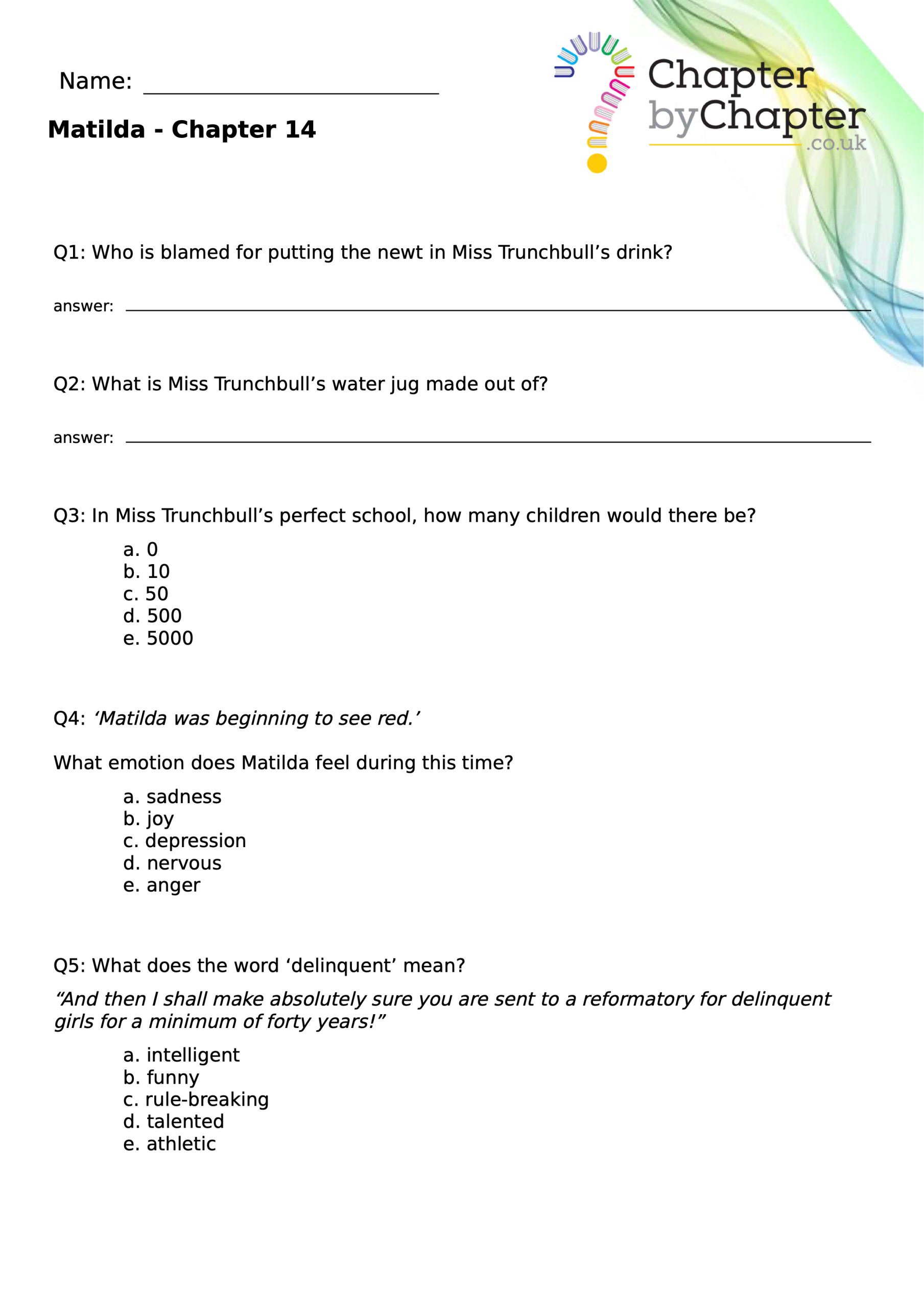
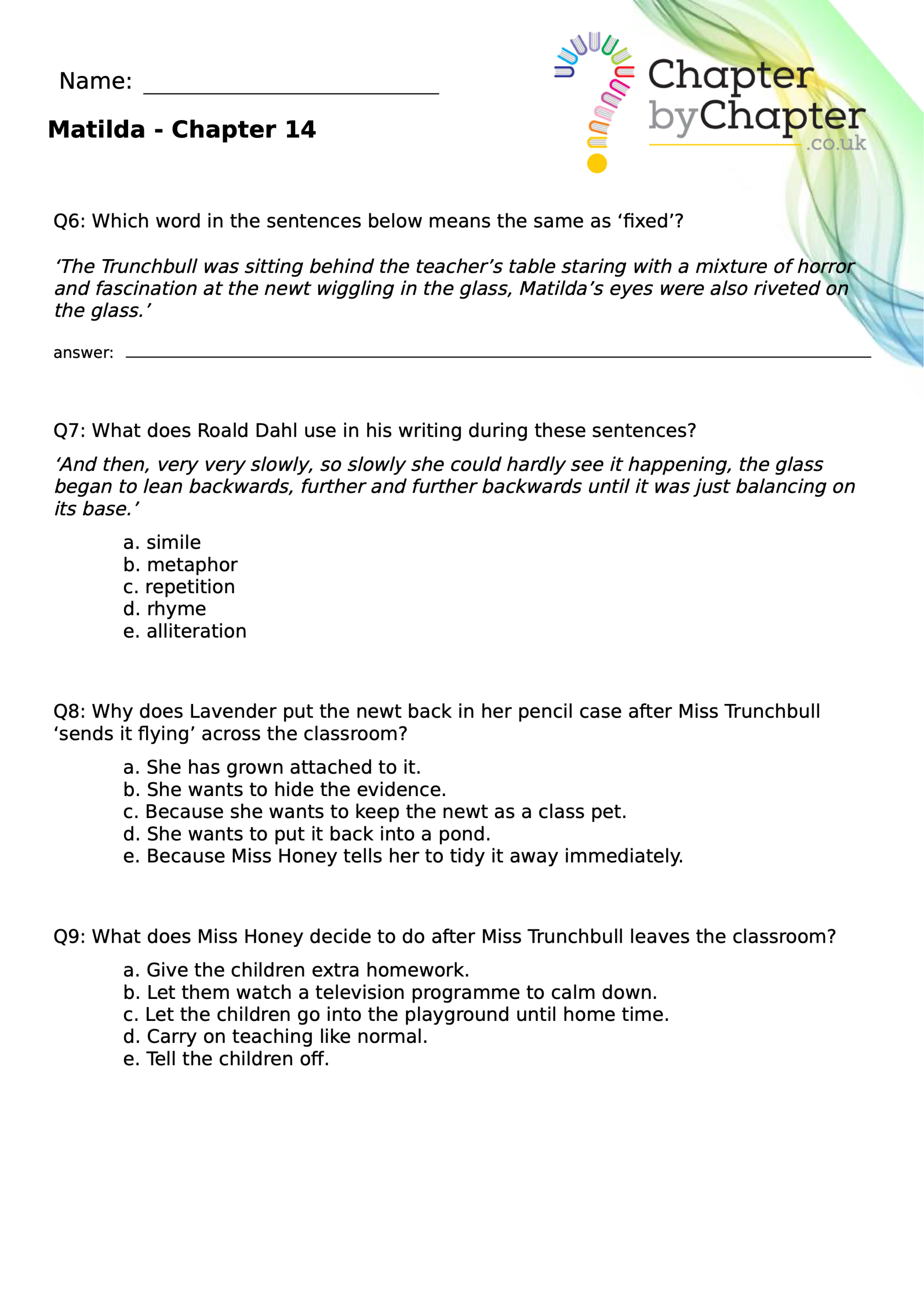
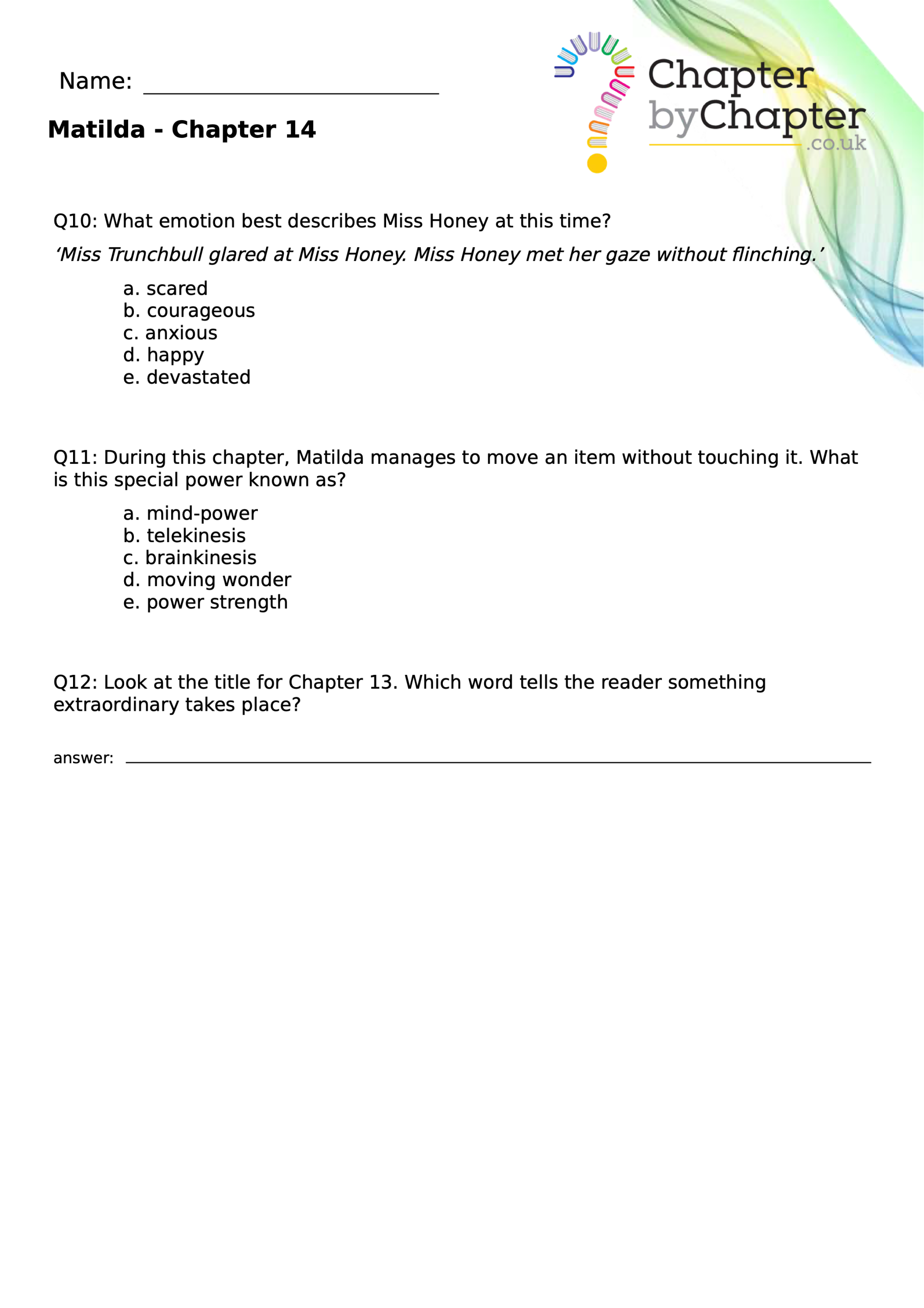
Chapter 14 Questions
After reading chapter 14, pupils can tackle thoughtfully written comprehension questions that include spelling, punctuation, and grammar questions.
Summary
In Chapter 14, Matilda is left shaken but amazed after discovering that she can move objects with her mind. The shock of Miss Trunchbull’s cruelty during the classroom incident brings out a sudden burst of power inside her, causing the glass of water to tip over without her touching it. Once she is alone at home, Matilda experiments to see whether the moment was just a fluke. She concentrates intensely and finds that she can make a small cigar push across the table by using only her thoughts. Excited and a little frightened, she realises that this ability is real and entirely her own.
Determined to understand her new gift, Matilda practises repeatedly until she gains better control. Each attempt drains her energy, but she becomes more confident with every tiny success. Although she knows she must keep her power a secret, she also senses it could help her stand up against the injustices she faces, especially from Miss Trunchbull. The chapter marks the beginning of Matilda’s journey into discovering her hidden strength—one that could change everything for her and for those she cares about.
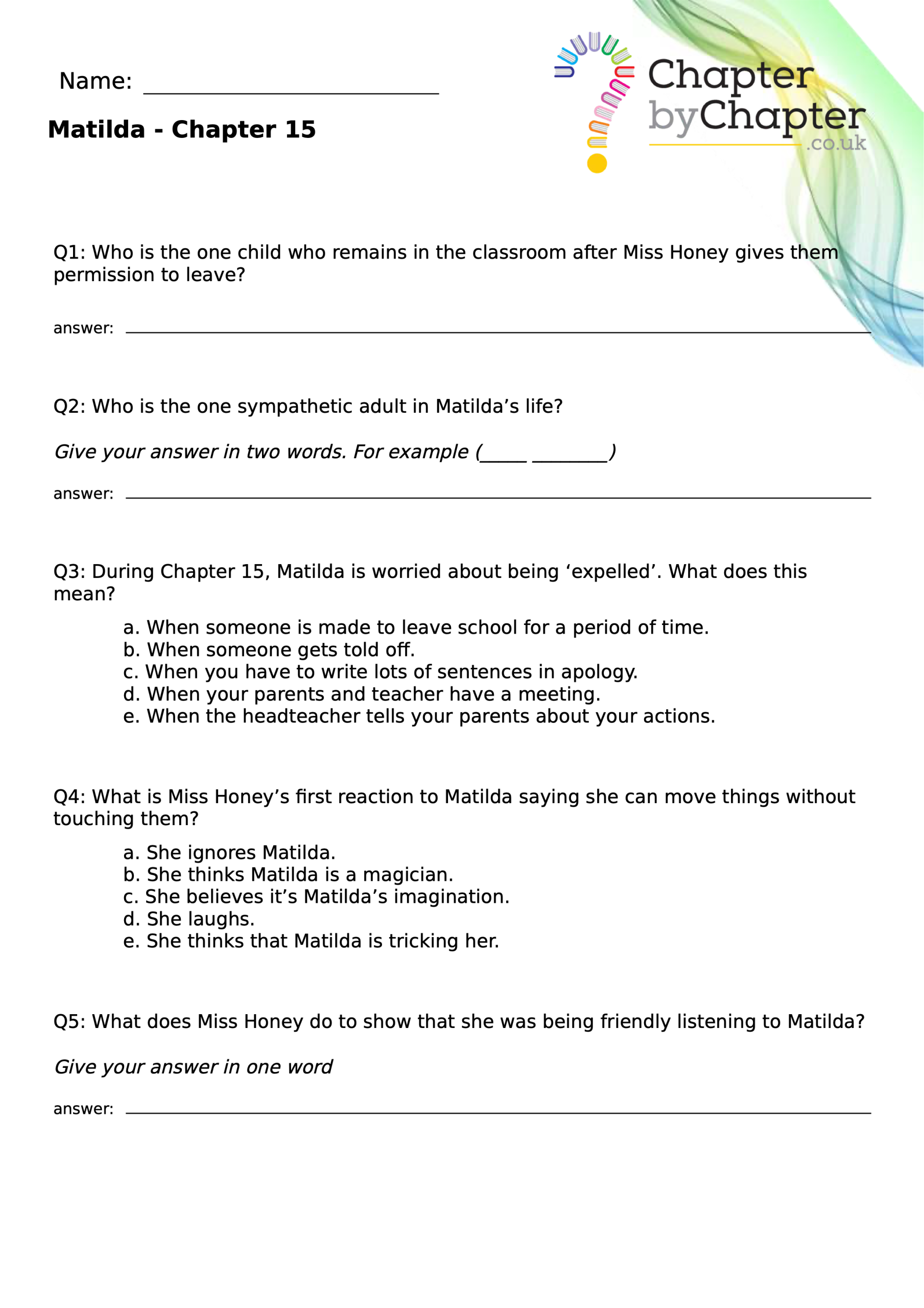
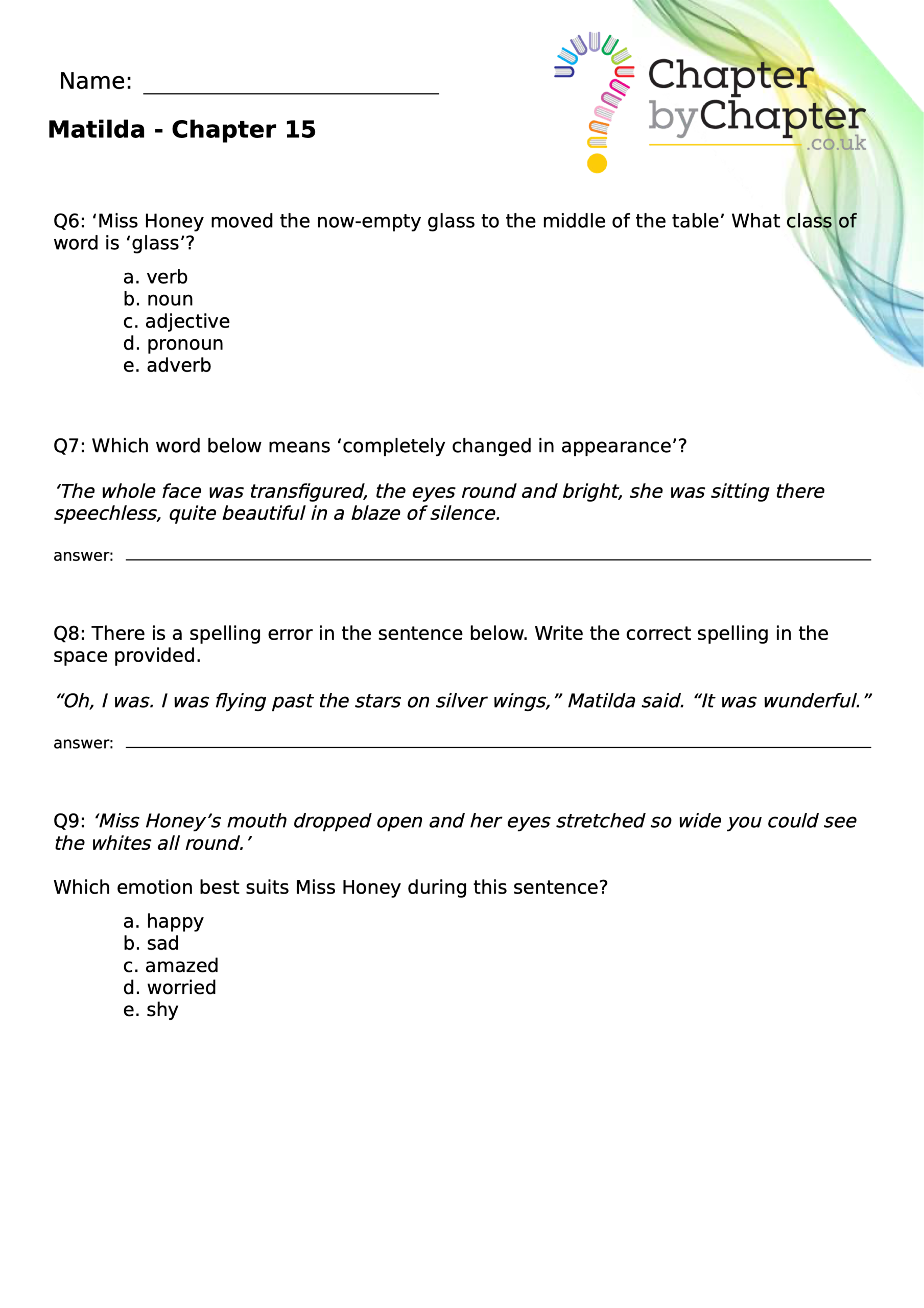
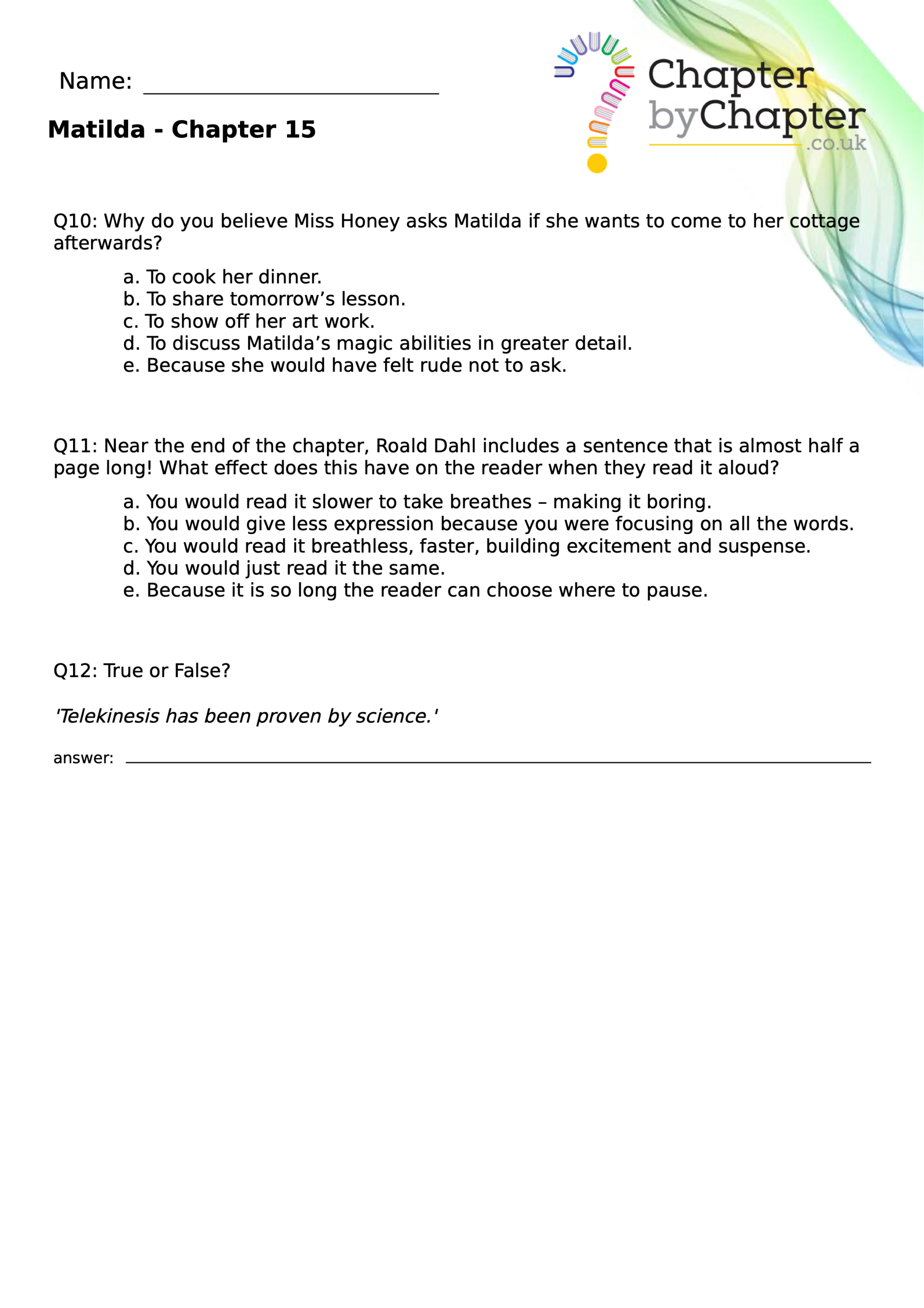
Chapter 15 Questions
With chapter-by-chapter questions for Matilda, our worksheets help pupils practise comprehension, grammar, spelling, and punctuation all in one place.
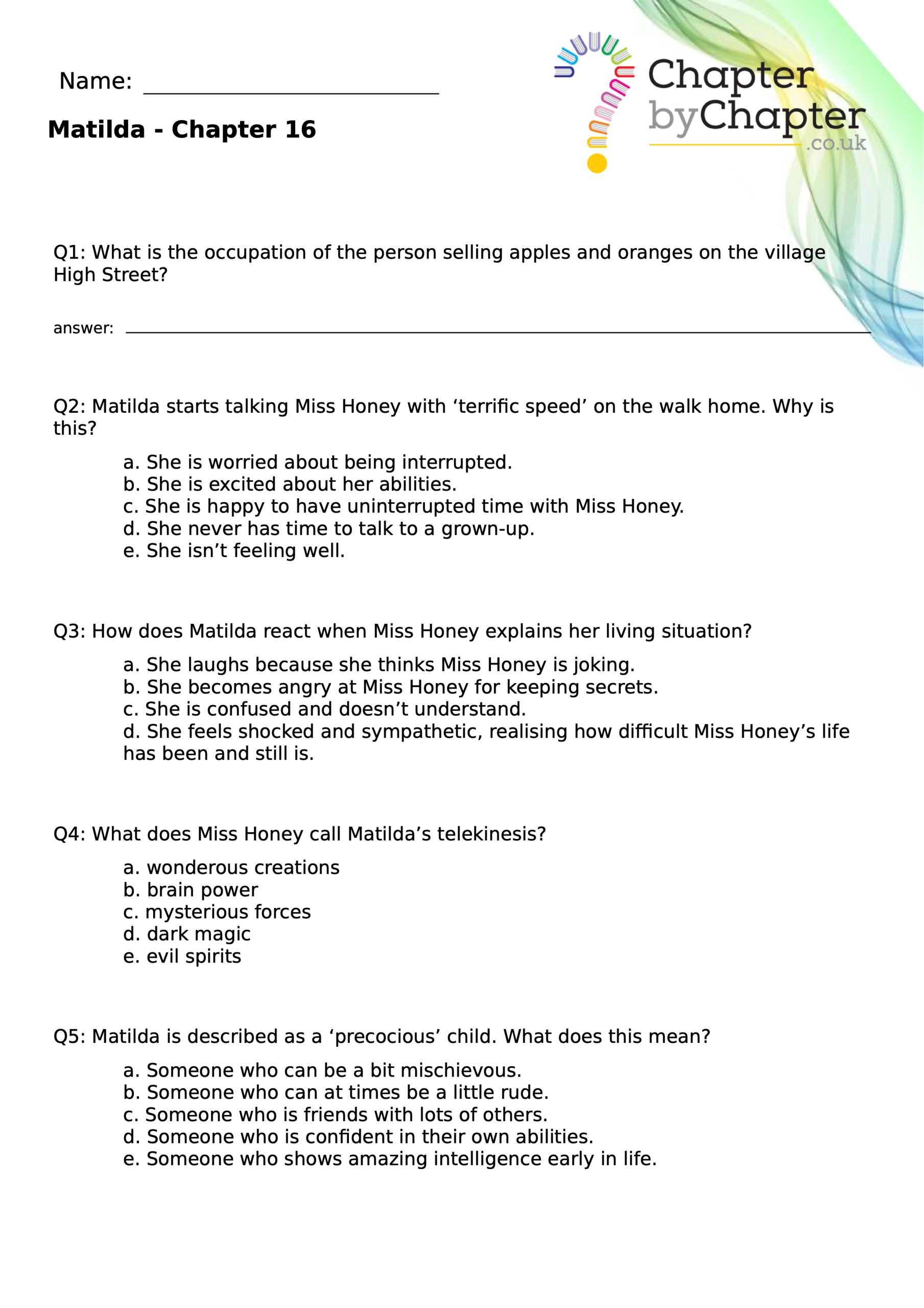
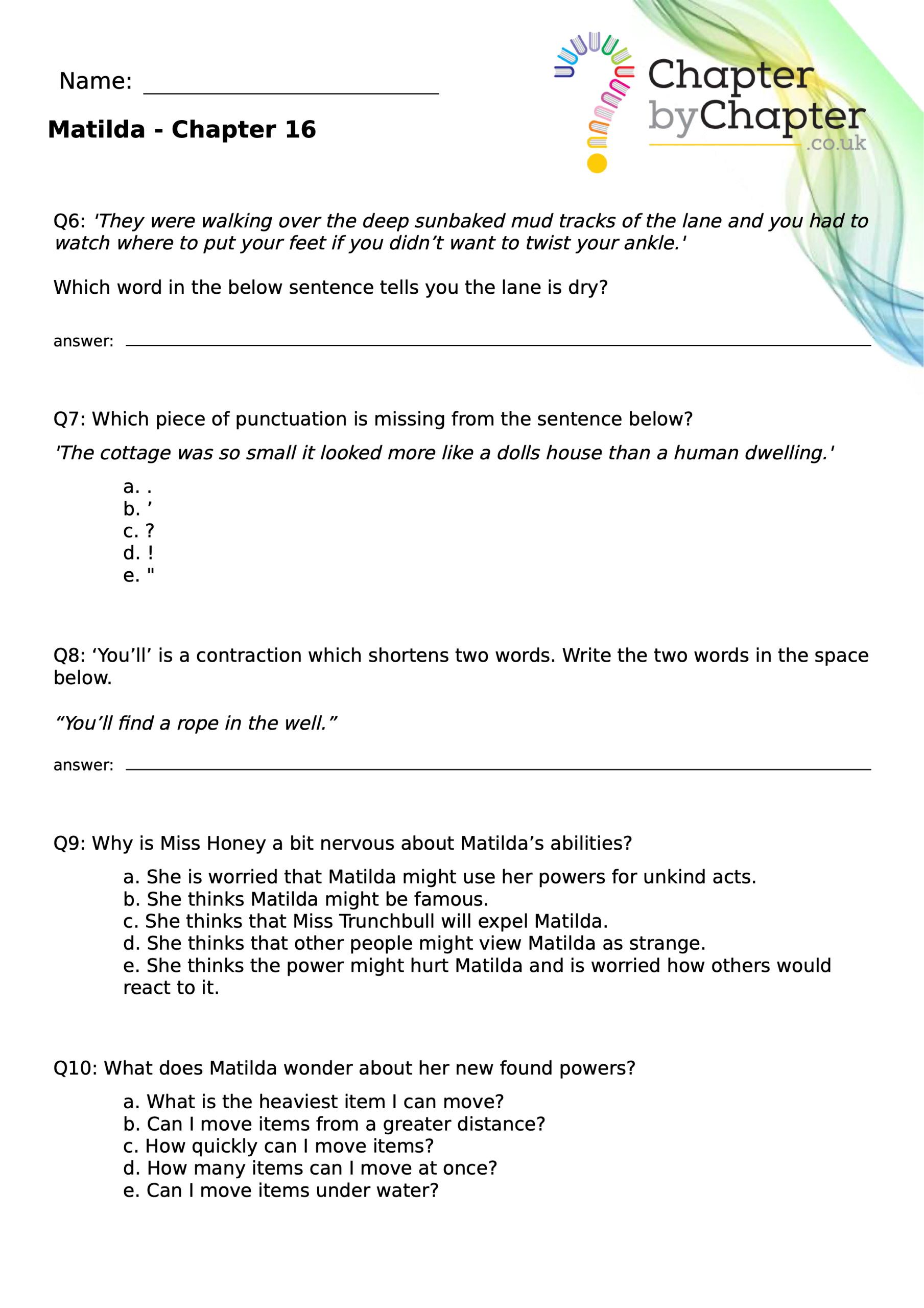
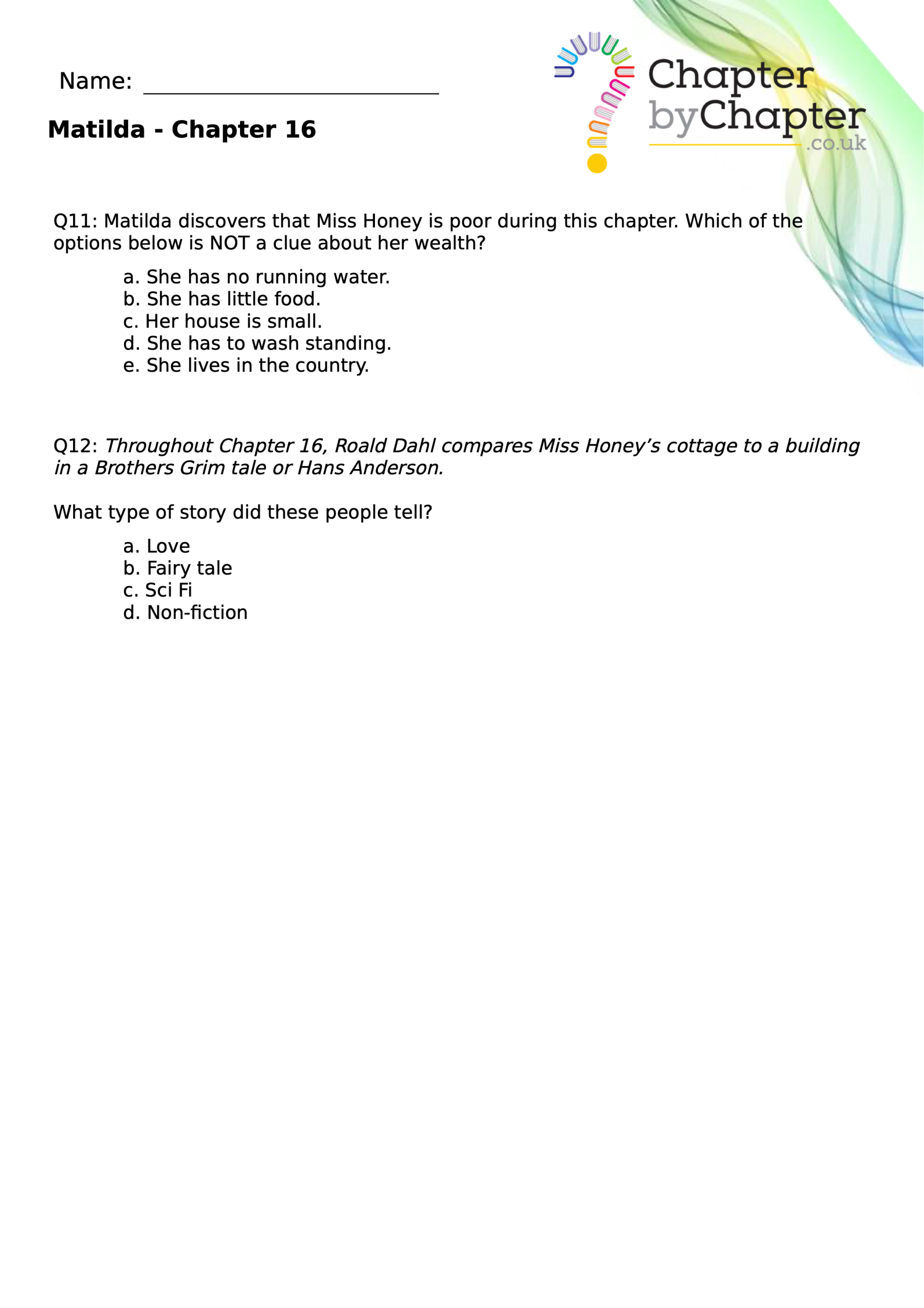
Chapter 16
Teachers can use our resources flexibly—set it for homework or include it in daily classwork sessions for Year 3 or 4 pupils.
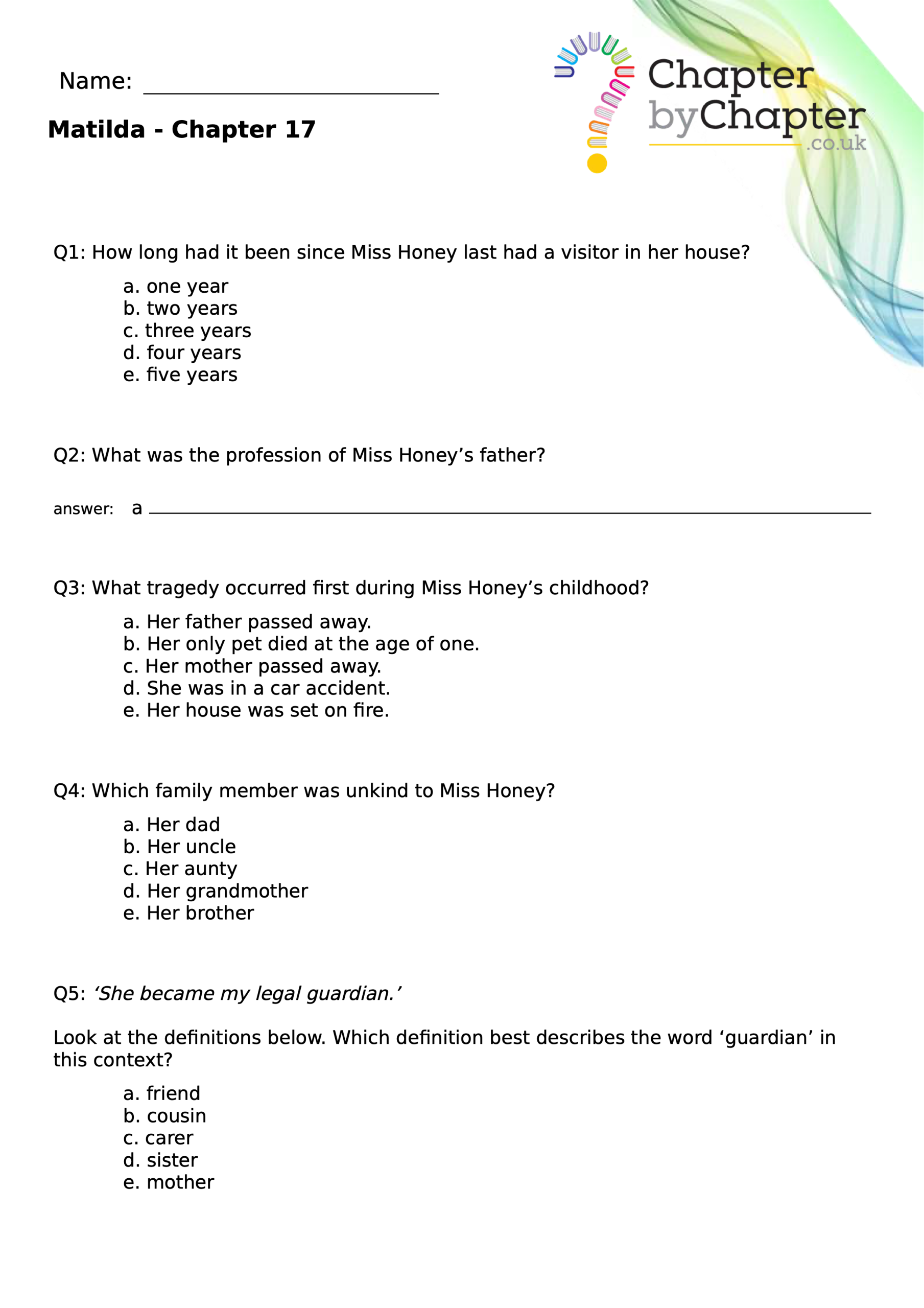
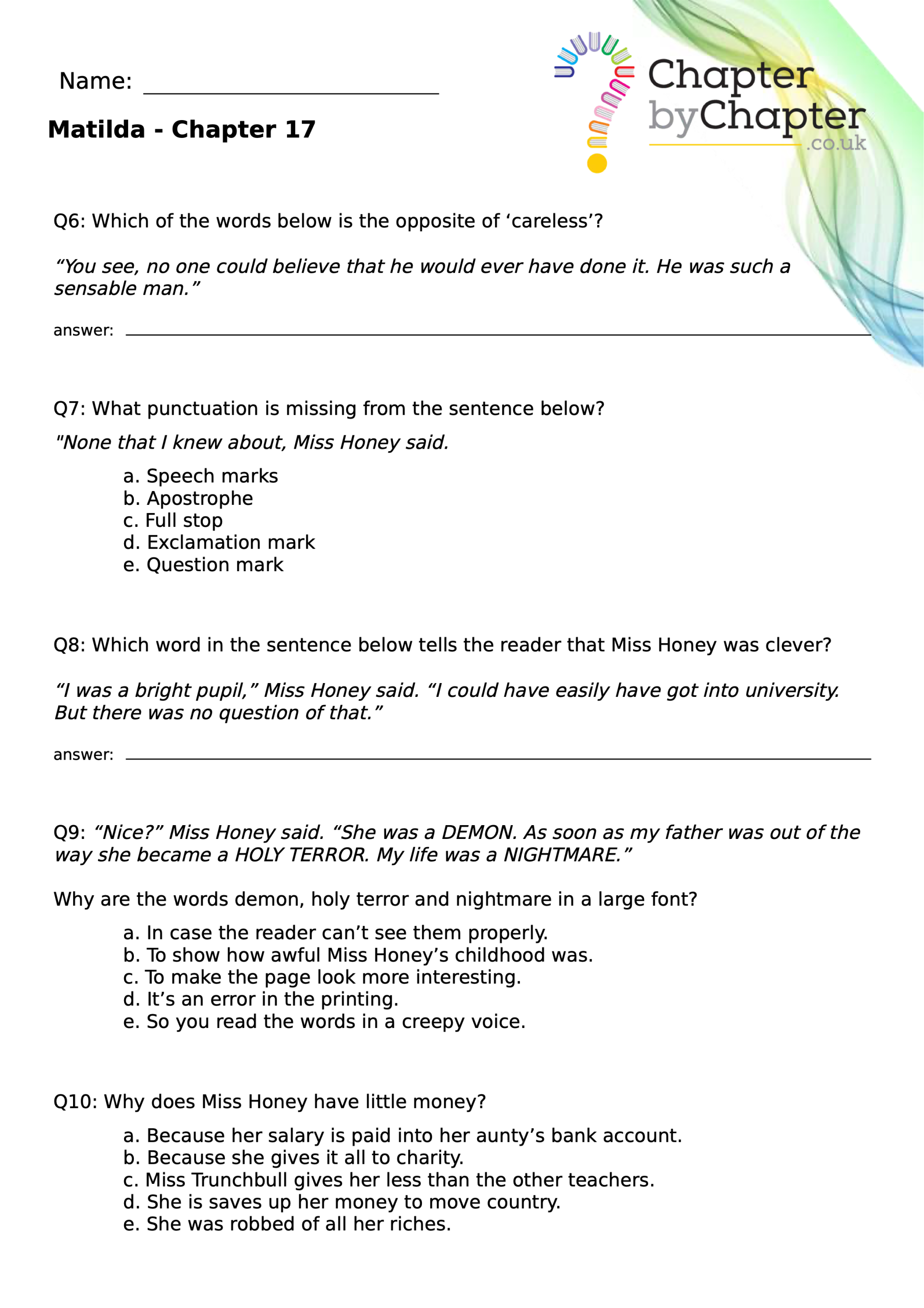
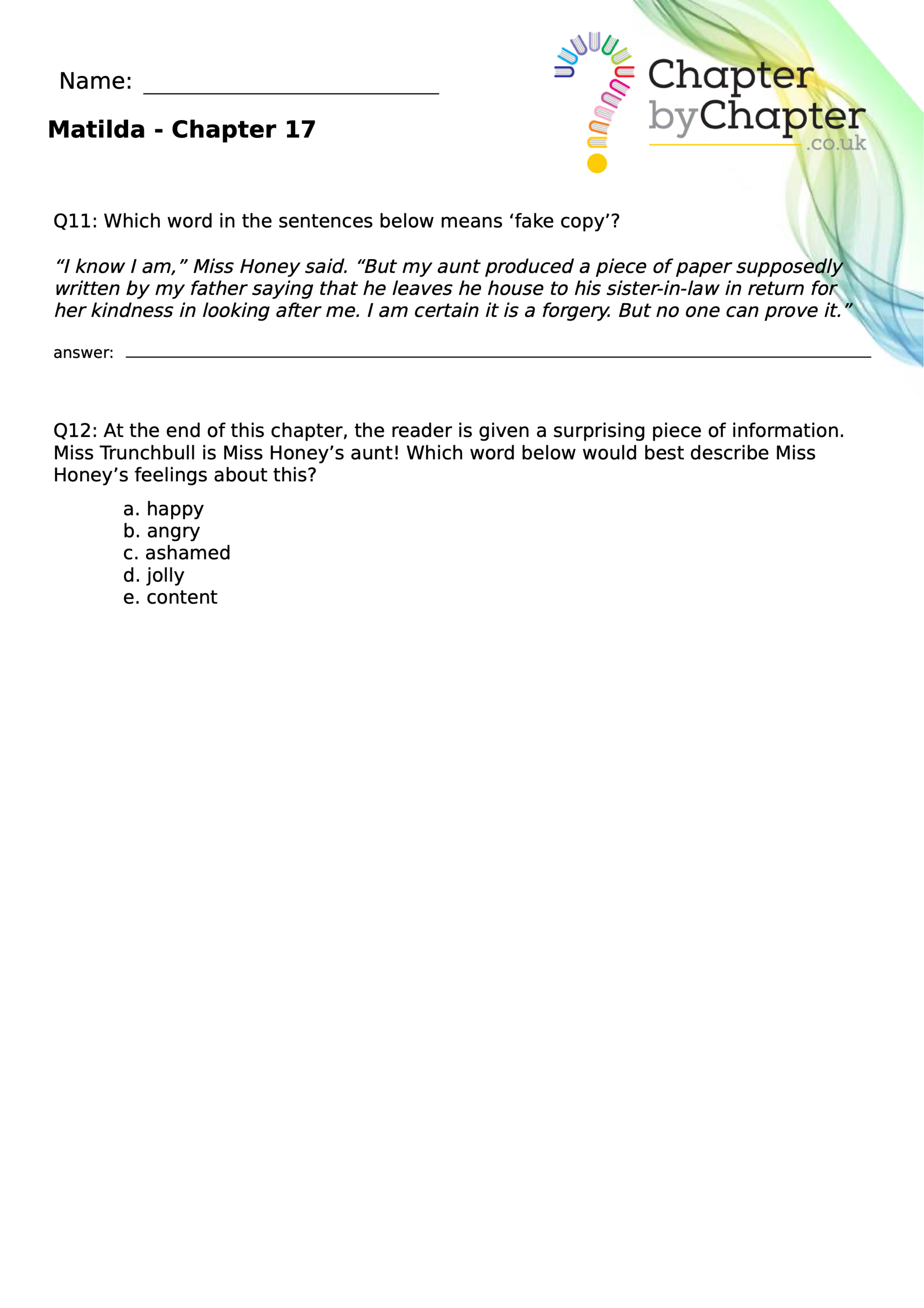
Chapter 17 Questions
Did you know?
Our resource supports key reading and literacy curriculum objectives with a mix of comprehension, grammar, and sequencing tasks.
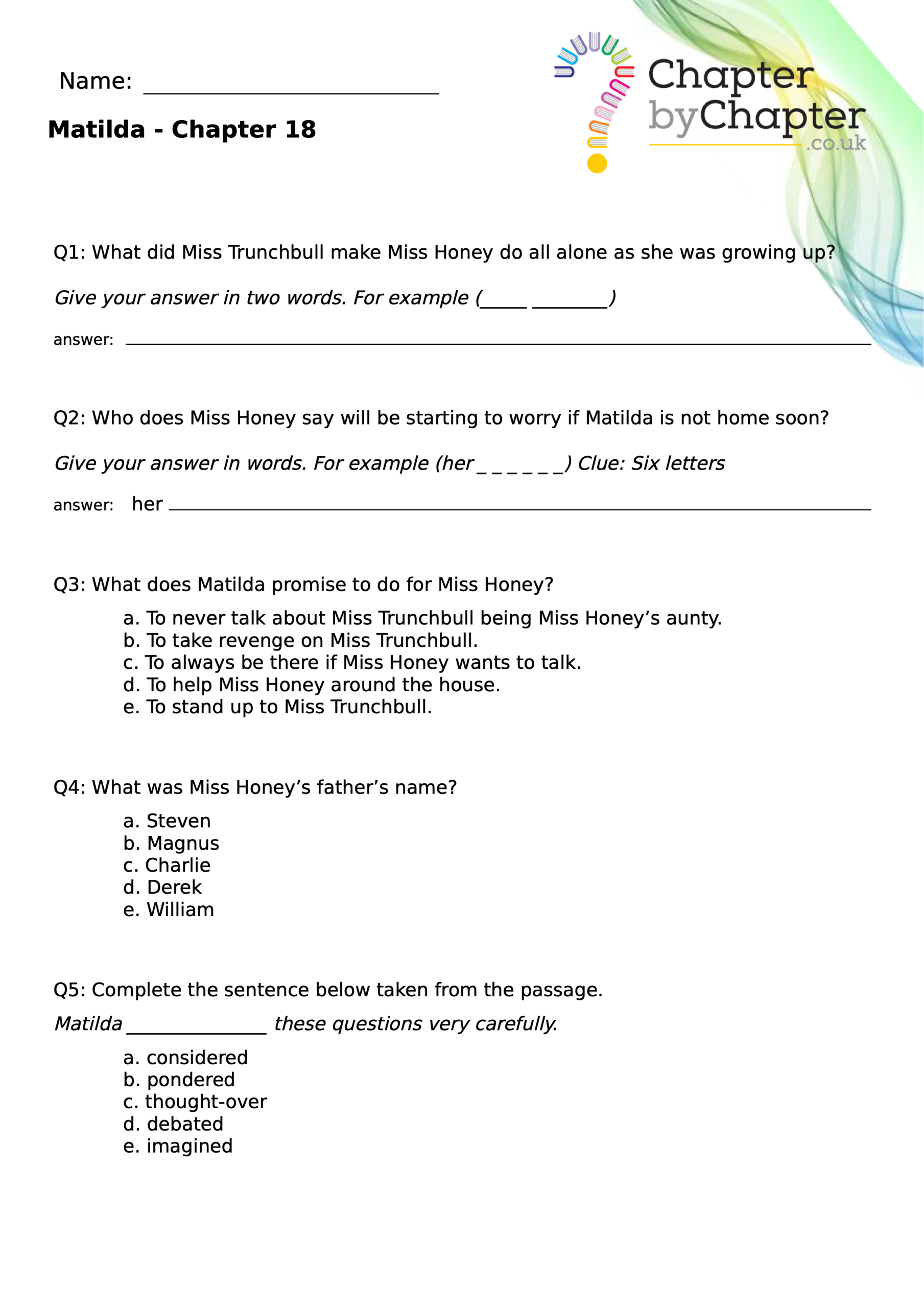
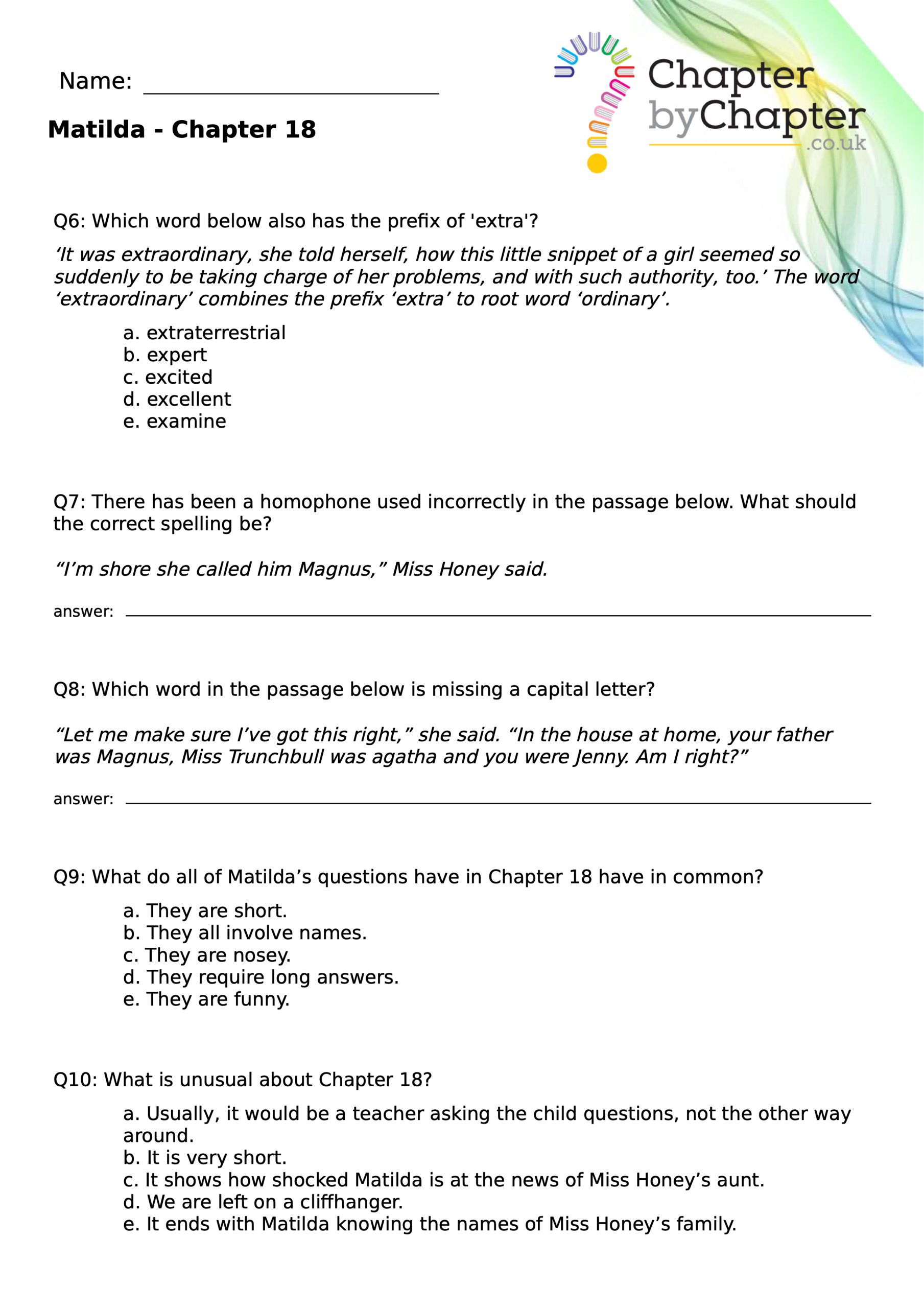
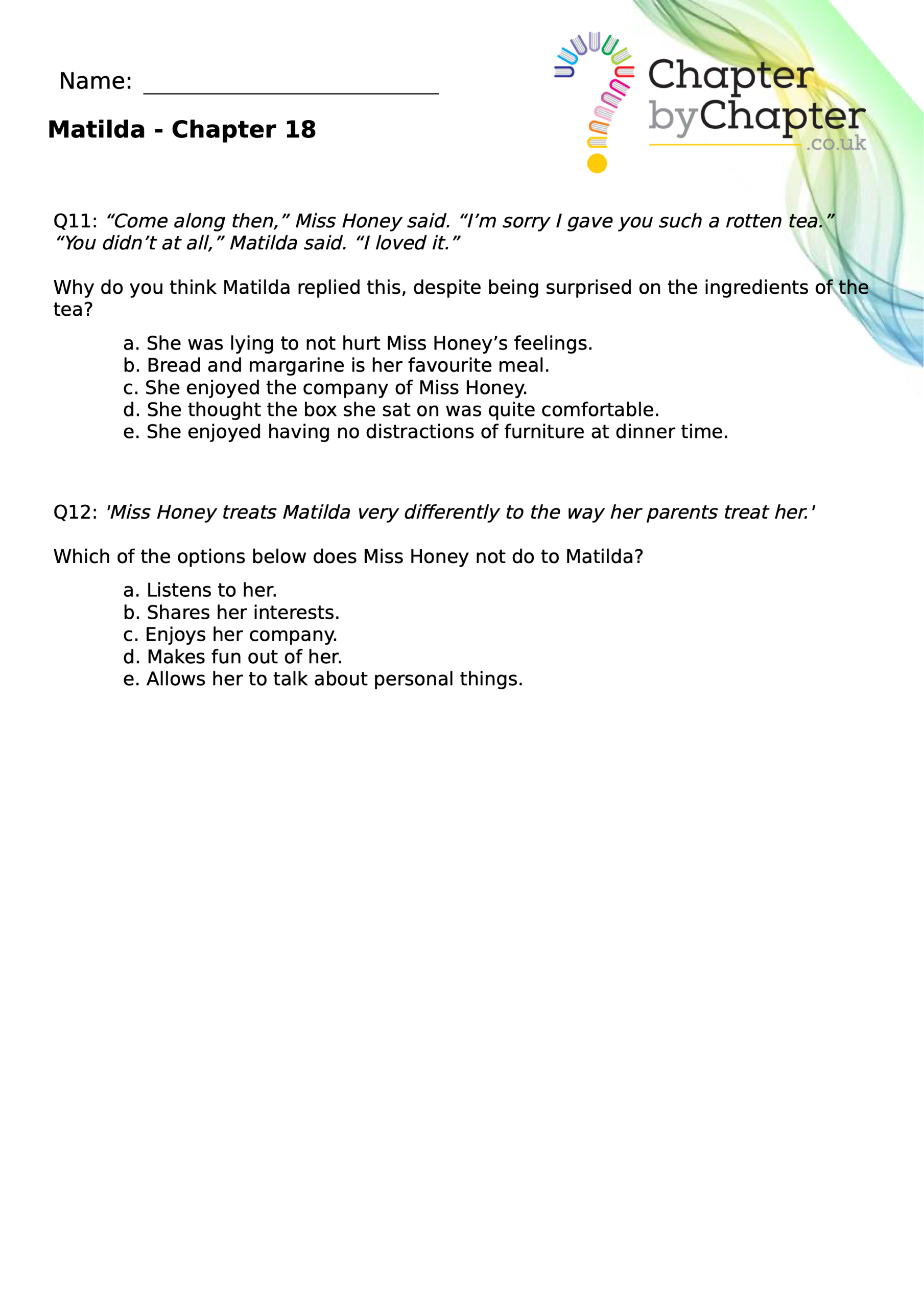
Chapter 18 Questions
Our question sets include multiple choice retrieval questions to build scanning and skimming skills.
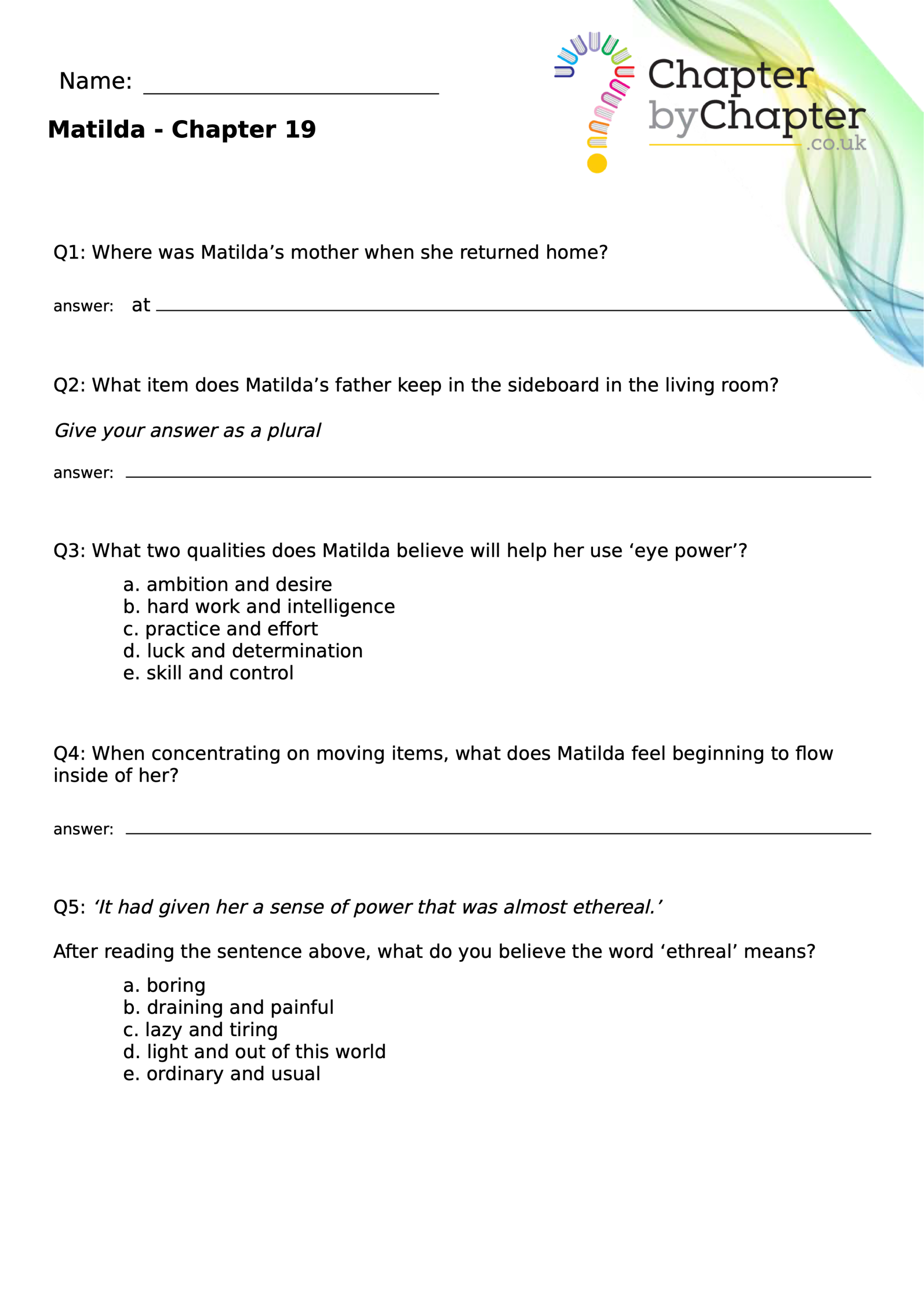
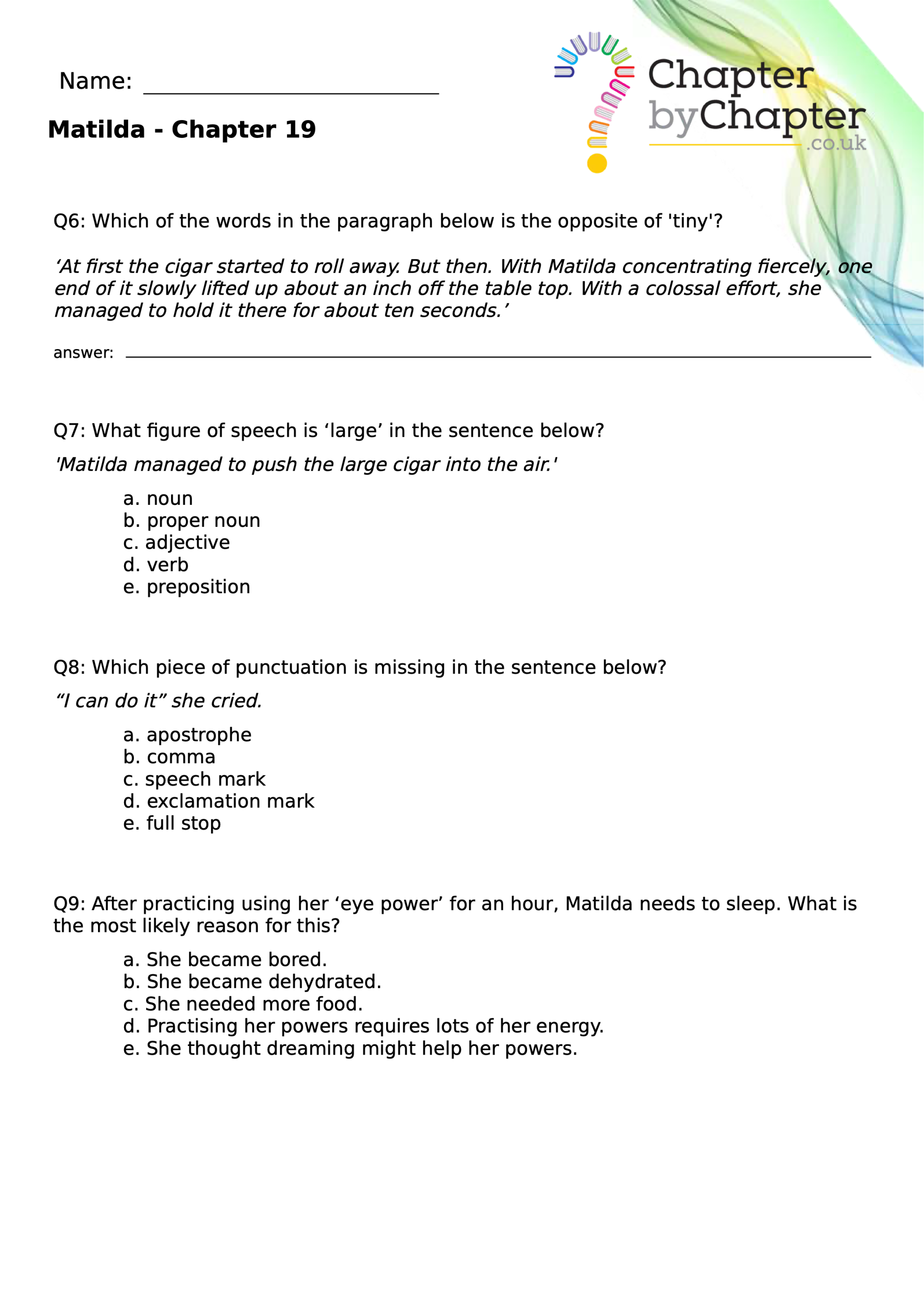
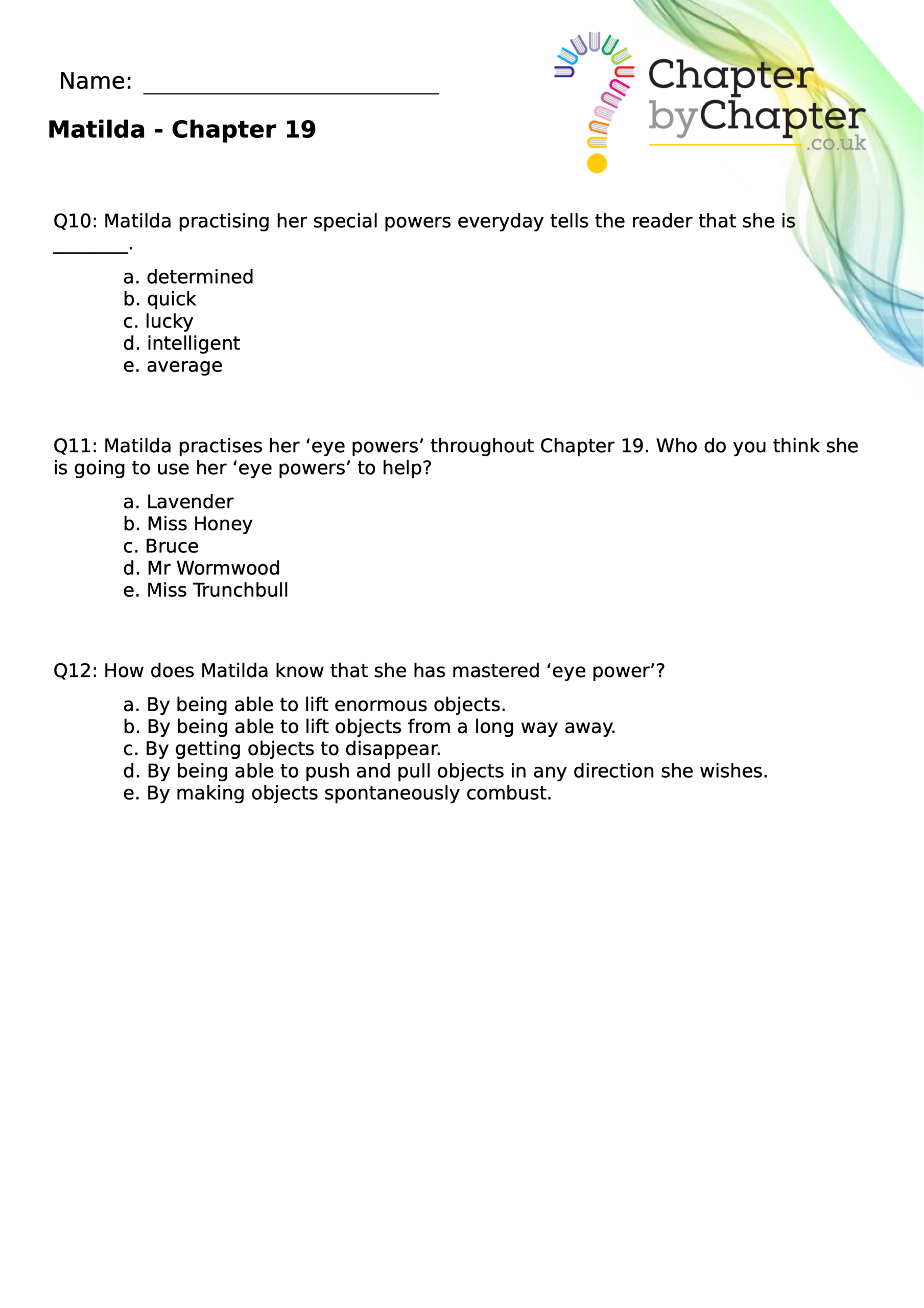
Chapter 19 Questions
From punctuation to spelling and grammar, our comprehensions ensure your class encounter a full spectrum of literacy skills whilst reading Matilda.
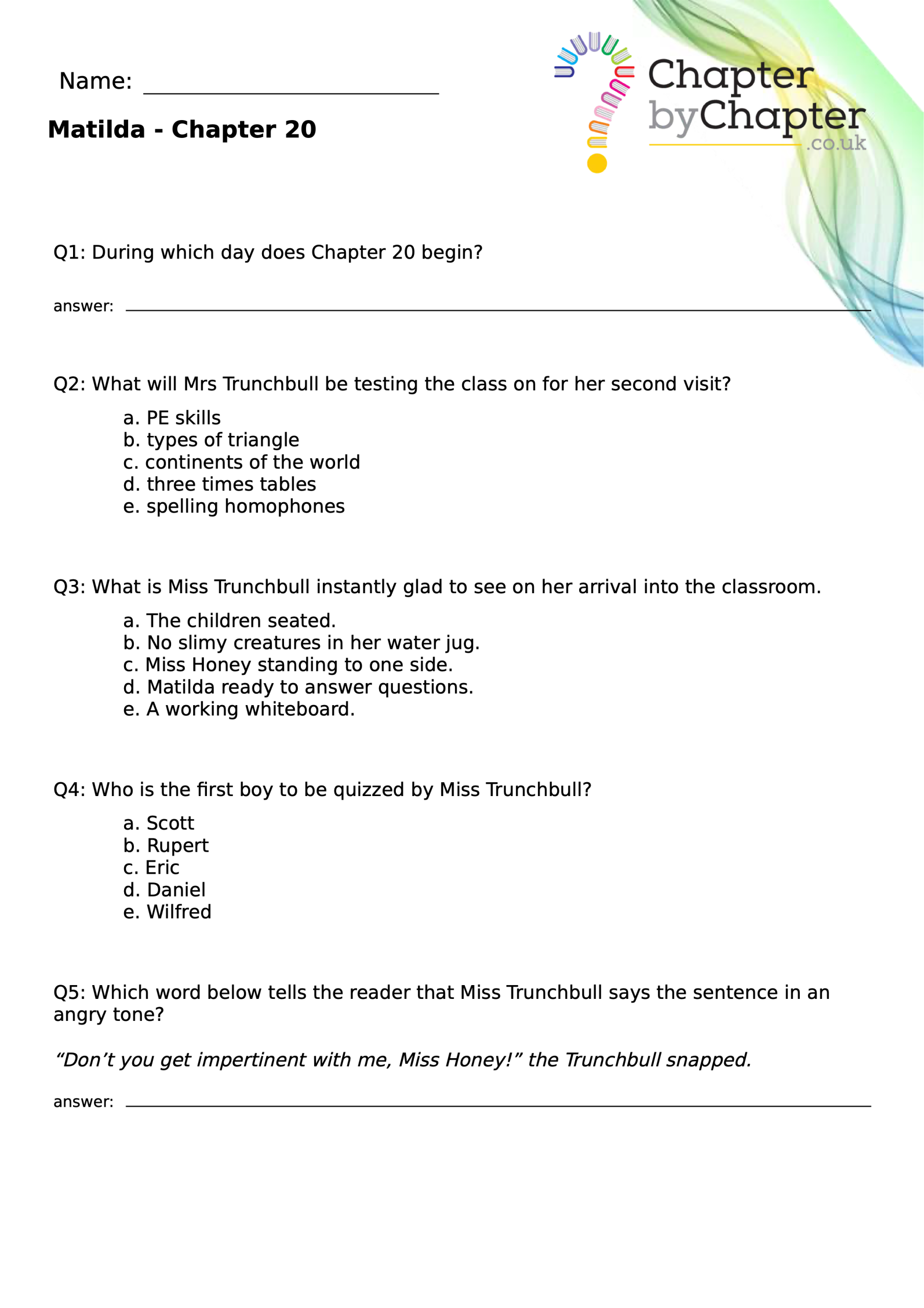
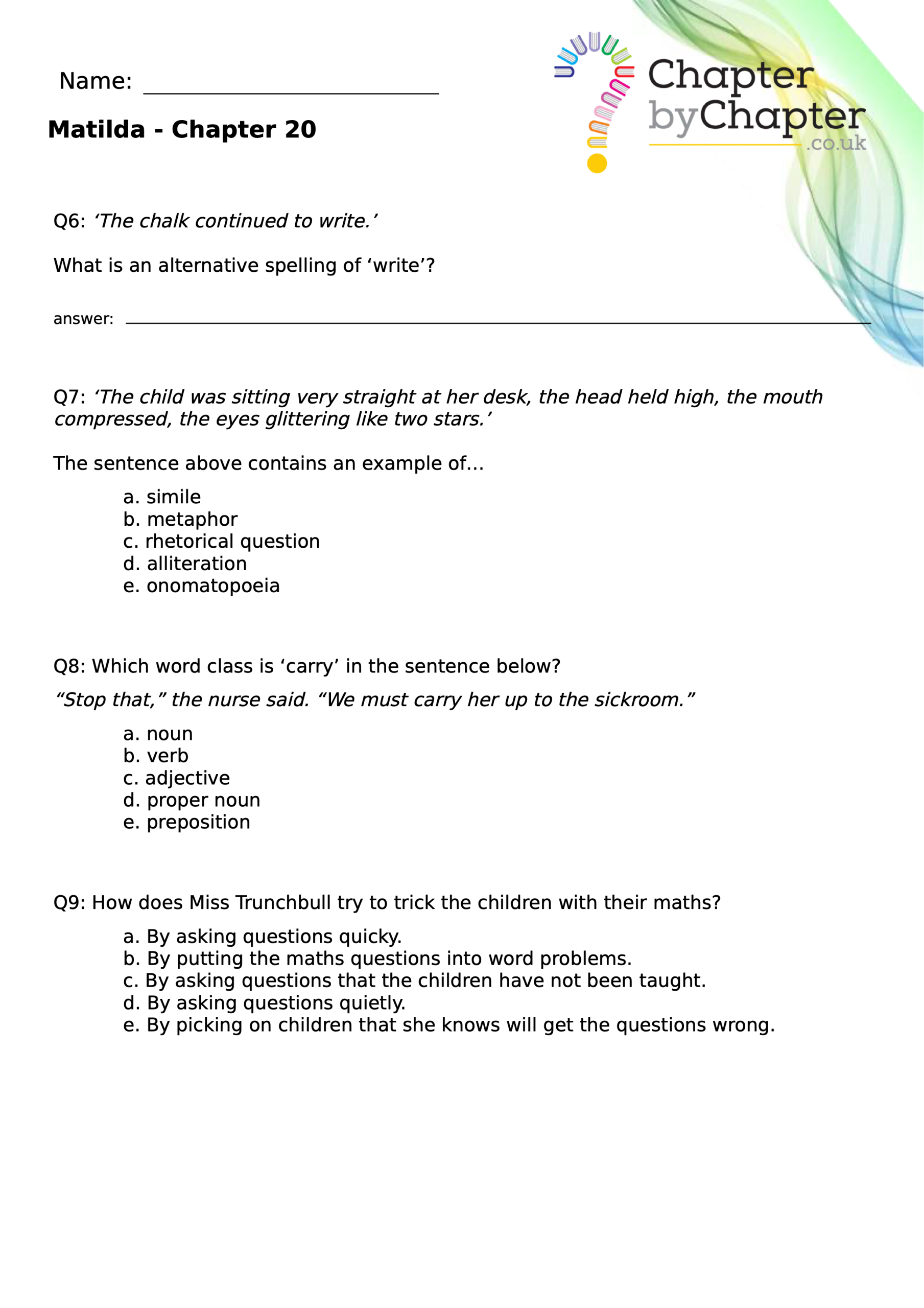
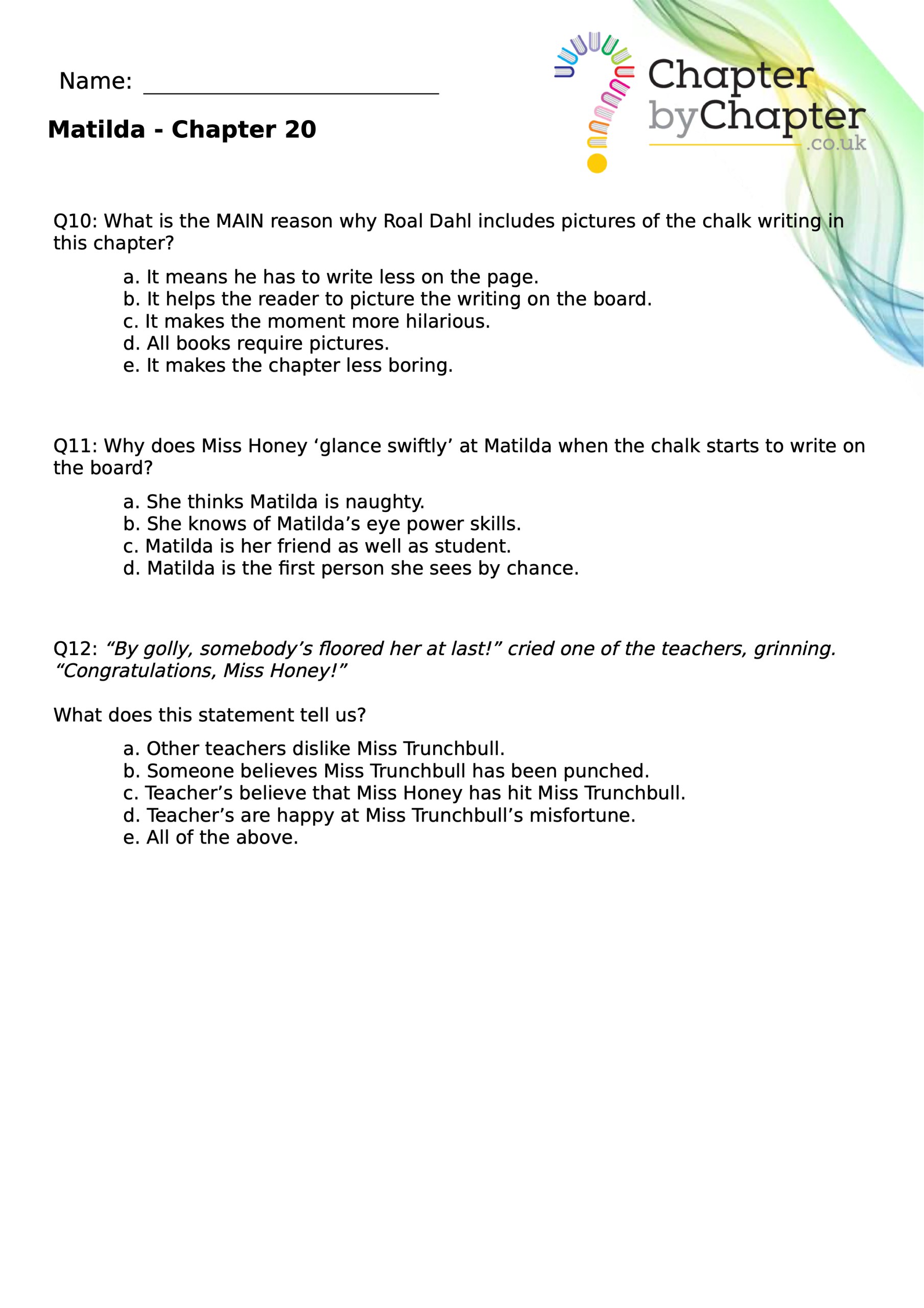
Chapter 20 Questions
Our reading comprehension resource for Matilda by Roald Dahl and is ideal for Year 3 and Year 4, featuring questions for each chapter in the book to boost understanding and reading skills.
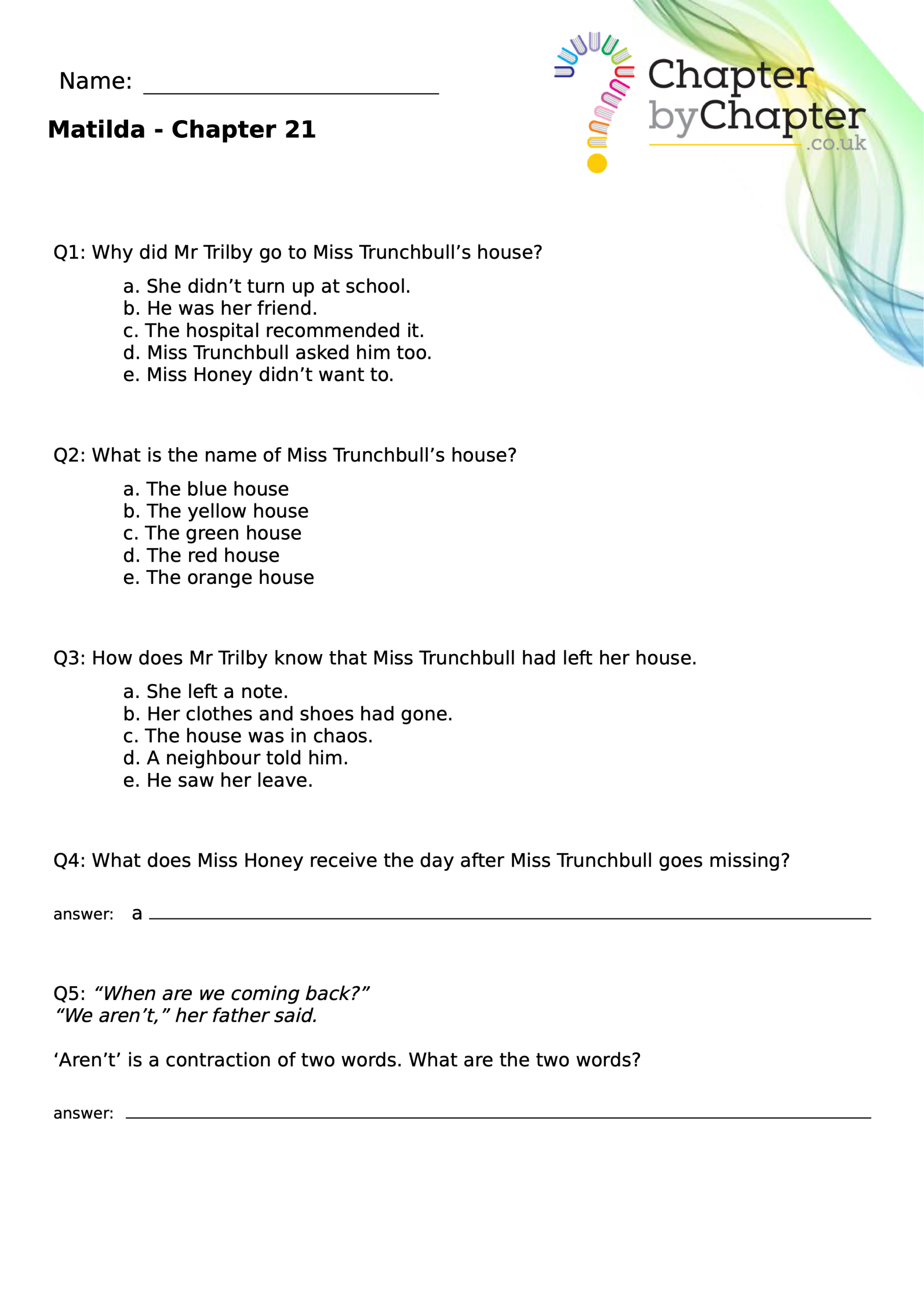
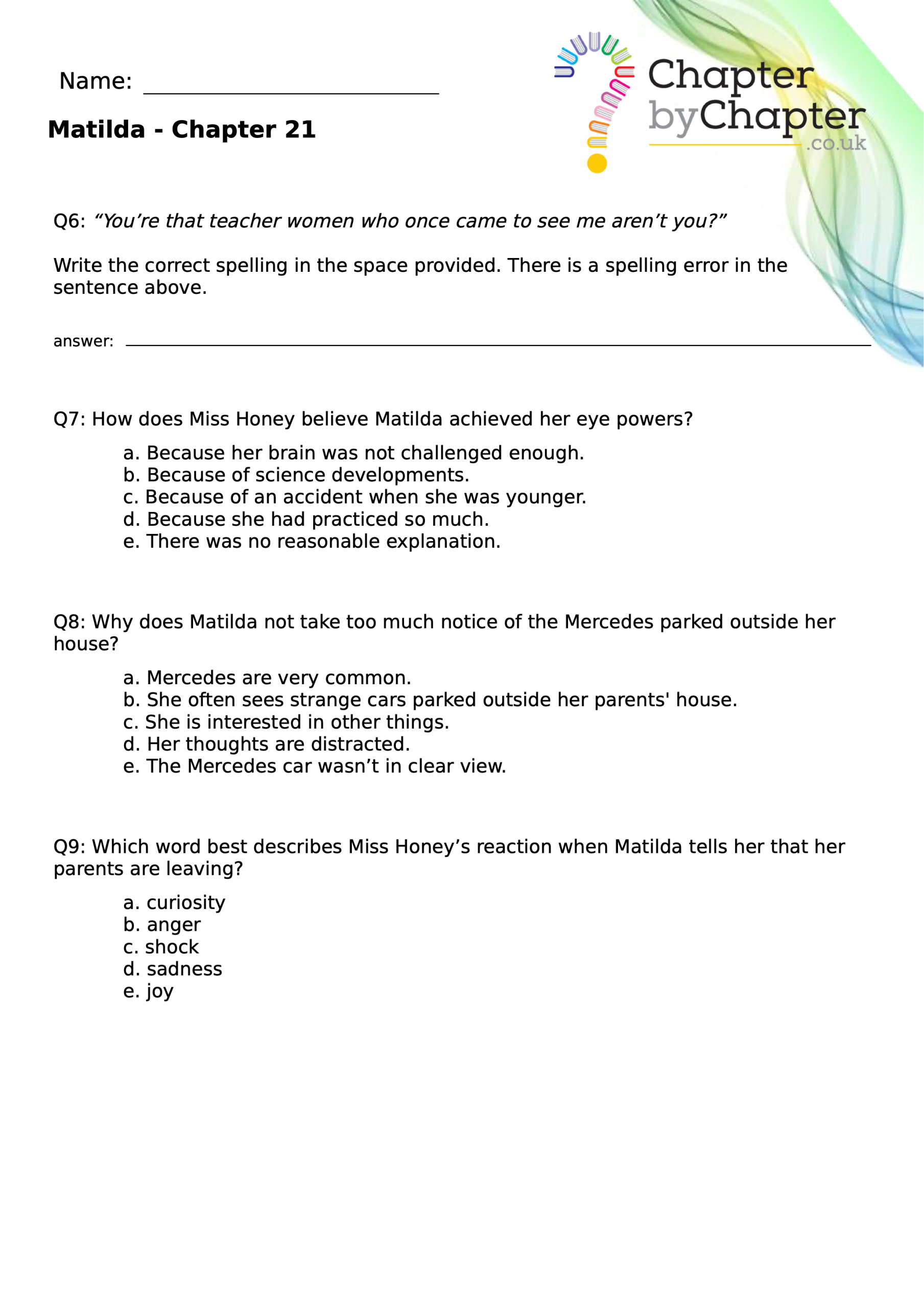
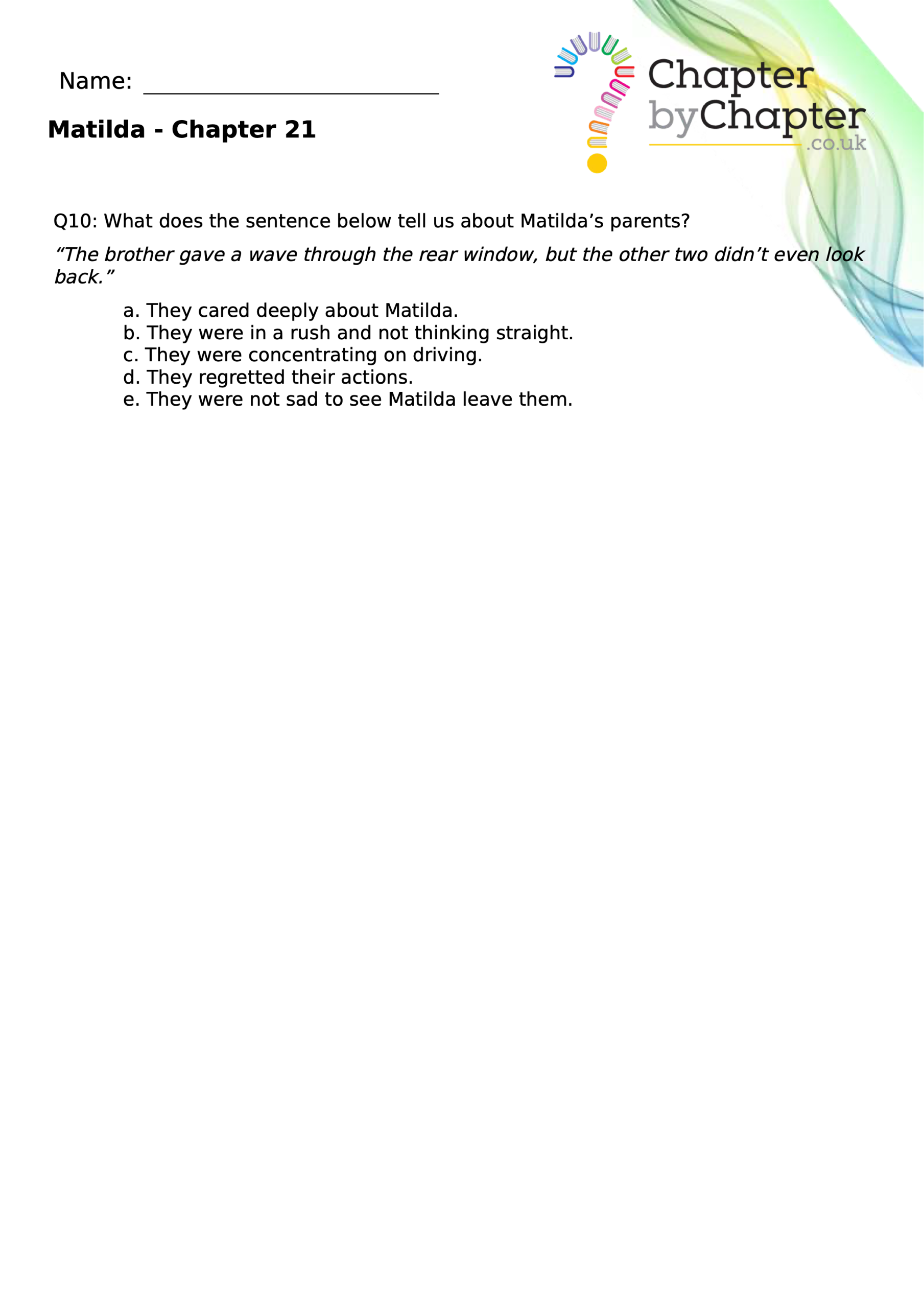
Chapter 21
The resource is structured around questions for each chapter in the book, making it easy to track progress as students move through the story.
